• Skip to main content
  • Skip to footer

CASTIMONIA

Sexual Purity Support & Recovery Group

  • Home
  • About Castimonia
    • Statement of Faith
    • Member Struggles
    • Are You a Sex Addict?
    • About the Leaders of Castimonia
  • Meetings
    • What to Expect at a Castimonia Meeting
    • Meeting Times & Locations
      • Alaska Meetings
      • Arkansas Meetings
      • Mississippi Meetings
      • New York Meetings
      • Ohio Meetings
      • Tennessee Meetings
      • Texas Meetings
      • Telephone Meeting
      • Zoom Online Meetings
  • News & Events
  • Resources
    • Books
    • Document Downloads
    • Journal Through Recovery
    • Purity Podcasts
    • Recovery Videos
    • Telemeeting Scripts
    • Useful Links
  • Contact Us

resentment

April 19, 2013 By Castimonia

Adult Manifestations of Childhood Sexual Abuse

Adult Manifestations of Childhood Sexual Abuse
Full PDF article and figures can be found here:
http://publichealth.lacounty.gov/wwwfiles/ph/media/media/TPH-409.pdf

Background

While childhood sexual abuse (CSA) continues to be a major public health problem, an equally severe and silent epidemic are the estimated 39 million adult survivors of childhood sexual abuse in the United States who continue to exhibit aftereffects of CSA that predispose them to adverse psychosocial outcomes throughout their adolescent and adult life.

Early childhood traumas such as sexual abuse can have lifelong effects throughout adulthood, and the cost to society is high. Ninety percent of cases go unreported and untreated, as the symptoms of CSA are often misdiagnosed and unappreciated.

This article attempts to provide clinicians with awareness of the neurodevelopmental effects of CSA, the adult clinical symptoms, and the adverse psychosocial outcomes of CSA. It will also present tools to help identify the aftereffects of CSA in adulthood and provide mandated reporting protocols.

Definition

Sexual abuse is defined as any sexual activity that a child cannot comprehend or consent to. It includes acts such as fondling, oral-genital contact, and genital and anal intercourse, as well as exhibitionism, voyeurism, and exposure to pornography. A central characteristic of any abuse is the dominant position of an adult that allows him or her to force or coerce a child into sexual activity. Researchers have determined that child sexual abuse victims come from all cultural, racial, and economic groups. The lack of a universal definition of CSA contributes to the complexity of data collection and estimates.

Incidence and Prevalence

Currently, CSA prevalence in the U.S. is not known, but estimates vary from 12% to 40%. Incidence studies suggest that while on average 5.5 children per 10,000 enrolled in day care are sexually abused, a greater number of children (8.9 children per 10,000) are sexually abused in their home. Further CSA studies suggest that 53% of the abuse occurs in the home, 57% report the perpetrator was a family member, and 65% report repeated abuse. Overall, studies show that 1 in 3 females, and 1 in 6 males have experienced childhood sexual abuse by the age of 18.

While nearly 90,000 cases of child sexual abuse are reported each year in the U.S., between 88%-90% of CSA cases are estimated to be unreported and interestingly, between 21%-49% of CSA victims appear asymptomatic following victimization. The lack of disclosing a history of sexual abuse contributes to the lifelong effects of the abuse.

Neurodevelopmental Damage of CSA

Controlled studies have shown that adult survivors of child sexual abuse (ASCSA) are more likely to exhibit adverse psychopathologies in adulthood, and neuroimaging studies confirm that exposure to sexual abuse in childhood alters the neurobiology and neurostructures in the brain, leading to scarring, an abnormal neurohormonal response to future stressors, and predisposes the victim to a lifetime of negative consequences.

Neurological damage from sexual abuse alters early brain development, increasing the risk for psychopathology in adolescence and adulthood (Table 1). The hippocampus, responsible for new learning and memory, plays a critical role in recording emotions that are attached to a stressful event such as sexual abuse. The hippocampus is known to be very sensitive to stress. During stress, high levels of glucocorticoids are released, and over time (as observed among CSA victims, including those re-victimized) elevated levels of glucocorticoids damage neurons in the CA3 region of the hippocampus and lead to atrophy. While the hippocampus has been shown to regenerate neurons, stress inhibits neurogenesis.

Abnormalities of the hippocampus have been shown to be associated with pathological fear, mood imbalances, and anxiety reactions in trauma-related disorders (also hallmarks among ASCSA).

Magnetic resonance imaging (MRI) studies have demonstrated a 12% left hippocampal volume size reduction among adults who have been sexually abused in childhood as compared to healthy controls (Figure 1). Similar reductions are exhibited among subjects with trauma-spectrum disorders such as depression, dissociation, PTSD, and borderline personality disorder. In addition, the amygdala, responsible for emotional and fear regulation, is affected by early sexual trauma, resulting in similar psychopathologies.

Studies suggest sexually traumatized children are also less able to utilize both brain hemispheres to process experiences. The corpus callosum, a longitudinal fissure that connects the left and right cerebral hemispheres, is shown to be abnormal in sexually abused children. Generally, the left side of the brain processes positive emotions and logical thinking, and the right processes negative emotions such as fear. When the corpus callosum is not operating properly these processes are unable to function at the same time, thus supporting theories why many abused individuals divide people into “all good” or “all bad” and exhibit mood swings, as observed in borderline patients.

Adult Manifestations of CSA

There is no adopted definition to identify the symptoms exhibited among ASCSA; however, evidence-based research has confirmed long-term effects of CSA in adolescence and into adulthood. Later in their lives, many ASCSA, whether reported or not, exhibit psychopathology, acting-out behaviors (social dysfunction), relationship problems (interpersonally), somatic symptoms, and sexual disorders.

CSA survivor studies suggest that ASCSA use health care services more often than the general population, are shown to exhibit more somatic symptoms that do not respond to medical treatment, and present more severe and complex symptoms.The response to sexual abuse during childhood varies, and is largely dependent on 1) age at onset; 2) severity; 3) duration; 4) relationship to the perpetrator; 5) the child’s resiliency; and 6) stability of and support from the family.

Childhood survivors might initially seem unaffected by the trauma; however, by adolescence and adulthood, the consequences eventually become symptomatic, resulting in eating disorders, dissociation, phobias, obsessions, borderline personality disorder, depression, anxiety, bulimia, obesity, post traumatic stress disorder, hallucinations, conduct disorder, substance abuse disorder, panic disorder, antisocial personality disorder, affective disorder, and impaired sense of self.

Behavioral Effects of CSA 

Acting out

Children are limited in their physical, cognitive, and emotional development and, thus, dependent upon adult and often sibling caregivers to provide love, trust, and support. Once a child is violated however, shame and stigma often follow, as well as fear that disclosing the abuse will result in re-victimization, loneliness and isolation, physical violence, and death. Poor coping skills are common among this cohort, such as substance abuse, tobacco use, overeating, addiction, lying/stealing, poor academic performance, expectation of early death, poor adherence to medical treatment, suicide, anger, prostitution, and increased risk of sex crimes.

Relationship problems

Controlled studies identify an association between childhood sexual abuse and adult relationship problems. Adult manifestations of CSA increase the risk of intimate partner violence victimization and perpetration, rape after 18 years of age, low self-esteem, intimate relationship problems, divorce, interpersonal problems, victim-perpetrator cycle, superficial idealization of sexual relationships, and the inability to trust others.

Somatic symptoms

Evidence illustrates that CSA also results in biophysical changes. ASCSA show a decreased threshold for pain. Other effects include a heightened sensitivity in the pelvic or abdominal region, various bowel symptoms, musculoskeletal disorders, back pain, severe headaches, gastrointestinal problems, sleep disorders, asthma, and pseudocyesis.

Sexual disorders

Adult manifestations of CSA increase adolescent and adult risk of exposure to sexually transmitted diseases, compulsive sexual behaviors, early sexual activity, extreme masturbation, sexual promiscuity, poor sexual adjustment, poor contraceptive practices, and teen pregnancy.

Functional amnesia

Functional amnesia (dissociative amnesia–dissociative disorders) can develop after severe trauma, such as child sexual trauma. This is especially true among children experiencing severe sexual trauma or in those aged 5 years or younger. Functional amnesia among CSA cases varies widely, from 19% to 88%. While theories about amnesia and delayed recall of CSA vary and may be controversial due to false memories, it is important to recognize that later in adolescence or adulthood, the victim may not recall the experience. Additionally, if the abuse occurred in middle childhood, ages 6-12, the victim may 1) develop false memories that the abuse ever occurred; 2) be in denial; or 3) be unaware that the type of experience was determined to be sexual abuse. 

Role of the Clinician

The clinician plays an important role in caring for adult survivors of childhood sexual abuse. Because the presenting symptoms can be somatic in nature, the role of CSA in the patient’s illness or presenting symptoms can be overlooked.

Despite never reporting the abuse, 85% of adult survivors of child sexual abuse favor physician screening. Directly asking patients about the occurrence of abuse has been shown to elicit more positive responses compared to self-reporting, 29% versus 7% respectively. Further, especially among adolescent patients, it is important to remember that early disclosure of sexual abuse by the victim is critical to reducing the effects of CSA and to helping reduce psychological distress later in life. Symptoms of ASCSA can vary greatly and, in fact, the patient can be asymptomatic.

Evidence-based research suggests that many interventions can be useful in this population. For example, coping-skill interventions seem to help diminish or prevent post traumatic stress disorder and related adult aftereffects of CSA. Physicians can use the SAVE universal screening tool (Table-2) for childhood sexual abuse in adulthood, developed by the Florida Council Against Sexual Violence. This useful tool screens patients for sexual violence.

Physicians should also be familiar with their own hospital, clinic, or HMO policies and procedures regarding sexual violence reporting, as well as the use of specific reporting forms. The California Medical Training Center develops instructional materials and conducts training in clinical forensic medicine techniques for physician and other health care professionals, social workers, and related reporters.


James M. DeCarli, MPH, MPA, CHES
Injury and Violence Prevention Program
Los Angeles County Department of Public Health

Filed Under: Sexual Purity Posts Tagged With: addiction, affair, Affairs, alcohol, alcoholic, anonymous sex partners, call girls, castimonia, Character Defects, christian, Emotions, escorts, father wound, gratification, healing, human trafficking, Intimacy, lust, masturbation, meeting, porn, porn star, pornography, pornstar, pornstars, prostitute, prostitutes, ptsd, purity, recovery, resentment, Sex, sex addict, sex addiction, sex partners, sexual, sexual impurity, sexual purity, spouses, STD, strippers, trauma

April 13, 2013 By Castimonia

Effects of Childhood Sexual Abuse, Part 5

Effects of abuse, part 5
By Paul Irby Special to the Abilenian
Abilene Reporter-News
Posted May 6, 2009 at 3:59 p.m

Since December, Mental Health Matters has featured one story a month examining the effects of childhood sexual abuse on its victims. Different dimensions to the individual have been considered, which include cognitive, emotional and behavioral. This order was chosen to illustrate the progression of abuse effects, beginning with how a child sees the world and self resulting in emotional experiences that lead to the behaviors which are the first noticeable signs. The behaviors that were last discussed were linked primarily to emotions such as fear, anger, depression and anxiety. This month’s article again focuses attention on the behavioral components that usually don’t manifest until puberty and later. The hope is that by discussing these issues, some insight will be gained into the possible motivations of these behaviors.

One important area to consider, especially in understanding victims of sexual abuse, is the impacts the abuse can have on the survivor’s sexual behaviors. As the person enters into puberty and subsequent arrival of sexual desire, there are two extremes that could possibly manifest.

The first is hypersexuality, which should be understood as an atypical promiscuity among peers. This hypersexuality in the life of an abuse victim is often misinterpreted by family and friends as evidence that the abuse may not have been as traumatic as once thought. However, nothing could be further from the truth. Many victims become hypersexual because sex for them was always something forced beyond their control and this hypersexuality is a means of having control over when and with whom they have sex. Another possible reason for the hypersexuality is to use sex as a means of retribution for their abuse. Sex in this context is seen as a tool for manipulation and self-gratification. One motivation for hypersexuality is linked most commonly among those who had a same-sex abuser. When a child has a same-sex abuser, this can cause confusion and concern in the victim that somehow the abuse will “make me homosexual.” Those with a same-sex abuser may become hypersexual in an attempt to concretely prove and reinforce to themselves that he/she is not homosexual. This understanding should not be somehow aligned with the myth purported in our society that gays and lesbians are pedophiles or that sexual abuse is a “cause” of same-sex attraction.

The other possible extreme of sexual behaviors manifested in the life of a sexual abuse victim is that this victim becomes asexual, which should be understood as having extremely low or no sexual desire. For the abuse survivor who is asexual, often it is because sex for them is so closely associated with their abuse/abuser and is viewed as a filthy violation.

Addictions also develop in the lives of abuse victims. Having worked with some victims who also had a history of substance addictions, a common scenario has developed. Stemming from the original notion that he/she is different from other people because of the abuse, in early adolescence any social invitation is viewed as a chance to “feel normal and accepted.” Often at social gatherings this person is offered his/her first drink or hit of a drug. Accepting this offer again can validate acceptance and “normalcy,” and often has the added affect of numbing the child from feeling depressed, fearful or angry. Add to this a predisposition for addiction and an addict is born.

It is important to keep in mind that hypersexuality, asexuality and addictions occur in a variety of arenas for a variety of causes, and not every person who possesses these signs are victims of sexual abuse. As we have discussed, it is the underlying motivation behind them that links them with abuse.

Paul Irby, M.A., is a licensed professional counselor with the Ministry of Counseling and Enrichment. Mental Health Matters is facilitated by the Mental Health Association in Abilene.

© 2009 Abilene Reporter-News. All rights reserved. This material may not be published, broadcast, rewritten or redistributed.

Filed Under: Sexual Purity Posts Tagged With: abuse, addiction, affair, Affairs, anonymous sex partners, call girls, castimonia, Character Defects, children, christian, Emotions, escorts, father wound, gratification, healing, human trafficking, Intimacy, lust, masturbation, porn, porn star, pornography, pornstar, pornstars, prostitute, prostitutes, ptsd, purity, recovery, resentment, Sex, sex addict, sex addiction, sex partners, sexual, sexual abuse, sexual addiction, sexual impurity, sexual purity, spouses, STD, strippers, trafficking, trauma

April 10, 2013 By Castimonia

Effects of Childhood Sexual Abuse, Part 4

April is Abuse Prevention Month
By Paul Irby Special to the Abilenian
Abilene Reporter-News
Posted April 1, 2009 at 5:26 p.m.

April is designated as abuse prevention month for the state of Texas. Therefore, the Mental Health Association of Abilene, felt it more than appropriate to run its latest installment of the “Effects of Abuse Series.” This installment is in two parts, because there is much to consider. In the previous two articles we considered the mental and emotional impacts of abuse, respectively. The third dimension to be examined is the behavioral dimension. What kinds of behaviors are “typical” of a person who has been sexually abused? The easy and disappointing answer is that there are no “typical” behaviors, and the behaviors that will be discussed are ambiguous enough that they should not be the sole determining factor in assessing if one has been abused. However, it is a fact that the behaviors are the first thing we notice in people that cause us alarm or concern. It is also important to clarify that behaviors are the end result of the “chain reaction” we have been discussing between thoughts/beliefs, feelings and behaviors.

The underlying belief that fuels those feelings of depression, anxiety, fear, anger, shame and doubt is the belief that he/she is “different” from others; that he/she is alone in this struggle and if anyone truly knew his/her plight, they would not value him/her. One of the most common manifestations of these beliefs and emotional responses is in the abused creating a persona of anger and aggression. This persona is in reality a wall meant to communicate to the world, “keep out!” and “if you don’t stay away, I’ll make sure you regret trying to get close.” Males will tend to be more physically aggressive while the females are more likely to be more verbally aggressive. Both are the result of a brooding anger which ultimately can be traced back to the fear of being betrayed, hurt, exploited and victimized again.

Depression and anxiety can lead to behavior manifestations like withdrawal, self-injury and suicidal ideations and attempts. Withdrawal is a common behavior in abuse victims. If the abuse begins at an early age and is chronic, this withdrawal may go unnoticed and explained away as a personality trait. Withdrawal is more noticeable in children between the ages of 8-18 because there is an already established pattern of social interaction. Self-injury is most common in adolescent females and takes the form of surface-level cuts on the forearms, abdomen, pelvis, or underneath the breast. The purpose of the self-injury is usually to achieve a sense of release reinforced by the initial shot of pain and subsequent presentation of blood. Many who engage in this behavior find it difficult or unacceptable to cry because crying leaves one with feelings of vulnerability, which is interpreted as weakness. Crying can also become uncontrollable, which again frightens the abuse victim, who often desires to have control in a life that seems so chaotic. The child who engages in self-injury believes they can control the cutting and therefore believe it to be a safe alternative. The self-injury then becomes another secret that has to be hidden and protected. In some ways this can relate back to the aspect of control, the cutter has control over the secret, but ultimately it becomes one more stressor which maintains the need to alleviate that stress. Self-injury can also be used as a form of self-punishment motivated by feelings of worthlessness. These feelings of worthlessness, when coupled with pent-up anxiety, depression, and fear, can lead to thoughts and attempts at suicide.

In the next installment we will look inside the possible sexual manifestations of a sexually abused child and how abuse can lead to substance and process addictions.

Paul Irby, M.A., is a licensed professional counselor with the Ministry of Counseling and Enrichment. Mental Health Matters is facilitated by the Mental Health Association in Abilene.

Original Article found here:
http://www.reporternews.com/news/2009/apr/01/april-abuse-prevention-month/

Filed Under: Sexual Purity Posts Tagged With: abuse, addiction, affair, Affairs, alcohol, alcoholic, anonymous sex partners, call girls, castimonia, Character Defects, child abuse, childhood sexual abuse, christian, Emotions, escorts, father wound, gratification, healing, human trafficking, Intimacy, lust, masturbation, meeting, porn, porn star, pornography, pornstar, pornstars, prostitute, prostitutes, ptsd, purity, recovery, resentment, Sex, sex addict, sex addiction, sex partners, sexual, sexual addiction, sexual impurity, spouses, STD, strippers, trauma

April 7, 2013 By Castimonia

Effects of Childhood Sexual Abuse, Part 3

Effects of abuse, part 3
By Paul Irby Special to the Abilenian
Abilene Reporter-News
Posted February 4, 2009 at 1:08 p.m.

This third article in the series of six reflects what can be called a continuation of a chain reaction beginning with the cognitive impacts discussed last month, which lead to the emotional experiences discussed in this article. The most common emotional experiences a sexually abused child encounters include fear, anxiety, anger, guilt and shame.

Fear and anxiety are closely related emotions. Many of their physiological and psychological experiences are identical. Fears and anxieties experienced by an abused child can be specific to gender, age range, status or race. When these fears are category-specific it is most likely tied to associations with the abuser. Fears and anxieties can also be more broad and general. Common generalized fears of abused children include the fear of their secret being found out, being rejected by peers and being emotionally vulnerable which would ultimately lead to being betrayed by someone else.

I recall working with a 23-year-old man who had been sexually abused by his mother from the age of 6 until the age of 21. One of the main reasons for his desire to seek therapy was “feeling angry all the time.”

I explained to my client that when I hear someone make such an assertion that my mind immediately returns to what I know to be the nature of anger. Anger is a secondary emotion. Quite literally, what that means is that anger is what we feel second in the sequence of emotional experience. Most often what is felt first is some kind of fear. This is only true of genuine anger, not frustration or irritation.

Think back to your own experience of being cut off in traffic. We can easily identify the feelings of anger toward that driver and our subsequent desires to express that anger. If someone were to ask you how you felt after being cut off, you would probably frame this experience as one that prompted anger. However, if we were to trace back the very first emotional experience, it would be one of fear. For the driver, it is the fear that the vehicle or self might be hurt, and the fear quickly manifests itself into anger. So, when I heard my client contend that he was “angry all the time,” we began a discussion of what fears are present that lead to his consistent feelings of anger. In reality one who has been abused, who walks around angry “all the time,” is living with pervasive fear. Anger was the way in which this person chose to protect himself from the fears becoming a reality.

Guilt and shame are often used interchangeably in our language, but an important distinction was made to me by one of my wise clients. He defined guilt as “believing you did something bad” and shame as “believing you are a bad person.” When considered in the framework of one who was sexually abused as a child, this is one of the biggest lies he or she can believe. While much of our society can look from the outside in to another’s experience and logically make a case finding fault in the abused child’s reactions or responses, these outsiders are wrong. Often they will say things like, “well you shouldn’t have kept it a secret so long,” not recognizing the power of intimidation, fear and humiliation that maintains the secret. Abusers use sick “logic” to rationalize abuse, claiming that the child “flirted” with them or “wanted it as much as they did.” These abusers fail to recognize their humane responsibility as adults to the welfare of children, and often confuse affection for sexual advancement.

Survivors of abuse will internalize these inaccurate beliefs that result in feelings of guilt and shame. Children should never be blamed for abuse perpetrated against them.

Paul Irby, M.A., is a licensed professional counselor with the Ministry of Counseling and Enrichment. Mental Health Matters is facilitated by the Mental Health Association in Abilene.

The original article can be found here:
http://www.reporternews.com/news/2009/feb/04/effects-abuse-part-3/

Filed Under: Sexual Purity Posts Tagged With: abuse, addiction, affair, Affairs, alcohol, alcoholic, anonymous sex partners, call girls, castimonia, Character Defects, child abuse, child sexual abuse, children, christian, Emotions, escorts, father wound, gratification, healing, human trafficking, Intimacy, lust, masturbation, meeting, porn, porn star, pornography, pornstar, prostitute, prostitutes, ptsd, purity, recovery, resentment, Sex, sex addict, sex addiction, sex partners, sexual, sexual addiction, sexual impurity, sexual purity, spouses, STD, strippers, trauma

February 25, 2013 By Castimonia

The Evolution of Revolution: Understanding Sex Addiction

An excellent article about sex addiction recovery.

Patrick Carnes: Evolution of Revolution, Understanding Sex Addiction

http://www.counselormagazine.com/detailpage.aspx?pageid=1443&LangType=1033&id=6442451121

carnespIt was a cold late fall evening, and I was about to give my first address to the medical staff of Golden Valley Health Center. This facility was an 850-bed hospital located in suburban Minneapolis. It had a long and respected tradition as a psychiatric facility that also treated substance abuse. The year was 1984 and Out of the Shadows had appeared in January. While the reception that year certainly started controversies, there was also real and substantive support in both the professional and the recovering communities. The very first inpatient program for sex addiction was set to open in January 1985.

My job that night was to be the keynote speaker for the annual medical staff dinner for close to 300 doctors, clinicians and their spouses. My purpose was to underline the importance of this new sex addiction program. I was nervous, but I strategized that what had worked best for me was to use compelling cases to paint a picture of real need. One example was that I had a letter from the wife of a physician who had joined Sex Addicts Anonymous (SAA) and received treatment. It was a moving tribute to the power of treatment and her gratitude for the help received. Also I knew I had spouses in the audience as well as doctors, so it was a way for all to identify. And the author had kindly given me permission to share her sentiments anonymously. So I was ready.

Yet I was totally unprepared for what happened. After the lovely supper had been served and eaten, the hospital administrator went to the podium and started his introduction for my talk. It was a cue for a staged walkout. Suddenly about half of the audience simply got up and left. They were led by the most significant psychiatric group on the medical staff. Even more stunning was that key members of the administration staff joined the exodus in protest to the hospital opening a sex addiction program.

Over my career I have had critics, hecklers and reluctant staff members. But that moment was a defining moment in which I and what I represented were clearly not welcome. I remember the spotlights being on me, and everyone waiting for what I would say. I stood there, notes and letter in hand, transfixed with the fear that I had no right to be there. I wondered if I should walk away, but then I looked at that letter and knew I needed to speak the truth I knew. So I stepped forward and with a somewhat halting voice thanked those who had stayed and told them why I was there.

At the time Golden Valley was owned by Compcare Corporation and its president was Dr. Richard Santoni. He and I had spent afternoons together reviewing data and cases about sex addiction. His resolve pushed all of us to opening that program on time. Once open, a transformation occurred. The patients were profoundly grateful to have a place that understood their problem. Compared to most patients in the facility, they were not only hurting but also motivated. Soon the Sexual Dependency Units became the place where everyone wanted to work. Even the physicians who had walked out during my address changed their minds. When the patients came, the legitimacy of the problem was clearly established. The reputation for breaking new ground and being of genuine help compared to the revolving psychiatric doors characteristic of the day was more than attractive. Plus in 1985, physicians would be paid by patient as a separate bill. With $265 a day at stake, those who walked out the night of my talk now demanded to be put on the rotation list.

Then new institutional battle lines were drawn. The word spread that these were interesting, motivated patients who could afford to pay. Doctors wanted to be these new patients’ doctors but did not have time to go through the training to understand what the staff was asking of the patients in the program. Thus you had doctors giving well-meaning but ill-informed advice that was contrary to the precepts of the program. Clearly, a training program was necessary. Similarly, referents were asking for help because now that there was help, others followed locally from 12-step groups. Clinicians also saw the progress made in the hospital but questioned how to maintain momentum when the patient returned to the real world.

Other questions arose. With so many patients coming to the clinic, could they be put into groups? What was the criteria for inpatients other than desperation? Did treatment work for offenders? Were offenders part of a continuum, a separate problem or was there an overlap with sex addiction?

Leading the requests to join the new program were various directors of physician health programs. Most notable among those was Dr. Richard Irons, who eventually joined the staff at Golden Valley, and Dr. David Dodd from the Tennessee Medical Foundation, who worked hard to open the doors to understanding for those who treated physicians with addictions. Both of these men rose to the challenge of leadership and contributed dramatically to the knowledge and acceptance of sex addiction as a problem. Now physicians were joining in the fight and advocating for further knowledge.

The problem then was how to acquire that knowledge. I remember sitting at lunch with colleagues from Golden Valley in May of 1985.

We were celebrating all the progress being made and a recent television show with Oprah Winfrey, which brought over 11,000 calls to the hospital seeking help. We were talking of the new training necessary. Suddenly I experienced a deep fear within myself and I tuned my colleagues out. I realized we were celebrating the opening of the hospital program as an end goal that would solve the problem. Yet it was but a waypoint. All these unanswered questions existed. How would we find the answers and pay for the research? We had worked so hard just to get to the point where we had a facility. So many prejudices and professional barriers had to be overcome. We had just begun. When I tuned back to my friends, the tone of the lunch changed when I shared what I was thinking.

Still, throughout this whole journey people were ready to help. Money was found. A team of eight researchers, including myself, started to gather data. Hundreds of therapists opened their practices to this work. And just short of 1,000 sex addicts and many of their partners joined in the effort. The pooling of the efforts of all of us helped us to fashion training as a collecting point for the story of recovery that was emerging. It was the beginning of the Certified Sex Addiction Therapist program whose participants today we call CSATs. The resistance to our work did not stop, since there frequently were obstacles such as “that may work in the city but will not in the country” or even, “that will never work in my country.” Plus the process of discovery led to more questions and complications. Yet we persisted in pooling our knowledge.

What we have experienced is now a global phenomenon. For example, a young woman who just started working on her CSAT returned to a very rural part of Canada. She was told such clinical interventions would never work there and certainly not with families. But with the backing of her hospital she now directs a thriving sex addiction program with heavy family involvement. In Slovenia, a country of only two million, a family physician supports the beginning of a 12-step program for sex addicts. Today she has left family practice behind and devotes herself to helping families of sex addicts. In South Africa, I attended an SAA meeting of about 125. I was struck by the level of knowledge and good recovery in the room. I asked how this happened. It was business leaders who knew something had to be done who had bought materials and distributed them for free. And then they subsidized interested therapists who sought training.

One of the more interesting stories internationally is what the Norlien Foundation in Alberta, Canada, has been able to achieve. Once they became clear about the problem of addiction, they focused first on prevention. They created an initiative for early childhood education and family wellness that leveraged foundation and provincial funds into an amazing resource for Canadian families. Then they brought the very best science experts in addiction together for a series of conferences involving policymakers, government officials and healthcare professionals. They completely revamped the approach to talking about sex addiction by focusing on brain development and trauma. Then they ramped up the discussion into understanding addiction as a brain problem–of which sex was one of the options. They created an initiative to educate providers and physicians. They invited an American think tank called Frameworks to help with a cultural intervention.

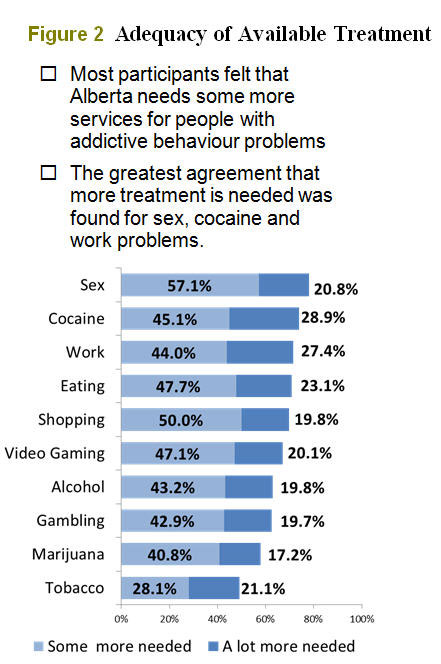
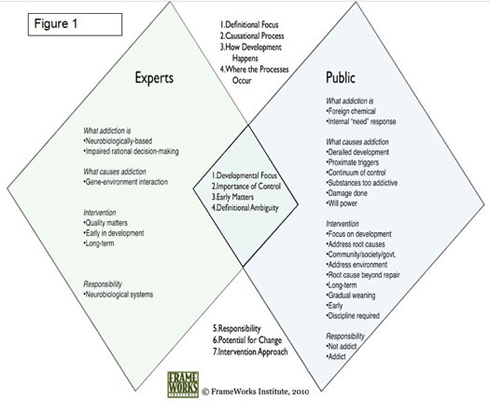
(see Figures 1 and 2)

Figure 1
figure1

Figure 2
figure2

Their first effort was to show that a consensus existed amongst all the various professions involved. Amongst the average citizen, however, there were all kinds of perceptions, far from those of the research consensus, and few areas of agreement. Figure 1 graphically summarizes where the discontinuities were. The second initiative was a massive education effort of the public, which showed an astounding shift in understanding. Figure 2 lists what emerged in a survey of 4,000 citizens. Sexual compulsivity was at the top of the list. (For more information, please go to their website norlien.org. It is an open source treasure trove of useful information.

Clearly the time has come for a global conversation. Hosted by Caron and U.S. Journal Training, but supported by key professional associations and treatment facilities,  the 1st International Conference on Sex & Love Addiction will be held April 4–6. A planning group was formed with clinicians and physicians from around the world. The conference is being held in Brooklyn, New York, an international city with easy access. The goal is to again share what we know across disciplines and countries.

Sex addiction does have uniqueness. It requires clinicians who understand addiction, sex therapy, family therapy, trauma, sex offending and brain science. Physicians need to step past traditional psychopathology and recognize process addictions. Cultural differences are a factor. We, for example, are the world leaders of pornography, producing over 400 million pages last year alone (the closest other country is Germany with 10 million pages). Yet the irony is that terrorists, including Osama bin Laden, were consumers of porn. In putting together this conference we were not surprised to learn that the pornography consumption among United States military personnel emerged as a significant issue and the United States military is not the only military struggling with this concern.

Sex addiction is most difficult to treat because of the intimacy and centrality of sex to being human. At a recent conference, an elderly clinician from China leaned over and whispered to me, “You do know this is the most important global issue we probably have. It is a huge problem in our country. But no one wants to talk about it.” She looked at me with tears in her eyes as she left. She did not even hear my whispered, “I know” as she now was already focused on her labored walking.

My seatmate on the plane was a professional man. After talking with him for a few minutes I was aware that the language he used was 12-step based. I asked if he was in the program and he said yes, that he had been in AA for four years. We talked some about it. Then he leaned over and asked me if I knew anything about sex addiction. I said that I had been in a program of sex addiction recovery for some time. He then said, “I have three sponsees who are struggling because they have not surrendered to their sex addiction. I finally said to one of them that I could not help him any longer if he did not do what his sex addiction treatment asked him to do, because he would die.” He then leaned over and asked me if that happens often. I nodded my assent. He leaned back and said, “We have to wake up.” I said, “I know.”

So consider this issue of Counselor a wake-up call. Sex addiction is not just a collateral problem to be referred on. We have invited some of the best providers in the country to share with you here some of the latest knowledge and tools. Rob Weiss is amazing at his ability to track how digitalization is transforming the key variable in addiction acquisition: availability. Suzanne O’Connor and Stefanie Carnes review some of the latest instrumentation available. Three private practitioners talk about what it has been like to build their practice around sex addiction. Two inpatient providers talk of revising their programs in light of evidence-based practice. Caron Foundation staff share what they learned when they systematically assessed clients for sex addiction. The Pine Grove staff at Gentle Path share their realization of how differentiated their patient population was when they simply tracked the patients as they withdrew from the program. As you read you will also learn how 12-step programs have provided so many good options across the world.

The professionals writing here are both evolutionary and revolutionary, doing what good medicine and science has always done. We make things better by pooling what we know and helping each other. Now our network will extend across the world. In the words of a song from the sixties, “There’s something happening here. . .”

I sold an old farm that my wife and I had while she was alive. In it all the research records were stored that we started collecting in 1985. Among them were all the stories of the 1,000 addicts and their partners. The average transcript was about 80 to a 100 pages long, single spaced. These stories were in addition to all the data collection we did, which took hours to fill out and seven years to collect and analyze. In moving my records, I sat on the floor, opened the boxes and was flooded by memories of all the people who had shared their pain, struggles and success. I heard their voices and wept. I whispered out loud, “I know.” And I think many more will know now too. Thank you.

Filed Under: Sexual Purity Posts Tagged With: addiction, affair, Affairs, anonymous sex partners, call girls, Carnes, castimonia, Character Defects, christian, Counselor, Counselor Magazine, escorts, father wound, gratification, healing, human trafficking, Intimacy, Jesus Christ, lust, masturbation, meeting, Patrick Carnes, porn, porn star, pornography, pornstar, prostitute, prostitutes, ptsd, purity, recovery, resentment, saa, Sex, sex addict, sex addiction, sex partners, sexual, sexual addiction, sexual impurity, spouses, STD, strippers, trauma

  • « Go to Previous Page
  • Page 1
  • Page 2
  • Page 3
  • Page 4
  • Page 5
  • Page 6
  • Interim pages omitted …
  • Page 8
  • Go to Next Page »

Footer

Useful Links

Castimonia Restoration Ministry, Inc. is a 501c3 non-profit organization


This site is intended for individuals who struggle with maintaining sexual purity. This information is posted for individuals at various stages in their recovery, year 1 to year 30+; what applies to some, may not apply others. Spouses are encouraged to read this blog with the caveat that they may not agree with, understand, or know the reason for some items posted. As always, take what you like and leave the rest.

Copyright © 2026 Castimonia Restoration Ministry

Loading Comments...