• Skip to main content
  • Skip to footer

CASTIMONIA

Sexual Purity Support & Recovery Group

  • Home
  • About Castimonia
    • Statement of Faith
    • Member Struggles
    • Are You a Sex Addict?
    • About the Leaders of Castimonia
  • Meetings
    • What to Expect at a Castimonia Meeting
    • Meeting Times & Locations
      • Alaska Meetings
      • Arkansas Meetings
      • Mississippi Meetings
      • New York Meetings
      • Ohio Meetings
      • Tennessee Meetings
      • Texas Meetings
      • Telephone Meeting
      • Zoom Online Meetings
  • News & Events
  • Resources
    • Books
    • Document Downloads
    • Journal Through Recovery
    • Purity Podcasts
    • Recovery Videos
    • Telemeeting Scripts
    • Useful Links
  • Contact Us

Sexual Purity Posts

March 17, 2017 By Castimonia

The ‘demons’ got my beautiful, loving daughter

For those with mental illness, this is truly a sad story but I hope it helps the public understand how terrible a life those of us with mental illness can really live.
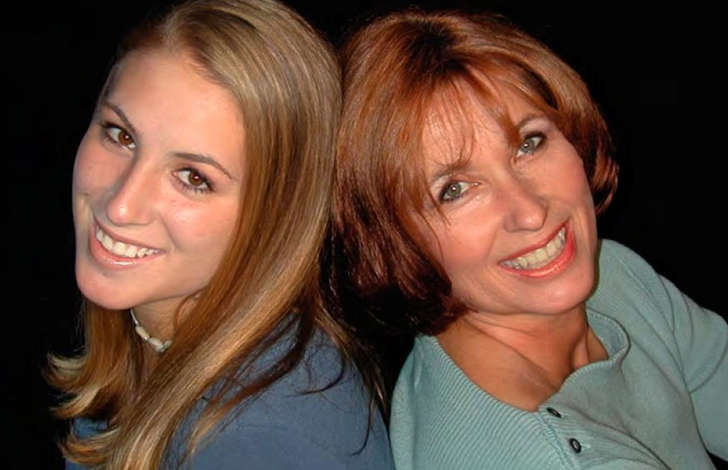
The author with daughter Natalie in 2004, soon after publication of their book “Promise You Won’t Freak Out.” © Doris Fuller/Treatment Advocacy Center The author with daughter Natalie in 2004, soon after publication of their book “Promise You Won’t Freak Out.”

by:  Doris A. Fuller of The Washington Post

I lost my darling daughter Natalie to mental illness last month. She killed herself a few weeks short of her 29th birthday by stepping in front of a train in Baltimore.

Natalie and I wrote a book together when she was 16: “Promise You Won’t Freak Out: A Teenager Tells Her Mother the Truth About Boys, Booze, Body Piercing, and Other Touchy Topics (and Mom Responds).” The idea of a teenager telling the truth about her secrets was such a startling concept that we were feature-page headliners in the Baltimore Sun and about two dozen other newspapers, went on TV coast to coast, including on one of the morning shows, and got paid to give speeches. “Oprah” called.

In the book, we used a device to signal whenever a wild turn was about to take place: And then . . . . In the introduction, I defined an And then . . . moment as “one of those critical junctures when my cheerful sense that all was right in the world collided with inescapable proof that it wasn’t.”

The book was published to great reviews the week before Natalie finished high school. Amazon named it the best parenting book of 2004. It was nominated for a national prize. It was translated into Lithuanian and Chinese.

And then . . . .

At 22, during the second half of her senior year of college, Natalie experienced a psychotic break. In the span of a few weeks she went from being a dazzling young adult with the world at her feet to a psych-ward patient with an arrest record. Only much later did I learn what a devastatingly common trajectory this was.

Psychotic disorders nearly always emerge in late adolescence or early adulthood, with onset peaking between the ages of 18 and 25, according to Thomas Insel, director of the National Institute of Mental Health. Scientists don’t know why. Many researchers are focusing on abnormalities in the way the brains of people who behave psychotically develop during adolescence. Others are investigating genetics, prenatal circumstances and environmental conditions.

Some consensus has emerged around the concept that psychotic breaks like Natalie’s are not, as they may seem, abrupt but rather are the climax of a long buildup. In this model, they are rooted in molecular changes in the brain that begin as much as a decade before symptoms occur and progress to an end-stage psychosis in which reality surrenders to delusion, paranoia, hallucinations or other forms of disordered thinking. This idea suggests the possibility, both tantalizing and controversial, that children might someday be screened for psychosis indicators the way they are screened for other health risks, with the hope of reducing the onset of psychosis much as we have reduced the prevalence of heart attacks.

Natalie’s symptoms probably began in her junior year of college, but — like nearly every other family member who ever talked to me about their own loved one’s unraveling — I had no frame of reference to recognize them for what they were.

She went a week without sleeping more than a few hours a night and seemed to have endless energy. But she was traveling abroad then and relying on caffeine to stay awake. Our family saw this as jet lag, not mania. A few months later, she reported that one of her friends had begun whispering whenever Natalie turned her head away. But the girls were on the road together in close quarters and having some spats. With no history of mental illness in the family, auditory hallucinations never crossed anyone’s mind.

Only half a year later — when the whisper of her friend grew into a chorus of strangers issuing commands that led to Natalie’s arrests for offenses such as trespassing — did the connection become apparent. Again, commonplace: The average duration of untreated psychosis in America is 70 weeks, Insel says.

Like most people in the midst of psychiatric crisis, Natalie maintained that she was fine and that “everyone else is crazy.” She continued to deteriorate until police officers, responding to still another call, took her to a hospital emergency room instead of to jail. After a series of psychiatric examinations and a court hearing, she was committed to the state’s public psychiatric hospital. She received intensive treatment for severe bipolar disorder with psychosis until she was stable and symptom-free two months later.

Natalie came home sane, revived and seemingly her vibrant old self. She moved in with me for the summer and taught me how to like grilled tofu and make egg scrambles. She concocted the best mixed salads of my life. She filled my house with her original art, her friends and her irrepressible spirit. Mental illness was not a theme. She returned to college to restart her senior year. I saw her off with an emptier stomach but oh so much optimism.

And then . . . .

Three months later, Natalie abruptly stopped taking the medications that had kept the manic swings and auditory hallucinations at bay. Within minutes of walking through the door for a weekend at home, her delusion-loaded thinking and behavior made it obvious that what I eventually came to think of as “the demons” were back.

Natalie’s relapse was worse than her first break: the psychosis and hospitalization longer, the recovery harder to achieve, the eventual medications more complicated, the resulting future not as bright. Her second commitment to the hospital lasted 10 months, an eternity in an era where the average psychiatric stay is about five days and most people who are psychotic never get a bed at all. Thanks to the intensive care, she rebounded again, albeit more slowly, and finished her bachelor of fine arts degree. Her attending psychiatrist from the hospital and several staff members drove 75 miles to attend her senior art show. It was a triumph for us all.

But, as is true for far too many individuals and families and professionals who live with or around untreated severe mental illness, the And thens continued. While Natalie seemed happier and more productive on meds, she missed the high of occasional mania and she hated the weight gain that is a common side effect of the drugs she was taking. Stable, she would sometimes declare that she wasn’t sick after all and didn’t need medication — another very common reason people give for quitting their meds.

Yet if she even inadvertently missed a few days of medication — even while receiving therapy and other forms of treatment — the demons would return, and one of the first things they would tell her was to stop taking her medicine. The second thing they would tell her was not to talk to her mom, the most powerful other influence in her life. Each time she obeyed and relapsed, she plunged into a longer free fall, hitting the ground harder, recovering more slowly and returning at a lower plateau.

The final time she entered this cycle was last fall, when Natalie became convinced she was among the 1 in 4 people with psychotic disorders whose symptoms improve only minimally or not at all with medications. There were no apparent signs of psychosis, and she seemed happy and healthy to everyone around her, but she said we couldn’t see inside her head. In November, six years after her first break, she announced that because she was going to have hallucinations anyway, she was giving up meds for good. Now 28 years old, she stopped the injectable antipsychotics and oral mood stabilizers that had helped her rebuild her life, and her mind began its final, fatal unwinding.

Natalie was a believer that treatment worked and that the mental health system needed to be reformed so other people received the kind of care she had when she was in crisis. She told her story in a documentary short last year about the criminalization of mental illness. She dreamed of being a peer counselor. She said she wanted to help others as she had been helped — until she became convinced that she was beyond help.

In the weeks since Natalie’s death, the outpouring of sympathy and grief from legions of people who have fought demons have made me keenly aware that the pain I feel from her loss is but a drop in the ocean of pain created by untreated mental illness. Wrote one woman, “I have bipolar disorder and can’t even begin to tell you how many people over the years have said to me, ‘Be glad that is all you have.’ ‘It could be worse, you could have cancer or some other terminal illness. . . . ’ It saddens me that so many people do not realize that mental illness, while treatable, is not a curable disease, and can lead to death.”

My daughter lived more than six years with an incurable disease that filled her head with devils that literally hounded her to death, and she did it while laughing, painting, writing poetry, advocating and bringing joy to the people around her. She was the bravest person I have ever known, and her suicide doesn’t change that.

“Natalie will help our society to move forward,” a postdoctoral fellow at Johns Hopkins Hospital wrote me upon learning of the suicide. “She is helping us to look at mental illness with the respect, the compassion and the dignity it deserves.”

I hope so. Natalie would have loved that legacy.

Fuller is executive director of the Treatment Advocacy Center, an Arlington-based nonprofit dedicated to eliminating barriers to treatment for people with the most severe psychiatric diseases.


Filed Under: Sexual Purity Posts Tagged With: addiction, Affairs, alcoholic, castimonia, Character Defects, christian, co-dependency, Emotions, escorts, father wound, gratification, healing, Intimacy, Jesus Christ, lust, masturbation, porn, pornography, pornstars, prostitutes, purity, recovery, Sex, sex addict, sexual, sexual purity, spouses, trauma

March 15, 2017 By Castimonia

Journal Through Recovery Entry 30: Being Known

We will not regret the past nor wish to shut the door on it. – excerpt from The Promises, adapted from Alcoholics Anonymous

My niece got married this weekend, my brother’s daughter. The wedding was beautiful. I had the opportunity to toast the new bride and groom. I said some things…don’t go to bed angry, support and love each other, innocuous words. Flowery words. Words with meaning but without depth or any of my truth. I told myself later that I didn’t want to say anything further because I didn’t want to embarrass my wife, my brother, or really myself. I held back.

My sister and her daughters stayed with us over the weekend for the wedding. I relished the time with my younger sister, getting to be a big brother again and an uncle to my nieces. Sharing and laughing and being serious about the future care of our parents, how we had gotten to this point in our lives, good memories, bad ones. But not too bad or too in depth.

Late on Saturday, we were just all laying on our bed. It was my wife, my sister, and me. We were talking about the past year, about how difficult it had been, the impact on my kids. But not too in depth. My wife and sister were talking. I was participating as well, or so I thought. It was a great conversation. But not too challenging. Safe.

That night, my wife asked me a question. Why can’t you be more open with your story? Why are you holding back? I had ready answers. It wasn’t a safe situation. I didn’t feel the Holy Spirit telling me to share. I didn’t think I had anything to add.

I told my sponsor about this conversation a couple days later. He asked me why didn’t I feel comfortable sharing? I answered with similar words: I wasn’t comfortable, I didn’t feel the Holy Spirit’s urging. I didn’t think it was the right time. He asked me if that was really it? Or was I like Mary, Martha, and the disciples in John 11. Did I not trust God enough?

In John 11, Lazarus died. Jesus’ friend Lazarus died. Jesus knew he would die but he didn’t rush back to save him. He wanted to do something different. To use Lazarus dying for His glory in His timing. So He came back and raised him from the dead, as only He could. Ok, I get it. He saved me from death and addiction as only He could.

My sponsor told me exactly. That’s what He did. He did it for His glory so all would know that only He could save from death and destruction. Every day that I was unwilling to share my story, I was suppressing God’s ability to bring glory to Him saving me from death and destruction and addiction as only He could.

I brought this up with my counselor who reminded me of truths he had previously shared. There are three tests for determining whether or not I should share my story. They are:

    • Do I need to tell my story to get more out of me, to benefit me
    • Do I need to tell my story to benefit the other person
    • Is my story relevant to the situation

Damn. I missed an opportunity. Sometimes truths are not comfortable or safe or nice to hear or pretty or reassuring. Sometimes they are convicting. By not being open with my story and determining whether or not I should share, I am not allowing God to use it for His purpose. I am wasting the good works He has done in my life. God, I am sorry. I will not regret the past nor wish to shut the door on it. I will use your opportunities to share my story, not for my glory but for yours.

Filed Under: Journal Through Recovery, Sexual Purity Posts Tagged With: addiction, affair, Affairs, alcoholic, anonymous sex partners, call girls, castimonia, Character Defects, christian, co-dependency, Emotions, escorts, father wound, gratification, healing, Intimacy, Jesus Christ, lust, masturbation, porn, porn star, pornography, pornstar, pornstars, prostitute, prostitutes, ptsd, purity, recovery, Sex, sex addict, sex addiction, sexual, sexual addiction, sexual impurity, sexual purity, spouses, STD, strippers, trauma

March 13, 2017 By Castimonia

Betrayal

21bc32224915450dd46c33d803f51f48

Click here to view the Star Wars Redemption Trilogy on why Anakin Skywalker turned to the Dark Side of the Force and his later redemption.

Filed Under: Humor, Sexual Purity Posts Tagged With: addiction, Affairs, alcoholic, castimonia, Character Defects, christian, co-dependency, Emotions, escorts, father wound, gratification, healing, Intimacy, Jesus Christ, lust, masturbation, porn, porn star, pornography, pornstar, pornstars, prostitute, prostitutes, ptsd, purity, recovery, Sex, sex addict, sex addiction, sex partners, sexual, sexual addiction, sexual impurity, sexual purity, spouses, STD, strippers, trauma

March 11, 2017 By Castimonia

How To Resolve Boundary Problems With Family

Genesis 2:24 – “A man shall leave his father and his mother and shall cleave to his wife; and they shall become one flesh.”

“You wouldn’t believe how she is with him,” Dan said. “She totally focuses on his every wish. When he criticizes her, she tries harder. And she practically ignores me. I’m tired of being the ‘second man’ in her life.”

Dan wasn’t talking about Jane’s lover. He was talking about her father. Dan was tired of feeling like Jane cared more about her father’s wishes than his.

This is a common sign of a lack of boundaries with family: the spouse feels like he gets leftovers. He feels as if his mate’s real allegiance is to her parents. This spouse hasn’t completed the “leaving before cleaving” process; she has a boundary problem. God has designed the process whereby a “man shall leave his father and his mother and shall cleave to his wife; and they shall become one flesh” (see Genesis 2:24). The Hebrew word for “leave” comes from a root word that means to “loosen,” or to relinquish or forsake. For marriage to work, the spouse needs to loosen her ties with her family of origin and forge new ones with the new family she is creating through marriage.

This does not mean that husbands and wives shouldn’t have a relationship with their extended families. But they do need to set clear boundaries with their families of origin. Many marriages fail because one partner fails to set clear boundaries with family, and the spouse and children get leftovers. Establishing boundaries with family is a tough task, but one with great reward. It is a process with distinguishable steps:

1. Identify the Need That Drives the Conflict
You do not act in inappropriate ways for no reason. You are often trying to meet some underlying need that your family of origin did not meet. Maybe we are still entangled because of a need to be loved, or approved of, or accepted. You must face this deficit and accept that it can only be met in your new family of God, those who are now your true “mother, father, brothers, and sisters,” those who do God’s will and can love you the way he designed.

2. Practice Boundary Skills
Your boundary skills are fragile and new. You can’t take them immediately into a difficult situation. Practice them in situations where they will be honored and respected. Begin saying no to people in your supportive group who will love and respect your boundaries. When you are recovering from a physical injury, you do not pick up the heaviest weight first. You build up to the heavy stuff. Look at it as you would physical therapy.

3. Say No to the Bad
In addition to practicing new skills in safe situations, avoid hurtful situations. When you are in the beginning stages of recovery, you need to avoid people who have abused and controlled you in the past.

When you think you are ready to reestablish a relationship with someone who has been abusive and controlling in the past, bring a friend or supporter along. Be aware of your pull toward hurtful situations and relationships. The injury you are recovering from is serious, and you can’t reestablish a relationship until you have the proper tools. Be careful to not get sucked into a controlling situation again because your wish for reconciliation is so strong.

Today’s content is drawn from Boundaries by Dr. Henry Cloud and Dr. John Townsend. Copyright 2014 by Zondervan; all rights reserved. Visit BoundariesBooks.com for more information.

Filed Under: Sexual Purity Posts Tagged With: addiction, Affairs, alcoholic, Boundaries, castimonia, Character Defects, christian, co-dependency, Emotions, escorts, father wound, gratification, healing, Intimacy, Jesus Christ, lust, masturbation, porn, pornography, pornstars, prostitutes, ptsd, purity, recovery, Sex, sex addict, sex addiction, sexual, sexual addiction, sexual impurity, sexual purity, spouses, STD, strippers, trauma

March 10, 2017 By Castimonia

Journal Through Recovery – Bonus Podcast Episode #07

https://castimonia.org/wp-content/uploads/2017/02/bonus-episode-07-journal-through-recovery.mp3

Disclosure is the worst best day of my life. I know it is the worst day of my wife’s life. I can’t believe this is actually the right thing to do.

Filed Under: Journal Through Recovery, podcast, Podcasts, Purity Podcast, Sex Addiction Podcast Tagged With: addiction, Affairs, alcoholic, call girls, castimonia, Character Defects, christian, co-dependency, Emotions, escorts, father wound, gratification, healing, Intimacy, Jesus Christ, lust, masturbation, porn, porn star, pornography, pornstar, pornstars, prostitute, prostitutes, ptsd, purity, Sex, sex addict, sex addiction, sex partners, sexual, sexual addiction, sexual impurity, sexual purity, spouses, STD, strippers, trauma

  • « Go to Previous Page
  • Page 1
  • Interim pages omitted …
  • Page 254
  • Page 255
  • Page 256
  • Page 257
  • Page 258
  • Interim pages omitted …
  • Page 416
  • Go to Next Page »

Footer

Useful Links

Castimonia Restoration Ministry, Inc. is a 501c3 non-profit organization


This site is intended for individuals who struggle with maintaining sexual purity. This information is posted for individuals at various stages in their recovery, year 1 to year 30+; what applies to some, may not apply others. Spouses are encouraged to read this blog with the caveat that they may not agree with, understand, or know the reason for some items posted. As always, take what you like and leave the rest.

Copyright © 2026 Castimonia Restoration Ministry

Loading Comments...