• Skip to main content
  • Skip to footer

CASTIMONIA

Sexual Purity Support & Recovery Group

  • Home
  • About Castimonia
    • Statement of Faith
    • Member Struggles
    • Are You a Sex Addict?
    • About the Leaders of Castimonia
  • Meetings
    • What to Expect at a Castimonia Meeting
    • Meeting Times & Locations
      • Alaska Meetings
      • Arkansas Meetings
      • Mississippi Meetings
      • New York Meetings
      • Ohio Meetings
      • Tennessee Meetings
      • Texas Meetings
      • Telephone Meeting
      • Zoom Online Meetings
  • News & Events
  • Resources
    • Books
    • Document Downloads
    • Journal Through Recovery
    • Purity Podcasts
    • Recovery Videos
    • Telemeeting Scripts
    • Useful Links
  • Contact Us

pornography

June 6, 2013 By Castimonia

Pornography’s Effect on the Brain, Part 2

Disclaimer from the leaders of Castimonia.  Although we agree with the author’s general assessment that pornography can have negative consequences on the human brain, we do not endorse, agree, nor disagree with Dr. Darkmoon’s personal thoughts and feelings on human sexuality or the site to which this article was originally posted.  I have removed any triggering links.

Pornography’s Effect on the Brain, Part 2
By Dr. Lasha Darkmoon
September 30, 2012

4.  PORN ADDICTION AND FRONTAL  LOBE  SYNDROME

It seems that frontal lobe damage, caused by long-term porn addiction and the compulsive masturbation that accompanies it, will give rise to a constellation of behaviors called “frontal lobe syndrome”. These include four main behavior patterns:  (1) Impulsive behavior with little regard to consequences. (2) Compulsive behavior, often leading to total loss of control. (3) Emotionally labile behavior, i.e., sudden and unpredictable mood swings. (4) Impaired judgment, leading to disastrous decision making.

All these conditions, it is now clear, are caused by frontal lobe damage. Though they can be produced instantaneously by a car crash or other serious trauma to the brain, they canalso occur as a gradual process by the habit of compulsive masturbation to pornography over a long period of time. “Nemo repente fuit turpissimus,” the Roman satirist Juvenal noted long ago. “No one became extremely wicked all at once.” It happens by slow degrees, step by painful step. Sow an act, and you reap a habit; sow a habit and you reap a character; sow a character, and you reap a destiny. Whoever said that was certainly on to something.

Dr. Victor Cline, possibly the world’s foremost expert on sex addiction, has this to say on pornography and compulsive masturbation in his classic essay Pornography’s Effects on Adult and Child:

In my experience as a sexual therapist, any individual who regularly masturbates to pornography is at risk of becoming, in time, a sexual addict, as well as conditioning himself into having a sexual deviancy.

A frequent side effect is that it also dramatically reduces their capacity to love. Their sexual side becomes in a sense dehumanized. Many of them develop an “alien ego state” (or dark side), whose core is antisocial lust devoid of most values.

In time, the “high” obtained from masturbating to pornography becomes more important than real life relationships. It has been commonly thought by health educators that masturbation has negligible consequences, but one exception would appear to be in the area of repeatedly masturbating to deviant pornographic imagery which risks (via conditioning) the acquiring of sexual addictions and/or other sexual pathology.

It makes no difference if one is an eminent physician, attorney, minister, athlete, corporate executive, college president, unskilled laborer, or an average 15-year-old boy. All can be conditioned into deviancy.

The process of masturbatory conditioning is inexorable and does not spontaneously remiss. The course of this illness may be slow and is nearly always hidden from view. It is usually a secret part of the man’s life, and like a cancer, it keeps growing and spreading. It rarely ever reverses itself, and it is also very difficult to treat and heal. (See here)
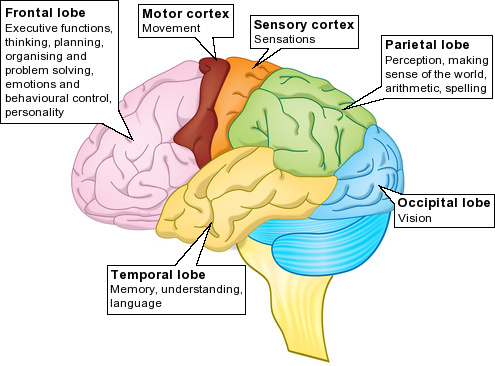
The Frontal lobe, located directly behind the forehead, involves several different functions but is concerned above all with judgment and behavior control, i.e., the ability to recognize the consequences of one’s actions and to avoid reckless and impulsive behavior inimical to one’s survival.

5.  A PORN ADDICTION  CASE  HISTORY

Before we go any further, it is necessary to convince the reader that porn addiction is indeed a serious problem—in fact, an epidemic unprecedented in human history.

Pornography is no longer the relatively mild aphrodisiac it used to be in the Summer of Love, 1967, when the Sexual Revolution first began to take off.  With the advent of the internet and the advance in audiovisual communications, its lethality has increased exponentially. Future advances in the area of holographic images and reality drugs threaten to make porn so irresistible to future generations that ordinary sex as we know it will pale into insignificance and fail to exercise its customary charms. Autoeroticism will then reign supreme; and the zombie sex addict, dead-eyed and drooling with unquenchable lust, will inherit the earth and turn it into a vast masturbatorium.

This is one vision of the sex dystopia to come: a science fiction nightmare that has every chance of being realized. This is a world in which only the sexually fit will survive as the masters, those schooled to self-discipline and impulse control. The weak-willed and degenerate will not necessarily die out. They will simply sink into the amorphous lumpenproletariat as permanent slaves.

I will now allow Dr Victor Cline to present one of his most revealing case histories of porn addiction:

One of my patients was so deeply addicted that he could not stay away from pornography for 90 days, even for $1,000. It is difficult for non-addicts to comprehend the totally driven nature of a sex addict. When the “wave” hits them, nothing can stand in the way of getting what they want—whether that be pornography accompanied by masturbation, sex from a prostitute, molesting a child, or raping a woman.

An example might help illustrate this problem. Ralph was a sexual addict, married 12 years with three children. He was active in his church and held sincere, high moral principles. He believed in the Ten Commandments and opposed adultery. Yet his particular cycle involved pornography use, followed by paid sex with prostitutes. After each incident, he begged God for forgiveness and swore that it would never happen again. But it did, again and again.

Since the trigger of each adulterous act was pornography-use, we decided to try to free him from his dependence on this material. I asked him to write me a check for $1,000, indicating that I would return it if he went 90 days without using pornography. Ralph loved to hang on to his money and was quite attracted to our strategy. “There’s no way I’d look at dirty videos or magazines if I knew it would cost me a thousand dollars!” he said.

He managed to resist temptation remarkably well for a while. But on the 87th day, he drove past an “adult” bookstore in an unfamiliar city while on a business trip. He slammed on the brakes, entered the store, and went virtually berserk for 90 minutes. When I saw him the following week, he tearfully confessed that he had lost his $1,000. Since he had gone 87 days “sober,” I decided to give him another chance.

So we started another 90-day “sobriety” cycle. We both felt that if he could go 87 days, he could certainly make 90 if we tried again, especially if it meant recovering his $1,000.

This time he went only 14 days before he relapsed. He lost his money, which was given to a charity. He was extremely committed to quit in order to save his marriage and to live in harmony with his religious principles. But that was not the case. In my opinion, even if he had given me $10,000, he still would have relapsed. When the wave hits them, these men are consumed by their appetite, regardless of the costs or consequences. Their addiction virtually rules their lives.  (See here)

Every act of masturbation to pornography draws the fish, so to speak, deeper and deeper into the net. Professor Donald L. Hilton, making use of the fish-in-net metaphor, explains the whole process in the technical language of science:

Pornography is a triple hook, consisting of cortical hypofrontality, dopaminergic downgrading, and oxytocin/vasopressin bonding. Each of these hooks is powerful, and they are synergistic. Pornography sets its hooks very quickly and deeply, and as the addiction progresses, it progressively tightens the dopamine drag until there is no more play in the line. The person is drawn ever closer to the boat and the waiting net.

The claim that pornography addiction can cause brain damage is admittedly still controversial at this time—see the section entitled ‘Frontal Lobe Damage’ here,written by practicing neurosurgeon and associate professor of Neurology, Donald L. Hilton, quoted above—but the claim that tobacco addiction could lead to lung cancer and heart disease was equally controversial when it was first aired. Nevertheless, given the neurobiological findings discussed above, there is little doubt that brain areas underlying sexual reward become structurally altered with the result that individuals are far more powerfully motivated by sexually arousing imagery. Whether one wants to call this brain damage seems moot. The main point is that the result is an exaggerated attraction to sexual reward at the expense of other emotions—in particular, love.

In any case, we are dealing here with an addiction that is arguably worse than crack cocaine or heroin addiction. This is not even controversial nowadays. It is a claim made so often by sex addiction therapists that no one who has researched the subject is surprised by it any longer.

6.  COCAINE AND METHAMPHETAMINE: THEIR ROLE IN PORN ADDICTION

Particular drugs potentiate sex. This is well known to anyone who has ever taken drugs. Under the influence of the drug, the intensity of the sex experience can be increased tenfold: becoming either sacred or satanic, divine or demonic, depending on one’s state of mind, but always piquant, frenzied, and quasi-mystical. Drug addiction and sex addiction therefore often go together, intensifying each other and making the sex junkie’s dual addiction an exquisite pleasure indistinguishable from a stabbing pain.

Two of the most potent aphrodisiacs in use today are cocaine and methamphetamine. The easy availability of these drugs nowadays has increased not only the number of sex addicts in society but also the intensity of their addiction. It will be found that both cocaine and methamphetamine are used extensively in combination with pornography. The result is compulsive masturbation on an epic scale, such as few societies in the past have ever known. Indeed, ours is the first civilization in history to make masturbation a competitive sport.

For centuries, cocaine has been known for its potent aphrodisiacal properties. In fact, one of the reasons people take cocaine it is to get a sexual “super high”. In the early 1900s, cocaine gained notoriety for its ability to induce “sexual frenzy” and “uncontrollable lust” in the stereotypical “dope fiend”. Today, in San Francisco and other big cities, cocaine is openly sold in gay bathhouses where it leads to suicidal unprotected sex:

In my own city, Toronto, promiscuous unsafe sex is a popular feature of the bathhouses which have been springing up over the past few years. Some of them are now licensed to sell beer, which they supplement, unofficially, with poppers and crack cocaine (smoke it in your room) as additional perks.

Methamphetamine (“meth”) would appear to be an even stronger aphrodisiac. This is more popular with women than cocaine because it produces rapid weight loss, at any rate initially. Common features found among both cocaine and methamphetamine addicts are communal orgies, sex binges, and bouts of compulsive masturbation with the help of pornography. (See here)

The trajectory of the typical methamphetamine addict is particularly grim. No amount of orgiastic sex will compensate for the ravages of time.
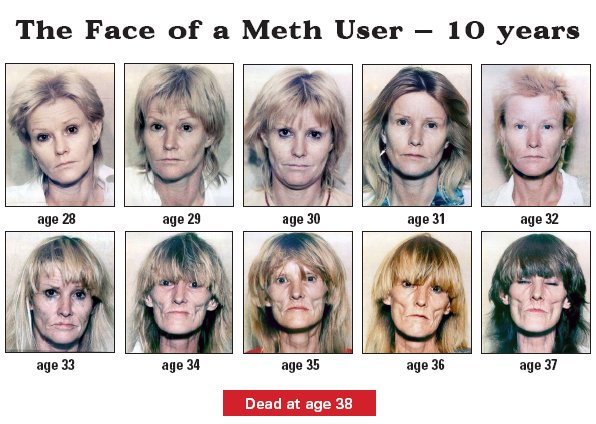
It is not without significance that the sex-obsessed Satanist Aleister Crowley and the Father of the Sexual Revolution, Sigmund Freud, were both cocaine addicts. Here is Crowley waxing eloquent on cocaine in the context of “sex magick.” Freud, whose early psychoanalytical theory was reportedly a by-product of his cocaine use, recommended cocaine as an analgesic and antidepressant while discreetly omitting to mention its aphrodisiacal qualities.

A bizarre added feature found in cocaine addicts, seldom mentioned outside specialist publications, is that this is one drug that often manages to turn heterosexual males into homosexuals—even against their natural inclinations and much to their subsequent disgust. Gay porn apparently does the trick, easing the way into homosexuality for the doped-up male heterosexual. Straight females, it is said, can take cocaine without necessarily becoming lesbians. I personally doubt this. My own experience in observing others convinces me that bisexuality can be induced in both sexes by a combination of drugs and sex.

Chronic high doses of cocaine [we are told] can result in aberrant sexual behavior such as compulsive masturbation and multiple partner marathons. The disinhibiting effects of cocaine or methamphetamine open the flood gates to sexual adventurousness. Only under the influence of cocaine or methamphetamine do some heterosexuals engage in homosexual fantasies and behaviors….

The combination of stimulant drug use and sex, two extremely potent reinforcers, creates a “super high” that is more addicting than the drug use alone. For these individuals, drugs and sex are inseparable….

Similar to cocaine but even more dramatically, methamphetamine increases sex drive, lowers inhibitions, delays orgasm, and improves sexual performance in many users. The aphrodisiacal effects of methamphetamine are considerably longer lasting than those of cocaine … it [is] especially appealing to individuals seeking prolonged, highly erotic, and uninhibited sexual experiences….

An interesting phenomenon noted many years ago by one of the present authors, but discussed rarely in the literature, is the ability of cocaine to stimulate homosexual fantasies and engender homosexual behaviors in men who identify themselves as heterosexual. These men report that when high on cocaine, they experience erotic fantasies to have sex with other men. This may lead to a pattern of compulsive masturbation [while] viewing gay male pornography, or to sexual encounters with gay male prostitutes, often transvestites known as “shemales” or “half and halves”— men who have a female persona and breast implants, but male genitalia.

After the drug wears off, many of these men report feeling extremely dysphoric and upset about their homosexual behavior. Many experience intense feelings of shame. It appears that the overwhelming majority of these men are fundamentally heterosexual. (See here)        

7.  CONCLUSION

That pornography damages the character, weakens the will, and produces sexual deviance in those it infects, can no longer be doubted. That it can even, under the influence of drugs such as cocaine, occasionally turn heterosexuals into homosexuals, is an even more sinister development.

That long-term pornography use, accompanied by compulsive masturbation, actually causes structural changes in the brain is now beyond dispute. Whether this amounts to “brain damage” in the classic sense is a contentious issue and will be hotly denied by the Masturbation Lobby and all those who believe, erroneously, that masturbation is a stress reliever and a cure for depression. Porn addiction and its invariable accompaniment, compulsive masturbation, are in fact stress increasers. They are often found as major symptoms in obsessive-compulsive disorders. Far from relieving depression, they intensify it. Indeed, they are all too often the underlying cause of the depression in that they generate a huge loss of self-esteem. These are truisms, patently obvious to all except the merchants of lies.

Meanwhile, there is little doubt that the virulent sex epidemic we witness all around us is a deliberately planned sex psyop. This is what governments want. The Puppet Masters who pull the hidden strings of our Western regimes, all masquerading as democracies, have managed to manufacture exactly what we see when we look around us: widespread neurosis, mass misery, the collapse of moral values, Christianity in ruins, and the coarse brutalization of the common man.

No need for gulags for those who consent to their own chains.

End of Part 2 of 2.

Filed Under: Sexual Purity Posts Tagged With: addiction, affair, Affairs, anonymous sex partners, call girls, castimonia, christian, escorts, gratification, healing, human trafficking, Intimacy, lust, masturbation, porn, porn star, pornography, pornstar, pornstars, prostitute, prostitutes, purity, recovery, Sex, sex addict, sex addiction, sex partners, sexual, sexual addiction, sexual impurity, sexual purity, STD, strippers, trauma

June 3, 2013 By Castimonia

Pornography’s Effect on the Brain, Part 1

Disclaimer from the leaders of Castimonia.  Although we agree with the author’s general assessment that pornography can have negative consequences on the human brain, we do not endorse, agree, nor disagree with Dr. Darkmoon’s personal thoughts and feelings on human sexuality or the site to which this article was originally posted.  I have removed any triggering links.

Pornography’s Effect on the Brain, Part 1
by Dr. Lasha Darkmoon
September 28, 2012

NEMO REPENTE FUIT TURPISSIMUS“No one became extremely wicked all at once.” — Juvenal, Satires

The aim of this essay is a controversial one: to provide evidence in support of the thesis that porn addiction, especially when accompanied by compulsive masturbation over a long period, alters brain chemistry and can eventually produce brain damage. This is not a conspiracy theory. It is an intellectually defensible thesis for which there is now a growing body of scientific evidence.

Perhaps the quickest way to tame and tranquilize an unruly nation is to turn its citizens into sex addicts: for just as children are easily taken in by predators who tempt them with candy, most people are only too pleased to live under governments that offer them the seductive pleasures of porn: that is to say, cheap and easy orgasms as substitutes for happiness.

Sex addiction, especially when fueled by internet pornography, has been likened to crack cocaine or heroin addiction, only much worse. It allows its victims no respite. It is a sickness of the soul that drives many to suicide, transforming its worst sufferers, like Ted Bundy and Gary Bishop, into serial killers. (See here and here).

The striking similarity between orgasm and the heroin rush was confirmed in 2003 when Dutch scientist Gert Holstege announced in a press release relating to his research that brain scans of orgasm resembled brain scans of shooting heroin. Laboratory rats know all about this, as a famous experiment in the 1950s by James Olds and Peter Milner conclusively demonstrated.

1.  UNDERSTANDING  BEHAVIOR  MODIFICATION

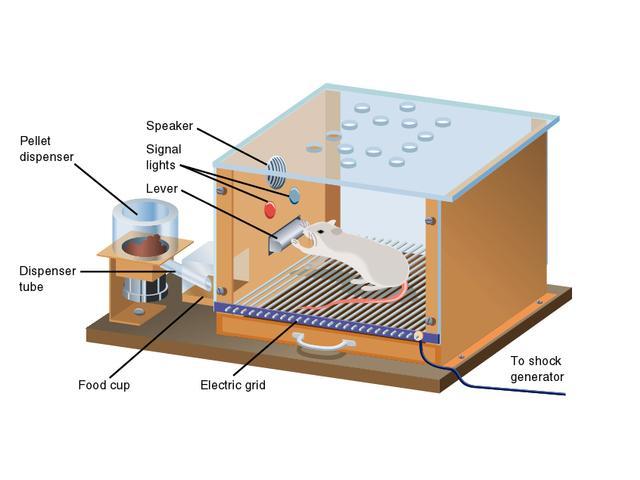
Rats go into a veritable frenzy pressing levers (in Skinner boxes) in order to give themselves powerful pleasurable sensations, even if it means depriving themselves of food and life. “Some rats,” we are told, “would self-stimulate as often as 2000 times per hour for 24 hours, to the exclusion of all other activities. They had to be unhooked from the apparatus to prevent death by self-starvation. Pressing that lever became their entire world.”

In a subsequent related experiment involving humans, a woman suffering from severe pain was allowed to stimulate the pleasure centers of her brain by turning an amplitude dial: so much so that she developed a chronic ulceration at her fingertip. She became so addicted to erotic self-stimulation that she had to beg her family to limit her access to the stimulator.

OPERANT CONDITIONING CHAMBER OR “SKINNER BOX”

American behaviorist psychologist BF Skinner (1904-1990) devised the operant conditioning chamber or Skinner box in the early 1930s. His object was to experiment with behavior modification in animals and then apply the same results to human beings. His major discovery was the concept of reinforcement: behavior that receives positive reinforcement (reward) tends to be repeated and strengthened, and behavior that receives negative reinforcement (punishment) tends to be extinguished. When placed in the Skinner box, the rat will learn to press a lever. This will trigger a reinforcing stimulus such as food or water, or a punishing stimulus such as an electric shock. The rat will rapidly learn to press the right lever and avoid the wrong one. In short, good habits can be acquired and bad habits destroyed in a systematic and scientific way under laboratory conditions.

Seven important points are worth noting here. These will allow the reader to trace the connection between operant conditioning and porn addiction.

(1) In the 1950s, psychologists James Olds and Peter Milner made a vitally important breakthrough in behavior modification research: they introduced innovations to the Skinner box so that the lever, instead of delivering food pellets when pressed, would now deliver direct brain stimulation through electrodes planted deep in the brain. Rats would now press the lever as many as 7000 times an hour to stimulate the pleasure centers of their brains. All other activities, including eating and drinking, were neglected. Every single moment was spent in pleasurable self-stimulation.

(2) How does this relate to porn addiction? Quite simply, the porn addict is behaving exactly like the rat in a Skinner box. His lever is masturbation, and his positive reinforcement or reward is the orgasm. His addiction is the result of self-imposed operant conditioning, i.e., he is conditioning himself without knowing it. The buildup to orgasm and the orgasm itself is accompanied by direct brain stimulation through the release of psychotropic chemicals into the bloodstream, especially dopamine, that produce precisely the same feelings of elation and euphoria in the porn addict which the rat experiences by the stimulation of the electrodes implanted in its brain.

(3) What triggers the release of the psychotropic chemicals into the bloodstream? The exciting erotic images. So it goes like this: Erotic mind pictures —> trigger psychotropic chemicals  —> which stimulate the pleasure centers of the brain —> which in turn produces obsessive-compulsive behavior (or addiction) in an attempt to relive the pleasurable sensations  —> which finally cause neuroplastic changes in brain structure as a result of constant chemical bombardment.

(4) Further brain research was to give rise to truly spectacular results in behavior modification, but this was at the cost of “deeply unethical experiments”, to quote one politically correct academic researcher. This research, conducted by two daring and enterprising scientists called Drs. Moan and Heath, was abruptly halted because, among other things, it had come up with a possible cure for homosexuality. Moan and Heath had obtained permission to engage the services of a hooker to see if she could turn on a confirmed homosexual male in the laboratory. Initially, the sight of this sexy young woman not only left patient B-19 completely cold but actually disgusted him. He found the idea of having sex with an attractive female quite repulsive. However, on being wired up and having the pleasure centers of his brain stimulated with electrodes, while the hooker proceeded to perform her tricks on him, patient B-19 began to perk up and soon experienced an impressive  erection. “And then, despite the milieu and the encumbrance of the electrode wires [poor B-19 was attached to an EEG machine the whole time], [Triggering Language Removed].”

(5)  Needless to say, such experimentation could not be allowed to continue, even with B-19’s full consent and cooperation and even though many homosexuals might want to become heterosexual and start families. It was political dynamite. So the experiments were abruptly halted, with Drs. Moan and Heath receiving a sharp rap on the knuckles and the stern disapproval of their politically correct peers. Since we are expected to believe that homosexuality is as “normal” and “healthy” a practice as heterosexuality, it follows that it is deeply offensive and “homophobic” to suggest that homosexuals might want to undergo heterosexual conditioning to “normalize” them. Even if they should wish to become heterosexuals, they should not be allowed to do so “on ethical grounds.” After all, one does not allow people to self-mutilate or commit suicide. One needs to protect them from themselves. In the same way, homosexuals, for their own good, need the state to protect them from the threat of heterosexuality.

(6)  The blocking of research into sensitive areas of behavior modification for political reasons has had far-reaching consequences which cannot be discussed here in detail. Suffice to say that if it is considered “ethically wrong” (= politically incorrect) to permit research that would yield an effective cure for homosexuality, then huge sacrifices in knowledge are deliberately being made in order to maintain the status quo on behalf of a corrupt elite—an elite that is not only against the idea of heterosexualizing gays but is actually committed to the homosexualization of America … beginning with the homosexualization of children and their corruption by exposing them to child porn in the classroom.

(7)  It is clear that successful behavior modification could, in theory, produce a Utopian society of model citizens. There need be no more sociopathic and criminal behavior in society, no more personality disorders, no more phobias and manias, no more neuroses, no more depression, no more crippling addictions to drugs, alcohol, gambling, sex, eating, shopping, and self-harming.  Such vast improvements in the mental health of society clearly cannot be permitted. If there were no more criminals, what would the police and legal profession do? There would no longer be a need for their services. Thatcannotbe allowed. They need criminals. Fighting crime is their job. Similarly, if there are no more sick people, what would Big Pharma and the medical profession do? They need sick people. Fighting sickness is their job. A sad situation indeed when the greatest threat to the established order is a Utopian society of model citizens who have nothing wrong with them! Perfection, if it were ever achieved, would have to be banned.

2.  PORN ADDICTION COMPARED TO HEROIN OR CRACK COCAINE ADDICTION

Columbia university neurologist Dr Norman Doidge, in his book The Brain That Changes Itself, describes how pornography causes rewiring of the neural circuits. He notes that in a study of men viewing internet pornography, the men looked “uncannily” like rats pushing the levers in experimental Skinner boxes. “Like the addicted rats,” Dr Doidge points out, “the men were desperately seeking their next fix, clicking the mouse just as the rats pushed the lever.”

All addictions, Dr Dodge tells goes on to tell us, cause “lifelong, neuroplastic changes in the brain.” This includes porn addiction:

Dopamine is also involved in plastic change. The same surge of dopamine that thrills us also consolidates neuronal connections. An important link with porn is that dopamine is also released in sexual excitement, increasing the sex drive in both sexes, facilitating orgasm, and activating the brain’s pleasure centers. Hence the addictive power of pornography.

The men at their computers looking at porn were uncannily like the rats in the cages of the NIH, pressing the bar to get a shot of dopamine or its equivalent. Though they didn’t know it, they had been seduced into pornographic training sessions that met all the conditions required for plastic change of brain maps. Since neurons that fire together wire together, these men got massive amounts of practice wiring these images into the pleasure centers of the brain, with the rapt attention necessary for plastic change.

They imagined these images when away from their computers, or while having sex with their girlfriends, reinforcing them. Each time they felt sexual excitement and had an orgasm when they masturbated, a “spritz of dopamine,” the reward neurotransmitter, consolidated the connections made in the brain during the sessions. (See here)

It is in this way that pornography becomes a serious addiction, comparable to heroin or crack cocaine addiction, and begins its slow and deadly assault on the brain.  And as other research has shown, it facilitates callousness in sexual relationships—sex completely divorced from love and an interest in family and children.

3.  PORNOGRAPHY AND BRAIN DAMAGE: IS THERE A LINK?

Recent research has shown that pornographic images become permanently embedded in the brain, releasing large amounts of naturally occurring chemicals into the bloodstream: e.g., dopamine, epinephrine, oxytocin, serotonin, vasopressin, prolactin, and enkephalins or endogenous opiods, i.e., the brain’s own endorphins. People who view porn obsessively become literally intoxicated: drunk with an overdose of psychotropic chemicals. These mind-altering substances are now known as erototoxins, a relatively recent neologism meaning “sex poisons”. This poison-bearing pornography, it has been shown in recent laboratory tests,“actually alters brain chemistry”and will in time produce brain damage.

Just as alcohol in large quantities consumed over a long period will damage the liver and kidneys, and just as long-term tobacco addiction will adversely affect the  lungs and cardiovascular system, so highly charged erotic imagery accompanied by compulsive masturbation can eventually, it is argued, lead to chemico-biological brain damage. This will of course be strenuously denied by the Masturbation Lobby, but the claim has nevertheless been made by responsible medical researchers.

Dr. Gary Lynch, a neuroscientist at the University of California at Irvine, in discussing the effect that a single highly erotic image can have on the brain, points out ominously:  “What we are saying here is that an event which lasts half a second [image imprint], within five to ten minutes has produced a structural change that is in some ways as profound as the structural changes one sees in [brain] damage.” (See here)

Dr Judith Reisman goes one step further. She refers to this brain damage as “brain sabotage”, thereby implying that pornographers are in fact engaged in a species of “sex terrorism”. She asks:

How does this “brain sabotage” occur? Brain scientists tell us that “in 3/10 of a second a visual image passes from the eye through the brain, and whether or not one wants to, the brain is structurally changed and memories are created; ‘we literally grow new brain’ with each visual experience.” Children and others who cannot read can instantly decode and experience images…. In fact, erotic (any highly arousing) images commonly subvert left hemisphere cognition.

Dr. Jeffrey Satinover, Psychiatrist and Professor at Princeton University, in his testimony to a Senate subcommittee on pornography toxicity, expresses himself even more forcefully:

Like cigarettes, that particular form of expression we call pornography is a delivery system that has a distinct and powerful effect upon the human brain and nervous system. Exactly like cigarettes, this effect is to cause a powerful addiction. Like any other addiction, the addiction is both to the delivery system itself—the pornography—and to the chemicals that the delivery system delivers.

It may seem surprising that I should speak of “chemicals,” when one might be thinking instead of “sex.” But, in fact, modern science allows us to understand that the underlying nature of an addiction to pornography is chemically nearly identical to a heroin addiction. (Emphasis added)

The pornography addict soon forgets about everything and everyone else in favor of an ever more elusive sexual jolt. He will eventually be able to find it only among other “junkies” like himself, and he will place at risk his career, his friends, his family. He will indulge his habit anywhere and everywhere, at any time. No one, no matter how highly placed, is immune. (See here)

Porn addiction, we are told by practicing neurosurgeon Donald L. Hilton, Jr., MD, produces long-term brain damage in which

the frontal lobes atrophy or shrink. Addiction scientists have called this condition hypofrontality and have noted a similarity in the behavior of [porn] addicted persons to the behavior of patients with frontal brain damage… [which] can also result from a car wreck.

All addictions create, in addition to chemical changes in the brain, anatomical and pathological changes which result in various manifestations of cerebral dysfunction collectively labeled hypofrontal syndromes. In these syndromes, the underlying defect, reduced to its simplest description, is damage to the “braking system” of the brain.

They are well known to clinical neuroscientists, especially neurologists and neurosurgeons, for they are also seen with tumors, strokes, and trauma. Indeed, anatomically, loss of these frontal control systems is most apparent following trauma, exemplified by progressive atrophy of the frontal lobes seen in serial MRI scans over time.

Not a peep of any of this in the mainstream media. You don’t need three guesses to know why. The world porn industry generates $97 billion a year in revenues. If porn damages your brain, this is the last thing the wealthy elitists who run the world and control the mass media would wish to tell you. “The publishing industry is now heavily involved in pornography,” Dr E. Michaels Jones points out, “and it is not in their interests to explain to the public that they are in the business of enslaving people.” (p.560)

Is one a Victorian prude for suggesting there is something seriously amiss here? The simple fact is that one awkward question remains unanswered by all these self-appointed “sex experts”—many of them egregious frauds and sexual perverts like Kinsey and Reich—and it is this: how can all this compulsive masturbation and porn consumption be good for you if they end up damaging your brain?

Masturbation doesn’t necessarily make you blind. Let’s hope it doesn’t. Maybe it’s not the eyes, but the brain, that ardent aficionados of the solitary vice need to worry about.

End of Part 1;

Filed Under: Sexual Purity Posts Tagged With: addiction, affair, Affairs, anonymous sex partners, call girls, castimonia, christian, escorts, gratification, healing, human trafficking, Intimacy, lust, masturbation, porn, porn star, pornography, pornstar, pornstars, prostitute, prostitutes, purity, Sex, sex addict, sex addiction, sex partners, sexual, sexual addiction, sexual impurity, sexual purity, STD, strippers, trauma

May 31, 2013 By Castimonia

Addiction

Originally posted by Brain for Business

Addiction: a life long illness not lifestyle choice

Addiction is a major health problem that costs as much as all other mental illnesses combined (about £40 billion per year) and about as much as cancer and cardiovascular disorders also.

At its core addiction is a state of altered brain function that leads to fundamental changes in behavior that are manifest by repeated use of alcohol or other drugs or engaging in activities such as gambling. These are usually resisted, albeit unsuccessfully, by the addict. The key features of addiction is therefore a state of habitual behaviour such as drug taking or gambling that is initially enjoyable but which eventually becomes self-sustaining or habitual. The urge to engage in the behaviour becomes so powerful that it interferes with normal life often to the point of overtaking work, personal relationships and family activities. At this point the person can be said to be addicted: the addict’s every thought and action is directed to their addiction and everything else suffers.

If the addictive behaviour is not possible e.g. because they don’t have enough money then feelings of intense distress emerge. These can lead to dangerously impulsive and sometimes aggressive actions. In the case of drug/alcohol addiction the situation is compounded by the occurrence of withdrawal reactions which cause further distress and motivate desperate attempts to find more of the addictive agent. This urge to get the drug may be so overpowering that addicts will commit seemingly random crimes to get the resources to buy more drug. It has been estimated that about 70% of all acquisitive crime is associated with drug and alcohol use.

Addiction is driven by a complex set of internal and external factors. The external factors are well understood: the more access to the desired drug or behaviour e.g. gambling the more addiction there is.

The internal factors are less clear. Although most addiction is to alcohol and other drugs, addiction to gambling and other behaviours such as sex or shopping can occur. These tell us that the brain can develop hard-to-control urges independent of changing its chemistry with drugs. All addictions share a common thread in that they are initially pleasurable activities, often extremely enjoyable. This results in these behaviours hijacking the brain’s normal pleasure systems so that naturally enjoyable activities such as family life, work, exercise become devalued and the more excessive addiction behaviours take over.

However, not everyone who engages in drug use or gambling becomes addicted to them so clearly other factors are important. These are not yet understood but are now being actively studied. Some people may be particularly sensitive to the pleasurable effects of alcohol, drugs or gambling, perhaps because of coming from deprived backgrounds. In others, addiction may occur because of an inability to adopt coping strategies. Others may have an underlying predisposition to develop compulsive behaviour patterns. Some unfortunate people may have several of these vulnerability factors and there are also genetic predispositions to some of them.

Also a significant amount of drug use is for self-medication, examples include cannabis for insomnia, alcohol to reduce anxiety, opioids for pain control etc. This therapeutic use can escalate into addiction in some people though by no means all. Not all drugs which are used for recreational purposes are addictive. LSD and magic mushrooms seem not addictive at all, and some have a low risk of addiction (MDMA/ecstasy; cannabis). The most addictive drugs are nicotine, heroin and crack cocaine plus metamfetamine (crystal meth) although this is not much used in the UK.

Just because some people – including leading politicians – have used drugs but stopped before they became addicted does not mean that anyone can stop that easily. Starting to use drugs may be a lifestyle choice but once addiction sets in, choosing to stop is very much more difficult if not impossible.

We are beginning to understand how addictions start in the brain. The pleasurable or rewarding effects of addictions are mediated in the brain through the release of chemicals such as dopamine [by cocaine, amphetamines, nicotine] or endorphins [heroin] or both [alcohol]. The pleasures are then laid down as deep-seated memories, probably through changes in other neurotransmitters such as glutamate and GABA that make memories. These memories link the location, persons and experiences of the addiction with the emotional effects. These memories are often the most powerfully positive ones the person may ever experience, which explains why addicts put so much effort into getting them again. When the memories re-occur, which is common when people are still using drugs or gambling, as well as when in recovery/abstinence, they are experienced as cravings. These can be so strong and urgent that they lead to relapse.

A great deal of research has been conducted into the role of dopamine in addiction and we now know that the number of dopamine receptors seems to predispose to excessive pleasure responses from stimulant use. This excessive response is thought to initially occur in the reward centre of the brain – [the nucleus accumbens] – but then move into other areas where habits are laid down. This shift from voluntary (choice use) to involuntary (habit-use) explains a common complaint of addicts that they don’t want to continue with their addictions, and even that they don’t enjoy them anymore, but cant stop themselves. In this sense addiction can be seen as a loss-of-control over what starts out as a voluntary behavior. Thus addiction is not, as some like to suggest, simply a “lifestyle” choice. It is a serious, often lethal, disease caused by an enduring (probably permanent) change in brain function.

We know that personality traits especially impulsivity, predict excess stimulant use and in animals this can be shown to correlate with low dopamine and high opioid receptor levels. Similarly in humans low dopamine and high opioid receptor levels in brain predict drug use and craving. These observations give new approaches to treatment, both psychological interventions such as behavioural control, and anti-impulse drugs such as those used for ADHD e.g. atomoxetine and modafinil, are being tested.

For some addictions, especially heroin, the risk to the addict (life expectancy less than that from many cancers) and to society (from crime and infections), is so high that the prescription of substitute opioid drugs or even heroin itself saves lives and reduces crime. These substitute drugs are methadone and buprenorphine [Subutex]. As well as reducing crime and social costs by removing the need for addicts to commit offences to feed their habit, they also protect from accidental overdose and reduce risk of infections such as HIV and hepatitis. Similar substitute pharmacological approaches exist for other addictions e.g. gammahydroxybutyrate (Alcover) and baclofen for alcohol addiction, and varenicline (Champix) for nicotine dependence.

Another major reason for relapse in addiction is stress. This may work through increasing dopamine release in brain so priming this addiction pathway or by interactions with other neurotransmitters such as the peptide substance P. As antagonists of these neurotransmitters are now available they are being tested in human addictions and may offer an alternative to substitution treatments.

Filed Under: Sexual Purity Posts Tagged With: addiction, affair, Affairs, alcohol, alcoholic, anonymous sex partners, brain, call girls, castimonia, christian, cocaine, crack, dopamine, escorts, father wound, gratification, healing, heroin, human trafficking, Intimacy, lust, masturbation, meth, porn, porn star, pornography, pornstar, pornstars, prostitute, prostitutes, ptsd, purity, recovery, Sex, sex addict, sex addiction, sex partners, sexual, sexual addiction, sexual impurity, sexual purity, spouses, STD, stress, strippers, trauma

May 28, 2013 By Castimonia

A Few Real Statistics About the Adult/Porn Entertainment Industry

There was a time in my life, deep in my addiction, that I glamorized the pornography / adult entertainment industry.  I am very grateful that I entered recovery and that God opened my eyes to the reality of the porn industry and the truth about how horrible and evil it truly is.  If you have any thoughts or fantasies about the porn industry or the actors in that industry, I hope these facts and statistics open your eyes.

  • Only 17% of performers use condoms in heterosexual adult films; in 2004, only two of the 200 adult film companies required the use of condoms
  • One male pornographic performer, R**** (600 films and 3,000 women), said: “Every professional in the porn-world has herpes, male or female.”
  • Dr. S***** M******* confirms the STD prevalence in an interview with Court TV, in which she states: “66% of porn performers have Herpes, 12-28% have sexually transmitted diseases, and 7% have HIV.”
  • Porn actress E*** M**** admits, “the drugs we binged on were Ecstasy, Cocaine, Marijuana, Xanax, Valium, Vicodin and alcohol.”
  • T**** B*******, formerly known as J***** J****, says, “Guys are punching you in the face. You get ripped. Your insides can come out of you. It’s never ending. You’re viewed as an object—not as a human with a spirit. People do drugs because they can’t deal with the way they’re being treated.”
  • In 2004, Dr. Mary Anne Layden reported before a Senate subcommittee: “Once [the pornography actresses] are in the industry they have high rates of substance abuse, typically alcohol and cocaine, depression, borderline personality disorder. . . . The experience I find most common among the performers is that they have to be drunk, high or dissociated in order to go to work. Their work environment is particularly toxic. . . . The terrible work life of the pornography performer is often followed by an equally terrible home life. They have an increased risk of sexually transmitted disease including HIV, domestic violence and have about a 25% chance of making a marriage that lasts as long as 3 years.”
  • In 1997, Eric Schlosser reported, “The highest-paid performers, the actresses with exclusive contracts, earn between $80,000 and $100,000 a year for doing about 20 sex scenes and making a dozen or so personal appearances. Only a handful of actresses—perhaps 10 to 15—are signed to such contracts. Other leading stars are paid roughly $1,000 per scene. The vast majority of porn actresses are ‘B girls,’ who earn about $300 a scene. They typically try to do two scenes a day, four or five times a week. At the moment, there is an oversupply of women in Southern California hoping to enter the porn industry. Overtime is a thing of the past, and some newcomers will work for $150 a scene.”

Human beings being reduced to nothing more than sexual parts for the pleasure of those that drive the pornography industry – the consumers/viewers of pornography.  Although I would like for the government to place regulations on pornography including filters on all computers, it is up to the rest of us to educate our friends, family, and children on the ills of pornography.  It is my mission, as a leader of Castimonia, to help cut the demand for pornography, one man at a time, with the hope to reduce the supply.

Filed Under: Sexual Purity Posts Tagged With: addiction, affair, Affairs, anonymous sex partners, call girls, castimonia, christian, cocaine, drug use, drugs, ecstasy, escorts, gratification, healing, herpes, HIV, human trafficking, lust, marijuana, masturbation, meeting, porn, porn star, pornography, pornstar, pornstars, prostitute, prostitutes, ptsd, purity, recovery, Sex, sex addict, sex addiction, sex partners, sexual, sexual addiction, sexual impurity, sexual purity, spouses, STD, strippers, trauma, valium, xanax

May 22, 2013 By Castimonia

Pornography Fueling Human Trafficking

Pornography Fueling Human Trafficking
Posted by Ferrell

Attention: Pornography is causing more pain and suffering than many imagine. The Internet is the latest means of encouraging sexual fantasies, but the devastating impact of pornography is anything but a fantasy. There are victims, real victims.

Ken Camp of the Baptist Standard has written a helpful story that connects pornography to human trafficking. Ken covered a recent “Freedom Ring” event at First Baptist Church of Commerce that dealt with trafficking. Freedom Ring is an alliance of Christians against human trafficking, and the Texas Baptist Advocacy/Care Center and Woman’s Missionary Union of Texas are key partners in the effort.

Pornography represents a form of commercial sexual exploitation with “branches and tentacles that reach into our homes,” said Noel Bouché, vice president of PureHope. Pornography constitutes 10 percent of the Internet’s content, and its creators use trafficking victims—many of them minors—in porn production, Noel Bouché, vice president of PureHope, told the Commerce gathering.

There is an evil at work here that is hard to comprehend, and it’s fueled by money, much of it paid by viewers of pornography.

Christians need to realize the magnitude of the commercial sex industry,  said Tomi Grover, founder of TraffickStop, which is supported by the Texas Baptist Cooperative Program and the Mary Hill Davis Offering for Texas Missions.

“Pornography in the United States makes more than the National Football League. It makes more than Major League Baseball. It makes more than the National Basketball Association. In fact, it makes more than all three combined,” Grover said.

“It’s a global problem that’s happening in our own country and that’s being channeled into every home,” Bouché said.

Grover made a staggering comment. ”The average age of exposure to pornography is 8 years old,” she said. “Exposing children to porn is like putting their brains on opiate drugs.”

Bouché urged Christians to pursue a four-fold response–pray, understand, resolve, and engage.

Why respond? Because Scripture teaches that every person is his or her brother’s keeper, and God hears the cry of the oppressed, said Van Christian, pastor of First Baptist Church in Comanche. Churches cannot escape their responsibility to God when it comes to responding to issues of trafficking and sexual exploitation.

The Baptist Standard story provides more detail on the conference.

This needs to be talked about in our churches–from the pulpit and in smaller groups. It’s not easy to talk about, but the need is there. People are hurting and suffering. We need to care enough to do something.

Filed Under: Sexual Purity Posts Tagged With: addiction, affair, Affairs, anonymous sex partners, call girls, castimonia, christian, escorts, gratification, healing, Intimacy, lust, masturbation, porn, porn star, pornography, pornstar, pornstars, prostitute, prostitutes, ptsd, purity, recovery, Sex, sex addict, sex addiction, sex partners, sexual, sexual addiction, sexual impurity, sexual purity, spouses, STD, strippers, trafficking, trauma

  • « Go to Previous Page
  • Page 1
  • Interim pages omitted …
  • Page 308
  • Page 309
  • Page 310
  • Page 311
  • Page 312
  • Interim pages omitted …
  • Page 342
  • Go to Next Page »

Footer

Useful Links

Castimonia Restoration Ministry, Inc. is a 501c3 non-profit organization


This site is intended for individuals who struggle with maintaining sexual purity. This information is posted for individuals at various stages in their recovery, year 1 to year 30+; what applies to some, may not apply others. Spouses are encouraged to read this blog with the caveat that they may not agree with, understand, or know the reason for some items posted. As always, take what you like and leave the rest.

Copyright © 2026 Castimonia Restoration Ministry


Loading Comments...