• Skip to main content
  • Skip to footer

CASTIMONIA

Sexual Purity Support & Recovery Group

  • Home
  • About Castimonia
    • Statement of Faith
    • Member Struggles
    • Are You a Sex Addict?
    • About the Leaders of Castimonia
  • Meetings
    • What to Expect at a Castimonia Meeting
    • Meeting Times & Locations
      • Alaska Meetings
      • Arkansas Meetings
      • Mississippi Meetings
      • New York Meetings
      • Ohio Meetings
      • Tennessee Meetings
      • Texas Meetings
      • Telephone Meeting
      • Zoom Online Meetings
  • News & Events
  • Resources
    • Books
    • Document Downloads
    • Journal Through Recovery
    • Purity Podcasts
    • Recovery Videos
    • Telemeeting Scripts
    • Useful Links
  • Contact Us

sex addict

September 24, 2019 By Castimonia

Reality! Who needs it?

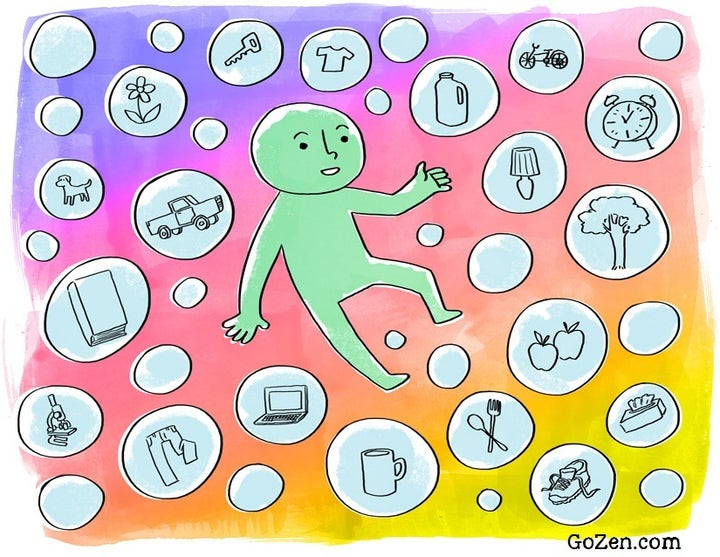
Individuals in recovery have generally spent a lot of time avoiding their painful, shameful or fearful reality. Using chemicals, relationships, busyness, spending, eating, not eating, fantasy, gambling, sex, etc. to escape reality.

What is your reality anyway?

As a baby, your brain was in a receptive mode and you downloaded and duplicated everything around you. As you grew up, you kept imprinting within you, all of the thoughts, feelings, beliefs, and things that happened and you became you.

From Pia Mellody’s Model of Developmental Immaturity, we learn that this programming creates a belief system. You interpret everything that you perceive through your own belief system, particularly as you interact with others. That’s why people frequently disagree about a shared experience. For example, let’s say that Jason had a disagreement with his sister while they were at a social event and shared about it with several friends. Sara identifies with Jason’s sister, feels empathy, and defends her. Jennifer is reminded of being embarrassed by her mother in public and feels pain and shame. Mark feels annoyed about the very topic of conversation and thinks about something else. Everyone has his or her own reality.

In emotional recovery work, it is extremely helpful to understand your reality and how to work with it. First, your reality is your experience in the present moment and includes your body, thoughts, feelings, and behaviors. Think of a recent time when you felt reactive in an interaction with someone and experienced some strong feelings come up. Now, breathe, take a moment, and fully experience the sensations in your body. Those sensations inform you about your feelings. Identify what the feelings are. Is it pain, hurt or sadness, or is it fear or anger? If you are not used to identifying your feelings, it can take some practice. Truthfully, your feelings are generated by the thought you had. When you are reactive, it’s hard to think straight and it can take some time to identify what the actual thought was, or where in your history it originated.

The most helpful way to think about this is with curiosity and owning it rather than judging yourself or blaming someone else. You are in a disempowered victim mode when you blame someone else for your reaction and that keeps you stuck. When you own that your reaction came from your own programming, then you are empowered to understand yourself better and can change.

So how do we do that? How do we change our reactivity, our thoughts, and feelings, and why go through the trouble?

Scott Peck wrote, “Mental health is staying in REALITY at all costs.” You’ve had those experiences when you are fully present, connected with yourself, aware of your senses, and feeling alive. Joy, passion, love, and the sense of connection with yourself are present moment experiences. You miss out on life when you are not present. Everyone checks/spaces-out at times; it is the human condition. However, the more present you are, the happier and healthier you will be.

Here are the steps to working with your reality when you are triggered or become reactive:

  • Take slow deep breaths and be curious about what you are experiencing and why it is coming up.

  • Notice and describe to yourself the sensations you are feeling in your body and identify the emotional feeling word or words that fit. (Hurt, fear, anger, irritation, shame, guilt, for example.)

  • Stay present and curious about the feelings or issues that are underneath the surface feelings. It could be abandonment, feeling threatened or unsafe, used or manipulated, blamed, shame, guilt, or a memory of an incident from your past. You could discuss this with a therapist.

  • When appropriate, you can own your own experience in the present moment and share it with that person you were reactive to by using your talking boundary. For example, in the previous story, Jennifer becomes very quiet and moody. She might share with Jason, “When I heard you say that your sister made a scene at the family dinner, what came up for me was a time when my mother was embarrassingly loud and rude in public and I’m feeling some shame and pain.” In sharing her reality in this manner, Jennifer’s friends will understand her better and she will likely have a sense of relief from the pain and shame.

Only do this when you feel like a functional adult. Listen to the other person’s reality. Be open to getting to know them and to learn about yourself.

Practicing this will likely bring insight as to how the programming in your brain hijacked the situation and gave you a distorted reality. That insight creates a new reality, even a new neuropathway in your brain. This practice begins to create a new, healthier, happier reality, which makes it easier for you to be present. So who needs reality? We all do.

Content Source

Filed Under: Sexual Purity Posts Tagged With: addiction, Affairs, alcoholic, anonymous sex partners, castimonia, Character Defects, christian, co-dependency, Emotions, escorts, father wound, gratification, healing, Intimacy, Jesus Christ, lust, masturbation, meeting, pornography, pornstar, pornstars, prostitute, prostitutes, ptsd, purity, recovery, Sex, sex addict, sex addiction, sex partners, sexual, sexual addiction, sexual impurity, sexual purity, spouses, STD, strippers, trauma

September 8, 2019 By Castimonia

3 Unrealistic and Detrimental Expectations About Marriage

SOURCE:  Margarita Tartakovsky, M.S. /PsychCentral

There’s no shortage of unrealistic expectations about marriage. Which we can pick up from our families, from friends, from fairy tales, from television and movies, from magazine articles. And these supposedly true beliefs can sabotage our relationships, creating a whole lot of misunderstanding and chipping away at our connection.

Unrealistic expectations “set up couples to fail,” said Clinton Power, a clinical relationship counsellor. “When you expect that your relationship is meant to be a certain way, and that expectation doesn’t happen, this can create feelings of anxiety, sadness, and despair.” It can spark resentment, which can ruin relationships.

Below are three unrealistic expectations—and the truths behind each one.

Unrealistic expectation: Happy couples continue to feel the same intense feelings of love. “Falling in love is often called a ‘temporary psychosis’ for the very reason that when you are ‘head over heels’ in love with another person, you are often blinded to some of their differences and quirks,” said Power, founder of Clinton Power + Associates in Sydney, Australia. You love everything about your partner, and want to be with them. All. The. Time.

There are physiological reasons for this. According to psychotherapist and relationship expert Melissa Ferrari, “Oxytocin, dopamine and serotonin dance with the sex hormones estrogen and testosterone, fueling our desire and keeping us on a ‘happy high’ of love and lust.”

But eventually, these electric effects dissipate. And what’s left are two people dealing with the reality of day-to-day life, Ferrari said. “And this is where the hard work starts.”

After the honeymoon period is over, it’s totally normal to enter a period of conflict, Power said. For instance, the quirks you once found adorable, like your partner regularly running late and losing things, are now like nails on a chalkboard. Now it’s a significant source of tension. After all, you take pride in your punctuality, and you have a penchant for organization. Which your partner keeps messing with.

The good news is that conflict isn’t inherently a problem. In fact, it’s actually an opportunity, Power said. When you’re experiencing conflict, you “learn to negotiate and manage your differences” and “how to successfully soothe one another when one or both of you are upset.”

Unrealistic expectation: Happy relationships remain the same. We assume that the person we married will remain exactly as they are, and thereby so will our relationship. This expectation might even be subconscious, but it rises to the surface in the form of surprise: Your spouse starts exploring a new career path or passion or moving away from something they used to love (and you still do), and you’re taken aback.

Maybe you even think, this isn’t the person I married. And maybe they’re not.

“[P]eople grow and change over time, and this means that the relationship changes,” Power said. He shared this example: A couple starts dating when one partner is only 19 years old. This younger partner receives a big promotion—and begins traveling more and more and spending more time at the office, building their dream career. The other partner, who’s at home, misses them and becomes increasingly bored. So they start going out more. Both partners are upset at their new reality because they feel disconnected from each other, drifting further and further apart.

“The issue is they haven’t accounted for some of the individual changes they are each going through. The relationship can’t be like it used to be, because they are different people now than they were when they first met.”

Unrealistic expectation: Partners are responsible for each other’s happiness. We tend to have expectations about what we’ll “get” from our partners, Ferrari said. And when our partner doesn’t give us what we think we should be getting, resentment emerges, and starts settling in. (“Over time, resentment can evolve into contempt, which is coined ‘the sulfuric acid of love’ because it will erode a marriage.”)

Ferrari works with many, many couples who expect their partner to meet their happiness quota. For instance, they expect their partner to earn enough money to give them anything they want. “That places pressure on your partner to make you happy about something that you could be aspiring to yourself.”

Plus, it’s very different from trying to understand your spouse in a profound, meaningful, vulnerable way, and fulfill their unmet needs. This might look like giving your partner a big, long hug every time you come home because you know that physical touch helps them to feel loved. This might look like making it a point to thank them for their kind gestures, because you know that as a child, they regularly felt unappreciated. This might look like talking calmly through conflict because they grew up in a volatile home.

The above is about being considerate and getting to know your partner. It isn’t about doing something for them that they can do themselves. It isn’t about taking responsibility for satisfying their needs. It is about supporting them.

It is about helping them to heal past hurts, Ferrari said. Which can “help them greatly psychologically, particularly in terms of confidence, feeling loved, safe and secure…” And that is incredibly powerful.

Explore the expectations you have about relationships—about what healthy, connected marriages look like, about how you and your partner should behave, about what you should “get.” Then explore where these beliefs stem from—and whether they’re genuinely true. Because many of our expectations are not, and many of them can interfere with our relationship.

Filed Under: Sexual Purity Posts Tagged With: addiction, Affairs, alcoholic, castimonia, Character Defects, christian, co-dependency, Emotions, escorts, father wound, gratification, healing, Intimacy, Jesus Christ, lust, masturbation, porn, porn star, pornography, pornstars, prostitute, prostitutes, purity, recovery, Sex, sex addict, sex addiction, sex partners, sexual, sexual addiction, sexual impurity, sexual purity, spouses, STD, strippers, trauma

August 27, 2019 By Castimonia

How to Stop Automatic Negative Thoughts

This article is in relation to children, but can truly be applied to men who struggle with negative thoughts.

SOURCE:  Renee Jain, Contributor/The Huffington Post

All kids blow things out of proportion or jump to conclusions at times, but consistently distorting reality is not innocuous.

“I didn’t get invited to Julie’s party… I’m such a loser.”

“I missed the bus… nothing ever goes my way.”

“My science teacher wants to see me… I must be in trouble.”

These are the thoughts of a high school student named James. You wouldn’t know it from his thoughts, but James is actually pretty popular and gets decent grades.

Unfortunately, in the face of adversity, James makes a common error; he falls into what I like to call “thought holes.” Thought holes, or cognitive distortions, are skewed perceptions of reality. They are negative interpretations of a situation based on poor assumptions. For James, thought holes cause intense emotional distress.

Here’s the thing, all kids blow things out of proportion or jump to conclusions at times, but consistently distorting reality is not innocuous. Studies show self-defeating thoughts (i.e., “I’m a loser”) can trigger self-defeating emotions (i.e., pain, anxiety, malaise) that, in turn, cause self-defeating actions (i.e., acting out, skipping school). Left unchecked, this tendency can also lead to more severe conditions, such as depression and anxiety.

Fortunately, in a few steps, we can teach teens how to fill in their thought holes. It’s time to ditch the idea of positive thinking and introduce the tool of accurate thinking. The lesson begins with an understanding of what causes inaccurate thinking in the first place.

We Create Our Own (Often Distorted) Reality

One person walks down a busy street and notices graffiti on the wall, dirt on the pavement and a couple fighting. Another person walks down the same street and notices a refreshing breeze, an ice cream cart and a smile from a stranger. We each absorb select scenes in our environment through which we interpret a situation. In essence, we create our own reality by that to which we give attention.

Why don’t we just interpret situations based on all of the information? It’s not possible; there are simply too many stimuli to process. In fact, the subconscious mind can absorb 20 million bits of information through the five senses in a mere second. Data is then filtered down so that the conscious mind focuses on only 7 to 40 bits. This is a mental shortcut.

Shortcuts keep us sane by preventing sensory overload. Shortcuts help us judge situations quickly. Shortcuts also, however, leave us vulnerable to errors in perception. Because we perceive reality based on a tiny sliver of information, if that information is unbalanced (e.g., ignores the positive and focuses on the negative), we are left with a skewed perception of reality, or a thought hole.

Eight Common Thought Holes

Not only are we susceptible to errors in thinking, but we also tend to make the same errors over and over again. Seminal work by psychologist Aaron Beck, often referred to as the father of cognitive therapy, and his former student, David Burns, uncovered several common thought holes as seen below.

  • Jumping to conclusions: judging a situation based on assumptions as opposed to definitive facts
  • Mental filtering: paying attention to the negative details in a situation while ignoring the positive
  • Magnifying: magnifying negative aspects in a situation
  • Minimizing: minimizing positive aspects in a situation
  • Personalizing: assuming the blame for problems even when you are not primarily responsible
  • Externalizing: pushing the blame for problems onto others even when you are primarily responsible
  • Overgeneralizing: concluding that one bad incident will lead to a repeated pattern of defeat
  • Emotional reasoning: assuming your negative emotions translate into reality, or confusing feelings with facts

Going from Distorted Thinking to Accurate Thinking

Once teens understand why they fall into thought holes and that several common ones exist, they are ready to start filling them in by trying a method developed by GoZen! called the 3Cs:

  • Check for common thought holes
  • Collect evidence to paint an accurate picture
  • Challenge the original thoughts

Let’s run through the 3Cs using James as an example. James was recently asked by his science teacher to chat after class. He immediately thought, “I must be in trouble,” and began to feel distressed. Using the 3Cs, James should first check to see if he had fallen into one of the common thought holes. Based on the list above, it seems he jumped to a conclusion.

James’s next step is to collect as much data or evidence as possible to create a more accurate picture of the situation. His evidence may look something like the following statements:

“I usually get good grades in science class.”

“Teachers sometimes ask you to chat after class when something is wrong.”

“I’ve never been in trouble before.”

“The science teacher didn’t seem upset when he asked me to chat.”

With all the evidence at hand, James can now challenge his original thought. The best (and most entertaining) way to do this is for James to have a debate with himself.

On one side is the James who believes he is in big trouble with his science teacher; on the other side is the James who believes that nothing is really wrong. James could use the evidence he collected to duke it out with himself! In the end, this type of self-disputation increases accurate thinking and improves emotional well-being.

Let’s teach our teens that thoughts, even distorted ones, affect their emotional well-being. Let’s teach them to forget positive thinking and try accurate thinking instead. Above all, let’s teach our teens that they have the power to choose their thoughts.

As the pioneering psychologist and philosopher, William James, once said, “The greatest weapon against stress is our ability to choose one thought over another.”

Filed Under: Sexual Purity Posts Tagged With: addiction, Affairs, alcoholic, anonymous sex partners, call girls, castimonia, Character Defects, christian, co-dependency, Emotions, escorts, father wound, gratification, healing, Intimacy, Jesus Christ, lust, masturbation, porn, porn star, pornography, pornstar, pornstars, prostitute, prostitutes, ptsd, purity, recovery, Sex, sex addict, sex addiction, sex partners, sexual, sexual addiction, sexual impurity, sexual purity, spouses, STD, strippers, trauma

August 23, 2019 By Castimonia

What Does The Bible Say About Destructive And Abusive Relationships?

SOURCE:  Leslie Vernick

I receive frantic calls and e-mails each week from Christian women (and some men) who feel scared, trapped, hopeless and helpless because their most intimate relationship is abusive; verbally, physically, economically, sexually, spiritually or all of the above. The Bible has something to say about the way we treat people and as Christians we should all strive to be Biblically wise in how we handle these difficult and painful family issues.

Below are five Biblical principles that will guide your thinking about this topic.

1. Abuse is always sin. The Scriptures are clear. Abuse of authority or power (even legitimate God given authority) is always sin. Abusive speech and/or behavior is never an acceptable way to communicate with someone. (Malachi 2:16-17; Psalm 11:5; Colossians 3:8,19).

2. Abuse is never an appropriate response to being provoked. In working with abusive individuals they often blame the other person. This can be especially tricky when trying to counsel couples. There is no perfect person and victims of abuse aren’t sinless. However, we must be very clear-minded that abusive behavior and/or speech is never justified, even when provoked. People provoke us all the time but we are still responsible for our response (Ephesians 4:26; Luke 6:45)

3. Biblical headship does not entitle a husband to get his own way, make all the family decisions, or to remove his wife’s right to choose. At the heart of most domestic abuse is the sinful use of power to gain control over another individual. Biblical headship is described as sacrificial servanthood, not unlimited authority and/or power. (Mark 10:42-45). Let’s not confuse terms. When a husband demands his own way or tries to dominate his wife, it’s not called biblical headship, its called selfishness, and abuse of power. (See, for example, Deuteronomy 13; Jeremiah 23:1-4; Ezekiel 34:2-4 for God’s rebuke of the leaders of Israel for their self-centered and abusive shepherding of God’s flock.)

4. Unrepentant sin always damages relationships and sometimes people. Sin separates us from God (Isaiah 59:2-5) and from one another (Proverbs 17:9). It is unrealistic and unbiblical to believe that you can continue healthy fellowship with someone who repeatedly sins against you when there is no repentance and no change. We are impacted in every way. (See Proverbs 1:15; 14:7; 21:28; 22:24; 1 Corinthians 15:33).

5. God’s purpose is to deliver the abused. We are to be champions of the oppressed and abused. God hates the abuse of power and the sin of injustice. (Psalm 5,7,10,140; 2 Corinthians 11:20; Acts 14:5-6.

What’s next? How should we respond when we know abuse is happening to someone?

We must never close our eyes to the sin of injustice or the abuse of power, whether it is in a home, a church, a work setting or a community or country (Micah 6:8). The apostle Paul encountered some spiritually abusive leaders and did not put up with it. (2 Corinthians 11:20). Please don’t be passive when you encounter abuse.

However, because we too are sinners, we are all tempted to react to abusive behavior with a sinful response of our own. The apostle Paul cautions us not to be overcome with evil, but to overcome evil with good (Romans 12:21).

Below are five (5) biblical guidelines that will help you respond to the evil of abuse with good.

1. It is good to protect yourself from violent people. David fled King Saul when he was violent toward him. The angel of the Lord warned Joseph to flee to Egypt with Jesus because Herod was trying to kill him. Paul escaped from those who sought to stone him. We must help people to get safe and stay safe when they are in abusive relationships. This is not only good for her and her children, it is good for her abusive partner. If you are not experienced in developing a safety plan and assessing for lethality (often women are more at risk when they leave an abusive partner), refer or consult with someone who is knowledgeable in this area (Proverbs 27:12).

2. It is good to expose the abuser. Secrets are deadly, especially when there is abuse in a home. Bringing the deeds of darkness to light is the only way to get help for both the victim and the abuser. If you are working with a couple and notice that the woman defers to her husband, regularly looks to him before she answers, blames herself for all their conflicts, speak with them separately. (Proverbs 29:1; Galatians 6:1; James 5:19-20). If you are a victim of an abusive relationship, it is not sinful to tell, it is good to expose the hidden deeds of darkness (Ephesians 5:11). Biblical love is always action directed towards the best interest of the beloved, even when it is difficult or involves sacrifice (1 Thessalonians 5:14; Hebrews 3:13).

3. It is good not to allow someone to continue to sin against you. It is not only good for the abused person to stop being a victim, it is good for the abuser to stop being a victimizer. It is it is in the abuser’s best interests to repent and to change. (Matthew 18:15-17; James 5:19-20).

4. It is good to stop enabling and to let the violent person experience the consequences of his/her sinful behavior. One of life’s greatest teachers is consequences. God says what we sow, we reap (Galatians 6:7) A person who repeatedly uses violence at home does so because he gets away with it. Don’t allow that to continue. (Proverbs 19:19). God has put civil authorities in place to protect victims of abuse. (Romans 13:1-5) The apostle Paul appealed to the Roman government when he was being mistreated. (Acts 22:24-29). We should encourage victims to do likewise.

5. It is good to wait and see the fruits of repentance before initiating reconciliation. Sin damages relationships. Repeated sin separates people. Although we are called to unconditional forgiveness, the bible does not teach unconditional relationship with everyone nor unconditional reconciliation with a person who continues to mistreat us.

Although Joseph forgave his brothers, he did not initiate a reconciliation of the relationships until he saw that they had a heart change. (See Genesis 42-45.)

Biblical repentance is not simply feeling sorry (2 Corinthians 7:8-12). Repentance requires a change in direction. When we put pressure someone to reconcile a marital relationship with an abusive partner before they have seen some significant change in behavior and attitude we can put them in harm’s way. We have sometimes valued the sanctity of marriage over the emotional, physical, and spiritual safety of the individuals in it.

The apostle Paul encourages us to distance ourselves from other believers who are sinning and refuse correction. (See 1 Corinthians 5:9-11; 2 Thessalonians 3:6,14-15).

A person cannot discern whether a heart change has taken place without adequate time. Words don’t demonstrate repentance, changed behaviors over time does. (Matthew 7:20; 1 Corinthians 4:20)

As Christians we have the mandate and the responsibility to be champions of peace. Dr. Martin Luther King said “In the end what hurt the most was not the words of our enemies but the silence of our friends.”

Filed Under: Sexual Purity Posts Tagged With: addiction, Affairs, alcoholic, call girls, castimonia, Character Defects, christian, co-dependency, Emotions, escorts, father wound, healing, Intimacy, Jesus Christ, lust, masturbation, porn, pornography, pornstar, pornstars, prostitute, prostitutes, ptsd, purity, recovery, Sex, sex addict, sex addiction, sex partners, sexual, sexual addiction, sexual impurity, sexual purity, spouses, STD, strippers, trauma

August 15, 2019 By Castimonia

Intimacy and Human Relational Design

Originally posted at: https://applyingmybeliefs.wordpress.com/2017/09/04/intimacy-and-human-relational-design/

This posting is part of what I am going to discuss in an “Intimacy in Marriage” class I am teaching at my church – The Fellowship, in Katy TX.  (www.thefellowship.org).

Having a God-centered comprehension of intimacy is a key to having a good understanding of human design and relationships.  This understanding, together with knowing what the fall of mankind into sin means, helps us to explain so many of the relational phenomena we see in human society.

The comprehension of intimacy starts with knowing some things about God.

We know from scripture that God is presented to us as a pre-existent uncreated being made up of three persons that are known as Father, Son and Spirit – sometimes we call them a trinity.  Some of the things we know about God are:

John 4:24 – God is spirit, and those who worship him must worship in spirit and truth.

1 John 4:16 – So we have come to know and to believe the love that God has for us. God is love, and whoever abides in love abides in God, and God abides in him.

John 10:30 – I and the Father are one.

From these three things that God says about Himself, we can note that He is a highly relational non-physical being, with His relationships cemented together by love.

As we move forward from past eternity to the sixth day of creation we see this being said:

Gen 1:26-27 – Then God said, “Let us make man in our image, after our likeness. And let them have dominion over the fish of the sea and over the birds of the heavens and over the livestock and over all the earth and over every creeping thing that creeps on the earth.”  So God created man in his own image, in the image of God he created him; male and female he created them.

God, the three persons, made us humans, to be like Him in some way.  He calls us an image, a word that suggests that we look like Him, probably not physically because He is spirit, but more likely our soul is made in His image.  This leads us to understand that our individual inner person is a representation of the trinity, although we may not know exactly what that means.  He also says that we are made in His likeness; that we are like Him in certain ways.  In the chart at the end of this document I have listed some likenesses and differences in a useful comparative table.

The next relevant thing that God said is this:

Gen 2:18 – Then the Lord God said, “It is not good that the man should be alone; I will make him a helper fit for him.

As we look at this we must remember that the original scriptures are written as continuous text, and our translators have added in grammar and most importantly punctuation.  Verse 18 here probably ought to be considered as two sentences that we have connected.  There is no indication that God spoke them as one continuous set of words without a pause.  It is entirely possible they were separated by days, weeks, months or years.  In the way we think, we would prefer to believe they were connected.  For a moment though consider them as completely separated.

Gen 2:18(a) – It is not good for man to be alone.

The Hebrew word that we translate as “man” here is “haa’aadaam” which is often shortened to “adam.”  It is found in over 500 places in the Old Testament, and is almost always used as a plural word for all of humankind.  So when God spoke Gen 2:18(a) He was referring to all of us.  Whereas in Gen 2:18(b) He was referring specifically to the man we call Adam.

This is the first true and direct reference to the designed-in reality that we (all humans) are created to be connected – to have intimacy with each other.  Also note that God spoke this before sin entered the world, making our need for intimacy part of God’s original intended design.

As we move forward in the story we come to this

Gen 2:24 – Therefore a man shall leave his father and his mother and hold fast to his wife, and they shall become one flesh.

When scripture says “therefore” it is asking the reader to consider the words written before it.  In this case the scriptures from Gen 2:18 to 2:23 that deal with the creation of the woman.  The woman is called a “suitable helper” for the man – this is specific designation and excludes all other animals and also another male human.

So in Gen 2:24 we see God tell us that a man (iysh in the Hebrew, meaning a generic man) is to leave the parents of his family of origin, and hold fast to his wife, and become one flesh with her.  This is a significant and formal intimacy statement from God that we ought to pay close attention to.

The words “hold fast” in our English translation (often called “cleave” in other translations) is one single word in the Hebrew, dabaq.  This word carries the meaning that something is “fastened together.”  One useful word picture here is that the man and woman become joined with each other using a relational bonding agent.  God says to link together so that no other human can break the connection.  Jesus put it this way:

Matt 19:5-6 – Therefore a man shall leave his father and his mother and hold fast to his wife, and they shall become one flesh.  So they are no longer two but one flesh. What therefore God has joined together, let not man separate.

The “one flesh” in Hebrew is basar echad (which we translate as “flesh one” and switch the order of words.)  Our English translation is a convenience to help the reader of scripture understand what God is saying.  But when we investigate what these words more literally say, we don’t get the simple “one flesh”; instead we get “collected together and united as a fresh unit.”  This obviously has an entirely different slant than the physicalness of the word flesh.

Sex and intimacy

As we look at intimacy as a designed-in feature of all humans, we need to make another special note here.  When God spoke these words about marriage, no human had ever had physical sex, and yet we, in our culture, use the term sexual intimacy.  Intimacy and sex are not connected; consider that God the Father, Son and Spirit are intimate and yet sex is not part of that intimacy.

So then, an error that is often made by well-meaning believers is that they relate marriage and sex based on the “one flesh” words in the scripture.  That is a stretch.  The reality is that humans are a special animal, the only one created in God’s image, but we are still an animal and we can have sex without being married just like other animals.  Physical sex does not need marriage, as many humans prove every day.

Physical sex is given to us by a loving God for two reasons.

  • To multiply the human race.
  • As a pleasurable reward for marital intimacy between two suitable helpers.

It is that second reason that needs to be focused on in this paper.

What we know as physical sex is only legitimate when it is conducted inside a marriage made in the sight of God, a lifetime covenant between two suitable helpers.  Anything outside of that is an immoral act; and God says this about that subject:

1 Cor 6:18 – Flee from sexual immorality. Every other sin a person commits is outside the body, but the sexually immoral person sins against his own body.

This is well-known and a simple conventional Christian statement.  However, there some other things that we ought to know about physical sex and intimacy.

Physical sex without intimacy can be fantastic!  Many people would be able to say that, but it is not the whole story.  When intimacy, relationship and true deep connectedness, is not present, the physical sex eventually fades into an animal-like routine.  The result is that humans who engage in it go from sexual partner to sexual partner trying to regain the “feeling.”  In the end it results in a kind of soul-sterility, and inability to connect with others in a designed-in way.  Promiscuity leads to numbness inside a person – this is because sex cannot lead to intimacy; God has designed us so that marital intimacy (only) is to lead to physical sex.

Sex “experts”, those that advise and teach about how to have a great sex life, seem to be united in one basic idea.  They almost universally tell us that the true sex organ is the brain, not the genitals.  They go on to explain that a good sexual life, meaning high levels of physical pleasure on a sustained basis, is only achievable when you are thoughtfully, emotionally and willfully connected to a specific partner.  Isn’t that an alternative description of intimacy in action?  So then, even the world agrees with God, although they don’t admit it.  Sex and intimacy go together, but intimacy is necessary for sustained pleasurable sex.

Another interesting aspect of sex and intimacy is what is reported by marriage researchers.  Apparently, long-term (30 years plus) marriage partners that have high levels of connectedness report that sex got better and was more satisfying for both partners on a continuous basis.  This was true for believers and non-believers alike.  This may be the best proof that God’s designed-in need for us to be intimate, to be like Him, is real and tangible – and that it is a precursor to a healthy sex life.

Some final words

If one agrees with what has been spoken of above so many things can be looked at differently.

  • Being hooked on pornography is not about sex, it is about intimacy.
  • Visiting sex workers is not about sex, it is about looking for intimacy.
  • Promiscuity will never lead to satisfaction, intimacy takes time and work.
  • Extra-marital affairs are not about sex, they are about the need for intimacy.
  • If a couple wants better sex, they ought to work on intimacy.

A Comparative Table of Likenesses and Differences

Characteristic God Mankind
Power & Strength Omnipotent – All Powerful Powerful
Knowledge Omniscience – All Knowing Knowledgeable
Understanding Unlimited Limited
Wisdom Unlimited Limited
Reason/Rationality Perfect reason Imperfect reason
Feelings Emotional being Emotional being
Self-directed Perfect Willfulness Imperfect Willfulness
Singularity One God One Soul
Trinitarian Three Persons Heart, Mind and Will
Action Orientation Acts through Jesus Acts through the Will
The Heart Perfect subjectiveness Deceptive
Lovingkindness Constantly loving Capable of loving
Connectedness Perfectly relational Made for relationships
Depth of relational ability Perfectly intimate Designed for intimacy


Filed Under: Sexual Purity Posts Tagged With: addiction, Affairs, anonymous sex partners, castimonia, Character Defects, christian, co-dependency, Emotions, escorts, father wound, gratification, Intimacy, Jesus Christ, lust, masturbation, porn, pornography, pornstar, pornstars, prostitute, prostitutes, ptsd, purity, recovery, Sex, sex addict, sex addiction, sex partners, sexual, sexual addiction, sexual impurity, sexual purity, spouses, STD, strippers, trauma

  • « Go to Previous Page
  • Page 1
  • Interim pages omitted …
  • Page 10
  • Page 11
  • Page 12
  • Page 13
  • Page 14
  • Interim pages omitted …
  • Page 257
  • Go to Next Page »

Footer

Useful Links

Castimonia Restoration Ministry, Inc. is a 501c3 non-profit organization


This site is intended for individuals who struggle with maintaining sexual purity. This information is posted for individuals at various stages in their recovery, year 1 to year 30+; what applies to some, may not apply others. Spouses are encouraged to read this blog with the caveat that they may not agree with, understand, or know the reason for some items posted. As always, take what you like and leave the rest.

Copyright © 2026 Castimonia Restoration Ministry

Loading Comments...