• Skip to main content
  • Skip to footer

CASTIMONIA

Sexual Purity Support & Recovery Group

  • Home
  • About Castimonia
    • Statement of Faith
    • Member Struggles
    • Are You a Sex Addict?
    • About the Leaders of Castimonia
  • Meetings
    • What to Expect at a Castimonia Meeting
    • Meeting Times & Locations
      • Alaska Meetings
      • Arkansas Meetings
      • Mississippi Meetings
      • New York Meetings
      • Ohio Meetings
      • Tennessee Meetings
      • Texas Meetings
      • Telephone Meeting
      • Zoom Online Meetings
  • News & Events
  • Resources
    • Books
    • Document Downloads
    • Journal Through Recovery
    • Purity Podcasts
    • Recovery Videos
    • Telemeeting Scripts
    • Useful Links
  • Contact Us

anonymous sex partners

September 20, 2019 By Castimonia

Adultery – Flee from the Darkness: Letter to a Would-Be Adulteress

SOURCE:  Lisa Chan

Dear Wife,

I have really wrestled with what God wants me to share in a letter like this. I’ve stopped and started a hundred times. I have found myself thinking, “They have already heard everything!” And then I remember that Paul, when writing to the churches, would often say things like “It’s no trouble for me to remind you of these things” (see Philippians 3:1).

“If we see just how near death is and how precious life is, adultery will look like the shriveled lie it really is.”

I guess I’m worried that it will just sound too obvious. But maybe you need to be reminded of the obvious. I know I do — about so many different struggles! So, it’s my joy to remind you why you would never want to have an adulterous heart toward your husband, and more importantly, toward God.

I have pictured myself sitting across the room from you, not knowing your whole story, but passionately compelled to snatch you away from the darkness.

Hunger for God’s Presence

Sin invites separation from God, and separation from God should terrify us. But our hearts are easily deceived, and 1 John 1:6 says, “If we say we have fellowship with him while we walk in darkness, we lie and do not practice the truth.” I praythat you still have enough of the Spirit’s presence in your life to recognize what is leading you into darkness right now.

Where is your fight? Where is your struggle and straining and pressing on? I say this with tears in my eyes, but where is your desire to know the presence of God in your life?

The presence of the living God must be something you can’t live without! Nearness to him should be the most desperate cry of our hearts. With David, we should plead, “Cast me not away from your presence, and take not your Holy Spirit from me” (Psalm 51:11). Are you so far from God that you don’t love the sound of his voice anymore? Has the surpassing worth of knowing Christ been lost in your heart?

Many women think that adultery happens when the passion for their husband is at war with their passion for someone else. But adultery really happens when your passion for the power and presence of God in your life is at war with the passions of lust and self-indulgence.

Jesus said, “Blessed are those who hunger and thirst for righteousness, for they shall be satisfied” (Matthew 5:6). I see a lot of women hungry and thirsty for many things (attention, material things, freedom from responsibility, affirmation, something new). But a desire and a hunger to be righteous?

If you develop an appetite for righteousness, God himself will satisfy you. His presence and love will overwhelm you.

Pray for God’s Power

“If you develop an appetite for righteousness, God himself will satisfy you.”

Remember that this fight against adulterous temptations and for God’s presence is not a battle you can see.

For we do not wrestle against flesh and blood, but against the rulers, against the authorities, against the cosmic powers over this present darkness, against the spiritual forces of evil in the heavenly places. (Ephesians 6:12)

This passage used to sound a little dramatic to me — maybe even alarmist. I’m embarrassed to admit that, but it’s true. But here I am now, overwhelmed by the intensity of the spiritual warfare that abounds. We wrestle against spiritual forces of evil? Yes, I believe it now. Do you?

If it’s true — if our battle is mainly a spiritual one — then we need to wage war with spiritual weapons. I know of a woman who was brokenhearted after finding out her husband was struggling terribly with pornography. But instead of crumbling at the enemy’s feet, she committed to fasting and praying regularly over her husband and their marriage. I know of other couples who fast and pray weeklytogether because they know how fierce the battle for their affections is.

When one of my friends heard that a young wife in her church was struggling with lustful thoughts towards another man, she boldly told her, “I want you to call me every time you feel that attraction and are struggling, and we’re going to pray in Jesus’s name for freedom and deliverance.” What an amazing response to something that we can’t talk people out of. “It is the Spirit who gives life; the flesh is no help at all” (John 6:63).

Again, to state the obvious, fight spiritual battles with spiritual weapons. I cannot imagine that you could be so far down the road toward adultery, and still say you were faithfully praying and fasting and seeking God.

Don’t you want to watch God powerfully intervene?! I’m not talking about intervening by making your husband suddenly seem perfect, or taking away every sinful desire. But if you will humble yourself and pray, God will rescue you from the enemy.

Number Your Days

“Be kind to one another, tenderhearted, forgiving one another, as God in Christ forgave you” (Ephesians 4:32). I don’t know why it’s so hard to be kind sometimes. Would your husband describe you as kind and tenderhearted?

A couple years ago, I had a doctor’s appointment that didn’t go very well. They saw some suspicious spots and wanted to do further testing. After they called me back in for more tests, I had to wait the weekend before getting the results. It was one of the best weekends of my life.

Call me gloom and doom, but I had my funeral planned by Friday night. That left two days to see everything in a different light. It was sort of an out-of-body experience, but in the best way. I was so affectionate toward my husband, I snuggled longer with my children, I seemed to know instinctively what not to care about, and all that was left was the pure enjoyment of the sweetness of life and love. At night I would tell God all my fears, and let his Spirit comfort me. I can’t tell you how good that was for me.

“If we are not fighting to enjoy the light of God’s presence, we are likely being lured by deceitful desires.”

Life is short. Please don’t forget that. Plead with the Lord to soften your heart, to offer forgiveness and to receive it. If we can see just how near death is and just how precious life is, adultery will look like the shriveled, satanic lie it really is.

If you are walking down that path that leads to anything but righteousness, turn back. I am praying that you will hear the voice of God calling you to himself, and you will drop everything and run to him.

He is worth it.

Filed Under: Sexual Purity Posts Tagged With: addiction, Affairs, alcoholic, anonymous sex partners, castimonia, Character Defects, christian, co-dependency, Emotions, escorts, father wound, gratification, healing, Intimacy, Jesus Christ, masturbation, porn, pornography, pornstars, prostitute, prostitutes, ptsd, purity, recovery, Sex, sex addiction, sex partners, sexual, sexual addiction, sexual impurity, sexual purity, spouses, STD, strippers, trauma

September 12, 2019 By Castimonia

Anxiety: How to stop catastrophizing – an expert’s guide

SOURCE:  Linda Blair/Clinical Psychologist

A clinical psychologist suggests a three-pronged plan for tackling anxiety and approaching each day logically and positively

Let us start by considering why some people catastrophize – that is, on hearing uncertain news, they imagine the worst possible outcome. After all, it is not uncommon and those who catastrophize seem to do it a lot.

Catastrophizers tend to be fairly anxious people. Whether this characteristic is principally genetic or more the result of learning is unknown. High levels of anxiety are extremely unpleasant, so we look for ways to discharge those unpleasant feelings as quickly as possible. If a catastrophizer is told something inconclusive – for example, if they go to a GP and are asked to have tests – they look for a way to feel in control again immediately. They learn to choose the worst possible outcome because it allows for the greatest sense of relief when they are reassured.

Considering all possibilities is not a bad strategy if you examine them logically. However, unable to bear their distress, catastrophisers rush to external sources to calm themselves down: checking whether anyone else has “come through” the same problem; matching symptoms online to obtain a diagnosis and treatment options; asking a professional to tell them that they will survive. Once they are reassured, they feel better – in psychological jargon, they have “rewarded” this seeking behaviour. The next time they feel uncertain or threatened, they will ratchet up their anxiety with a catastrophic thought, then look outwards for reassurance even faster than before. In this way, catastrophising soon becomes a well-entrenched habit. The greatest problem with seeking others to alleviate anxiety is that it offers only temporary relief. There is always another source to check or another opinion to be had; as a result, catastrophisers feel anxious again increasingly quickly. The only way to break this cycle is to tame anxiety. After this, you can still seek advice. So, if you are a catastrophiser and you would rather not be, how do you go about making changes?

•Accept yourself. Anxiety is energy: if you are an anxious person, celebrate! However, why waste that energy feeling uncomfortable and preparing yourself for circumstances that will almost certainly never occur? Look for enjoyable ways to challenge yourself and use your energy more positively: taking regular aerobic exercise; learning something new; taking up a creative passion.

•Take control. Establish a regular “worry time”. Start by setting aside half an hour every day. Write down all your concerns in specific terms. For example: “I felt nauseated this morning. Do I have stomach cancer?” Assign a score on a scale of 0 to 100% to estimate how distressed this possibility makes you feel. Next, list all the possible explanations for your concern, then rank each one according to how likely it is to be correct. Make use of external sources if necessary, but stick with reputable websites and professionals. Finally, score your worry for the level of distress it is causing you now. Gradually, you will be able to reduce the amount and frequency of worry time.

•Use the “best friend test”. Ask yourself what you would advise your best friend to do about each concern, and take that action.

•Learn to self-soothe. Whenever you are overwhelmed by anxiety and feel you must seek reassurance, give yourself permission to do so – but not straight away. Establish an interval before you are allowed to act. Even two minutes is enough at first, because you are still exerting self-control. Breathing slowly in through your nose and out through your mouth, or taking some gentle exercise, will help. Gradually, you will find you can wait longer. When you get to the point where you can wait more than 20 minutes, most people find they no longer need to be reassured by others.

This three-pronged approach – using your “worry energy” to carry out new and enjoyable challenges, approaching your tendency to catastrophize logically and systematically, and learning to wait through discomfort – takes time. But if you invest the necessary time, you will start looking forward to each day knowing you can deal with uncertainty in a more positive, balanced way.

Filed Under: Sexual Purity Posts Tagged With: addiction, Affairs, alcoholic, anonymous sex partners, castimonia, Character Defects, christian, co-dependency, Emotions, escorts, father wound, gratification, healing, Intimacy, Jesus Christ, lust, masturbation, porn, pornography, pornstar, pornstars, prostitute, prostitutes, ptsd, purity, recovery, Sex, sex addiction, sex partners, sexual addiction, sexual impurity, sexual purity, spouses, STD, strippers, trauma

August 31, 2019 By Castimonia

Spurgeon Can Help Your Depression

SOURCE:   Brian Albert/The Spurgeon Center

The fact that you are reading this article indicates with a high degree of certainty that you have been depressed. If this is the case, you should be encouraged to know that you are not alone. The one we dub the “Prince of Preachers” was just that because he was also the “Prince of Pain.” When articulating his own depression, Charles Spurgeon spoke with brazen clarity:

“The worst cloud of all is deep depression of spirit.”

“The worst ill in the world is a depressed spirit.”

“Of all things in the world to be, dreaded despair is the chief.”

“Depression is . . . the shadow of death.”

“Depression is . . . my horror of great darkness.”

These were not mere pithy, little sayings doled out to be quotable. Rather, they were forged in a lifetime of brute experience. From the age of fifteen to his death in 1892, Spurgeon was never fully liberated from “Giant Despair.”

Overcoming Extreme Heaviness

In his sermon “Our Leader Through the Darkness,” Spurgeon provided his understanding of depression, which is crucial in grasping his spirituality and our own despondencies. He asked his congregation, “Do you know what exceeding heaviness means?” (“Exceeding heaviness” was a Victorian label for depression). Spurgeon took his grasp of despondency one step further by linking the malady with spirituality. Spurgeon said, “depression of spirit” is “deep” when “accompanied with the loss of the light of God’s countenance.”

Depression was not merely “dullness, inertia, pessimism, and deep unhappiness,” as many of his Victorian counterparts believed. To be depressed, according to Spurgeon, was to feel God’s presence removed from life, which led to “extreme heaviness.”

For Spurgeon, Jesus was the “nearest, dearest, closest, most intense and most enduring relationship that can be imagined.” He consistently proclaimed that the “essence of spirituality is found in Jesus.” Little wonder, then, that Spurgeon declared, “To be forsaken of God is the worst ill that the most melancholy saint ever dreams of.” He chose the same superlative to describe depression. The worst ill is “to be depressed of spirit” and “to be forsaken of God.”

The “Whys” of Life and the “Prince of Peace”

In the heat of history’s darkest day, Jesus also understood what it felt like to be forsaken by God. On the cross, the “Prince of Peace” took our sin (2 Corinthians 5:21) and became the “Prince of Pain.” Jesus broke the afternoon silence with a scream that Spurgeon called “the bottomless cry.” Jesus asked, “Why . . . me?”

The “whys” of life stump us. They are often the core question in our depression.

“Why did my baby die?”

“Why did a maniac fire into a crowd of people?”

“Why does Planned Parenthood prosper?”

“Why did I get cancer?”

“Why does my ministry languish?”

Jesus and Spurgeon take the “whys” one step further and recall Christ’s dying words, “God, why have You forsaken me?” (Matthew 27:46).

When depression intrudes into our lives, we want to know why. We want to know why a particular circumstance has caused our malady. Spurgeon and Jesus both experienced depression because they believed God had forsaken them. And this, above all, was a “prelude to hell,” one that was completely “unendurable.”

Yet Jesus, our Prince, took hell for us. Spurgeon’s struggle with depression is more closely linked to Jesus’s depression than we initially conceived. Perhaps that’s why Spurgeon was called the “Prince of Preachers,” because he knew the “Prince of Pain.”

Filed Under: Sexual Purity Posts Tagged With: alcoholic, anonymous sex partners, castimonia, Character Defects, christian, co-dependency, depression, Emotions, escorts, father wound, healing, Intimacy, Jesus Christ, lust, masturbation, porn, porn star, pornstars, prostitute, ptsd, recovery, Sex, sex addiction, sex partners, sexual, sexual addiction, sexual impurity, sexual purity, spouses, strippers, trauma

August 27, 2019 By Castimonia

How to Stop Automatic Negative Thoughts

This article is in relation to children, but can truly be applied to men who struggle with negative thoughts.

SOURCE:  Renee Jain, Contributor/The Huffington Post

All kids blow things out of proportion or jump to conclusions at times, but consistently distorting reality is not innocuous.

“I didn’t get invited to Julie’s party… I’m such a loser.”

“I missed the bus… nothing ever goes my way.”

“My science teacher wants to see me… I must be in trouble.”

These are the thoughts of a high school student named James. You wouldn’t know it from his thoughts, but James is actually pretty popular and gets decent grades.

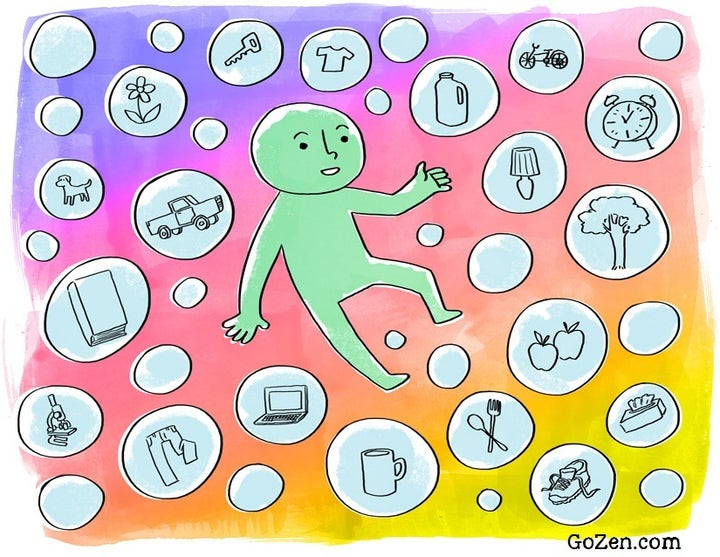
Unfortunately, in the face of adversity, James makes a common error; he falls into what I like to call “thought holes.” Thought holes, or cognitive distortions, are skewed perceptions of reality. They are negative interpretations of a situation based on poor assumptions. For James, thought holes cause intense emotional distress.

Here’s the thing, all kids blow things out of proportion or jump to conclusions at times, but consistently distorting reality is not innocuous. Studies show self-defeating thoughts (i.e., “I’m a loser”) can trigger self-defeating emotions (i.e., pain, anxiety, malaise) that, in turn, cause self-defeating actions (i.e., acting out, skipping school). Left unchecked, this tendency can also lead to more severe conditions, such as depression and anxiety.

Fortunately, in a few steps, we can teach teens how to fill in their thought holes. It’s time to ditch the idea of positive thinking and introduce the tool of accurate thinking. The lesson begins with an understanding of what causes inaccurate thinking in the first place.

We Create Our Own (Often Distorted) Reality

One person walks down a busy street and notices graffiti on the wall, dirt on the pavement and a couple fighting. Another person walks down the same street and notices a refreshing breeze, an ice cream cart and a smile from a stranger. We each absorb select scenes in our environment through which we interpret a situation. In essence, we create our own reality by that to which we give attention.

Why don’t we just interpret situations based on all of the information? It’s not possible; there are simply too many stimuli to process. In fact, the subconscious mind can absorb 20 million bits of information through the five senses in a mere second. Data is then filtered down so that the conscious mind focuses on only 7 to 40 bits. This is a mental shortcut.

Shortcuts keep us sane by preventing sensory overload. Shortcuts help us judge situations quickly. Shortcuts also, however, leave us vulnerable to errors in perception. Because we perceive reality based on a tiny sliver of information, if that information is unbalanced (e.g., ignores the positive and focuses on the negative), we are left with a skewed perception of reality, or a thought hole.

Eight Common Thought Holes

Not only are we susceptible to errors in thinking, but we also tend to make the same errors over and over again. Seminal work by psychologist Aaron Beck, often referred to as the father of cognitive therapy, and his former student, David Burns, uncovered several common thought holes as seen below.

  • Jumping to conclusions: judging a situation based on assumptions as opposed to definitive facts
  • Mental filtering: paying attention to the negative details in a situation while ignoring the positive
  • Magnifying: magnifying negative aspects in a situation
  • Minimizing: minimizing positive aspects in a situation
  • Personalizing: assuming the blame for problems even when you are not primarily responsible
  • Externalizing: pushing the blame for problems onto others even when you are primarily responsible
  • Overgeneralizing: concluding that one bad incident will lead to a repeated pattern of defeat
  • Emotional reasoning: assuming your negative emotions translate into reality, or confusing feelings with facts

Going from Distorted Thinking to Accurate Thinking

Once teens understand why they fall into thought holes and that several common ones exist, they are ready to start filling them in by trying a method developed by GoZen! called the 3Cs:

  • Check for common thought holes
  • Collect evidence to paint an accurate picture
  • Challenge the original thoughts

Let’s run through the 3Cs using James as an example. James was recently asked by his science teacher to chat after class. He immediately thought, “I must be in trouble,” and began to feel distressed. Using the 3Cs, James should first check to see if he had fallen into one of the common thought holes. Based on the list above, it seems he jumped to a conclusion.

James’s next step is to collect as much data or evidence as possible to create a more accurate picture of the situation. His evidence may look something like the following statements:

“I usually get good grades in science class.”

“Teachers sometimes ask you to chat after class when something is wrong.”

“I’ve never been in trouble before.”

“The science teacher didn’t seem upset when he asked me to chat.”

With all the evidence at hand, James can now challenge his original thought. The best (and most entertaining) way to do this is for James to have a debate with himself.

On one side is the James who believes he is in big trouble with his science teacher; on the other side is the James who believes that nothing is really wrong. James could use the evidence he collected to duke it out with himself! In the end, this type of self-disputation increases accurate thinking and improves emotional well-being.

Let’s teach our teens that thoughts, even distorted ones, affect their emotional well-being. Let’s teach them to forget positive thinking and try accurate thinking instead. Above all, let’s teach our teens that they have the power to choose their thoughts.

As the pioneering psychologist and philosopher, William James, once said, “The greatest weapon against stress is our ability to choose one thought over another.”

Filed Under: Sexual Purity Posts Tagged With: addiction, Affairs, alcoholic, anonymous sex partners, call girls, castimonia, Character Defects, christian, co-dependency, Emotions, escorts, father wound, gratification, healing, Intimacy, Jesus Christ, lust, masturbation, porn, porn star, pornography, pornstar, pornstars, prostitute, prostitutes, ptsd, purity, recovery, Sex, sex addict, sex addiction, sex partners, sexual, sexual addiction, sexual impurity, sexual purity, spouses, STD, strippers, trauma

August 19, 2019 By Castimonia

How Codependency Sabotages Your Life

SOURCE:  Dr. Henry Cloud

Codependency is something that often needs to be addressed because it can be a huge obstacle in your life, and learning to say no is crucial to removing this obstacle.

Codependency is most simply defined as a tendency to take too much responsibility for the problems of others. While it’s good to care for, help and support people, the codependent crosses a line in the relationship – the line of responsibility. Instead of being responsible to others, the codependent becomes responsible for them. And, unless the other person is your child or someone whose care is entrusted to you, the line of responsibility between the to and the for can become quite blurred. The result is that instead of caring and helping, you begin enabling and rescuing. Enabling and rescuing do not empower anybody. They only increase dependency, entitlement, and irresponsibility. Love builds up strength and character, whereas codependency breaks them down.

Codependency unchecked can take you right off the rails of what you want to achieve in your life, get in the way of goals and sabotage your dreams. And it’s all too easy to be completely unaware of it. This is because while distractions, toxic people and worthy-but-untimely things are outside of you, codependency is within you. Sometimes it’s just too close to see. But it is there, at least in small part, in most of us.

For example, you are late to your night class in the MBA track because a co-worker drops the ball and asks you to work late to bail him out. Or you want to take flying lessons, but your wife doesn’t like to try new things and prefers to stay at home. Since she feels lonely when you are gone, you stay home, which actually ends up being worse for the both of you. Or perhaps you feel guilty for the fact that your efforts at online dating are paying off, while your girlfriends are moping and complaining about their lack of prospects. So you hid your success from them, or even slow down the process.

Most of the time, the problem caters on the unhappiness of the other person. Since we care about them, we don’t want them to be sad, hurt, disappointed or unhappy. And that kind of care is a good thing. However, no one has ever yet made an unhappy person happy. You can’t take the emotions of another person and change them. You can help, love, accept, empathize, advise, challenge, confront and support. But at the end of the day, their feelings belong to them. So you must say no to enabling and rescuing behaviors. Life gets better and people become more successful when they are able to shoulder their own responsibilities.

When you start saying no to your own codependency, however, you will also find yourself saying no to people you have been rescuing. So be ready for some twinges of guilt. You may feel like the bad guy or fear that the other person will think badly of you. These feelings are normal; consider them part of the price of reaching your dreams. Just remember to stay loving and caring while respecting the line of responsibility. The guilty feelings should resolve in time, and you will become a freer person.

Filed Under: Sexual Purity Posts Tagged With: addiction, Affairs, alcoholic, anonymous sex partners, castimonia, Character Defects, christian, co-dependency, Emotions, escorts, father wound, gratification, healing, Intimacy, Jesus Christ, lust, masturbation, porn, pornography, pornstar, pornstars, prostitute, prostitutes, ptsd, purity, recovery, Sex, sex addiction, sex partners, sexual, sexual addiction, sexual impurity, sexual purity, spouses, STD, strippers, trauma

  • « Go to Previous Page
  • Page 1
  • Page 2
  • Page 3
  • Page 4
  • Page 5
  • Interim pages omitted …
  • Page 110
  • Go to Next Page »

Footer

Useful Links

Castimonia Restoration Ministry, Inc. is a 501c3 non-profit organization


This site is intended for individuals who struggle with maintaining sexual purity. This information is posted for individuals at various stages in their recovery, year 1 to year 30+; what applies to some, may not apply others. Spouses are encouraged to read this blog with the caveat that they may not agree with, understand, or know the reason for some items posted. As always, take what you like and leave the rest.

Copyright © 2026 Castimonia Restoration Ministry


Loading Comments...