• Skip to main content
  • Skip to footer

CASTIMONIA

Sexual Purity Support & Recovery Group

  • Home
  • About Castimonia
    • Statement of Faith
    • Member Struggles
    • Are You a Sex Addict?
    • About the Leaders of Castimonia
  • Meetings
    • What to Expect at a Castimonia Meeting
    • Meeting Times & Locations
      • Alaska Meetings
      • Arkansas Meetings
      • Mississippi Meetings
      • New York Meetings
      • Ohio Meetings
      • Tennessee Meetings
      • Texas Meetings
      • Telephone Meeting
      • Zoom Online Meetings
  • News & Events
  • Resources
    • Books
    • Document Downloads
    • Journal Through Recovery
    • Purity Podcasts
    • Recovery Videos
    • Telemeeting Scripts
    • Useful Links
  • Contact Us

Affairs

May 20, 2015 By Castimonia

Trying to Fix Someone Else

Codependency is rampant in this society. Like cancer is to the body, codependency is to relationships. Codependency refers to a state of being that is centered around the unconscious desires an individual has towards catering to the needs of others at the expense of themselves. People with unclear boundaries, who lack the ability to say “no” often times are victims of codependent thinking. Codependency shows up in relationships that include partners suffering an addiction to substance abuse, as well as other forms of addiction. When people are in love with alcoholics, they tend to find themselves worrying obsessively about their addicted loved one. They worry about them physically, financially and emotionally. They worry about them so often, that they lose touch with their own needs because so much of their attention has been paid to trying to fix the alcoholic. The alcoholic is dependent upon the alcohol, and the alcoholics partner is dependent upon the fixing the alcoholic. Whenever people find themselves trying to fix someone else, to the point where they have lost touch with their own needs, they are engaging in codependent behavior. On the other side of the equation, whenever people behave like victims to get their selfish needs met, they are engaging in codependent behavior. When people are unable to be honest in relationships, because they fear hurting the feelings of the other person, they are engaging in codependent behavior. Any behavior that disallows the full, honest expression of one human being to another, can be considered codependent in nature. From an article by Lisa A. Romano http://www.examiner.com/article/codependency-and-how-it-destroys-relationships

“The only person that can ever truly make you happy is yourself. Stop depending on everyone else.” – Anonymous
Filed Under: Sexual Purity Posts Tagged With: addiction, Affairs, castimonia, christian, co-dependency, co-dependent, codependency, codependent, gratification, healing, Intimacy, Jesus Christ, lust, masturbation, porn, pornography, pornstars, prostitutes, ptsd, purity, recovery, Sex, sex addict, sex addiction, sexual, sexual addiction, sexual purity, trauma

May 17, 2015 By Castimonia

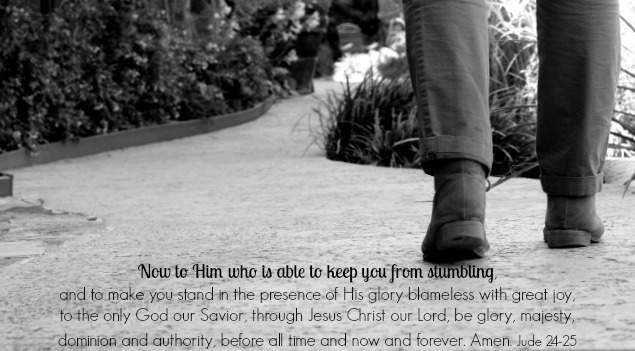
Benediction: Able to Keep You

http://purehope.net/benediction-able/

by Maria Marballi

SONY DSC

Stumbling interferes with the sanctification of our hearts.

Darkness can cause us to fall, but Christ is able to keep us.  We cannot forget that it is to Him we send our prayers; He will turn darkness to light, and the the Holy Spirit will help us walk.

When our child’s Internet misuse feels like a despairing cycle, we bow our heads in prayer; He is able.

When the eye lusts and addictions to impurity take hold of the mind and body, we bow our heads in prayer; He will keep us from stumbling.

When we feel like there is no escape from a sinful cycle, we bow our heads in prayer; He can make us stand.

Yet we are quick to become disheartened and overwhelmed with feelings of guilt and hopelessness when bombarded by the images and attitudes of our sexualized culture, and paralyzed by the unholy desire to fix our own problems…or worse, hide them in secrecy.

Surely the Word of God sings a new song.  If we take a moment to consider the power and majesty of the God we serve, we must also acknowledge His awe-inspiring ability and will to protect our hearts and minds from evil.  He can make us blameless.

He desires contrition and the renewal of our hearts in purity, and when we pray for Him to heal and protect, He responds with an overwhelming “Yes.”

Depression and discouragement can spin into an endless cycle of sin, but through the love and faithfulness of Christ Jesus, He fills us with the joy that is our strength.

What verses sustain you during times of trial or temptation?

screen-shot-2012-07-03-at-9-00-00-am1Maria Marballi attends The Ohio State University and was a 2012 pureJUSTICE intern.

Filed Under: Sexual Purity Posts Tagged With: addiction, Affairs, castimonia, christian, escorts, gratification, healing, Intimacy, Jesus Christ, lust, masturbation, porn, pornography, pornstars, prostitutes, purity, recovery, relapse, Sex, sex addict, sex addiction, sexual, sexual addiction, sexual purity, trauma

May 15, 2015 By Castimonia

Hope – VIDEO

I love superhero movies.  I don’t really know why.  I don’t read comic books.  Maybe it was me, as a child, hoping to be rescued from sexual abuse and neglect or maybe it was in watching superhero movies like Superman, I was able to escape my dysfunctional childhood for a few hours.  Nevertheless, it wasn’t until entering recovery that the Holy Spirit gave me some special “recovery glasses” that have allowed me to spot recovery themes in various media; music, movies, photographs, etc…  These themes can include support groups, honesty, selfishness, selflessness, redemption, etc… that are portrayed in the movie. 

X-Men: Days of Future Past is one of these movies.  The plot of this movie has been pasted below courtesy of Google:

Convinced that mutants pose a threat to humanity, Dr. Bolivar Trask (Peter Dinklage) develops the Sentinels, enormous robotic weapons that can detect a mutant gene and zero in on that person… More. In the 21st century, the Sentinels have evolved into highly efficient killing machines. With mutants now facing extinction, Wolverine (Hugh Jackman) volunteers to go back in time and rally the X-Men of the past to help change a pivotal moment in history and thereby save their future.

What I saw in this movie was the hope that we give to others when we sponsor them as well as us needing hope for healing as we listen to the worst of the worst from our sponsees.  Therapists and counselors also experience this hope when they see the transformation process.  But it is up to the sponsor, therapist, or counselor not to break underneath the weight of the brokenness of those he is trying to help.  It is the greatest gift we have, to help one another the way God helped us and help them bear their burdens.  This movie is dedicated to all sponsors, mentors, facilitators, therapists, and counselors who willing help others out of their love for God and His healing of the individual we help.

I hope you enjoy watching this video as much as I enjoyed creating it.  As always, take what you like and leave the rest.

FAIR USE NOTICE: This video may contain copyrighted material. Such material is made available for purposes such as criticism, comment, teaching, & education, etc. This constitutes a ’fair use’ of any such copyrighted material as provided for in Title 17 U.S.C. section 107 of the US Copyright Law NO COPYRIGHT INFRINGEMENT INTENDED! All trademarks and copyrights remain the property of their owners.

Filed Under: Sexual Purity Posts, Videos Tagged With: addiction, Affairs, alcohol, alcoholic, castimonia, Character Defects, christian, co-dependency, Emotions, escorts, father wound, gratification, healing, Hope, Intimacy, Jesus Christ, lust, masturbation, porn, pornography, pornstars, prostitutes, ptsd, Sex, sex addict, sex addiction, sexual, sexual addiction, sexual impurity, sexual purity, Sponsor, Sponsors, spouses, trauma, X-Men

May 14, 2015 By Castimonia

Relapse and the Brain by Michael Dye

http://www.genesisprocess.org/more-info/understanding-relapse
Relapse and the Brain by Michael Dye

In very simplistic terms, we have two parts to our brains. The first part is the neocortex. It is located in the front of the head and receives and stores information for decision making and remembering. The other part is called the limbic system, which controls all the automatic systems of the body and the emotions. Most importantly, the limbic system controls the survival responses, i.e., fight or flight and freeze. When you feel threatened, these protective responses tell you either to defend yourself or to run away or go numb. The limbic system doesn¹t have a memory like the neocortex. It doesn’t know the difference between yesterday and 30 years ago, which explains why some of our childhood traumas still trigger us so powerfully today. It is the limbic system that is most affected by our beliefs, behaviors and addictions. The limbic system can be negatively programmed through traumatic experiences such as growing up in a stressful or” dysfunctional family”. Basically the limbic systems encourages us to repeat things that give us pleasure and take away pain and avoid things that hurt or have to do with fear. Drugs, alcohol and other compulsive behaviors have programmed the limbic system to avoid the awareness of uncomfortable thoughts and feelings instead of making healthy responses to resolve fear.

Events come through our senses and are fed into various parts of the brain. The limbic system colors or tags these events with degrees of response as either safe or dangerous. If tagged dangerous because of past trauma, either real or imagined, it reacts by creating anxiety or depression. If the event is tagged having to do with survival, the limbic system can create a focused craving for behavior that has been associated with survival in the past. The craving focuses our attention on that behavior until we feel safe or normal again. Thus an addiction is created. Addiction is not about getting high but [it provides] a way to feel normal (free of stress). The conscious mind learns to cooperate with the survival behavior (addiction) and protects it from being challenged by a filtering process called denial. The result is the addictive brain.

The limbic system may have learned that having needs in a dysfunctional family resulted in vulnerability, hurt, abandonment, and isolation. In order to survive day after day in a dysfunctional/threatening atmosphere, a person has to find a system of thought that will allow for survival by removing stress. One way they may have done this is by thinking “I don¹t need anybody”. If I don¹t need anybody, I’m not vulnerable. If I’m not vulnerable, I don¹t get hurt.

(this is what Genesis calls a survival lie.)

Every time a feeling of vulnerability is experienced, fear creeps in and warns, Danger! Feelings of fear and panic signal you to fight, flee, or freeze to avoid possible hurt.

This limbic process responds automatically and subconsciously. Even after the painful or traumatic situation is over, the subconscious still believes that If I have needs and trust other people, I’m going to get hurt and I won’t survive. When trust issues come up today, the limbic system can react with strong emotions as it was programmed . This fear can be expressed in anger/rage, self-gratification and mistrust which creates a survival personality. Your protective personality makes you feel in control (free of fear and stress) by pushing people away. This false sense of control is often achieved through self-gratification or compulsive/addictive behaviors which temporarily removes the awareness of the unwanted thoughts and feelings… The Limbic System controls basically three areas, food, sex and safety. Which is why all our compulsives / addictive behaviors are in these three areas.

To change, you must reprogram your brain by first discovering these false beliefs and then replacing them with the truth. You will realize, for example, why you have been sabotaging relationships by believing that you don¹t need anybody. The truth is you need to trust God and others. The Limbic System will make it very difficult for you to make changes that involve risk (like recovery) unless it feels it is safe. And it’s not safe to take risk alone. Personal change always involves risk.

Even though you’ve discovered false beliefs, uncovered the lies and know a new truth, there is a time lag between what your limbic system believes and what your neocortex has learned. This is called limbic lag, a process that can be anywhere from a couple of months to years, but it will get shorter as you continue to uncover and challenge the false beliefs (lies produced from traumatic experiences) and risk trusting again. You may have fear and panic attacks, but once you go through them without doing the old behavior, your limbic system will say, “Oh, we went through that and actually survived.” The next time you experience the fear it will be less, and you will be able to make a good choice rather than overreacting with a fight , flight or freeze response. Old automatic habits aren’t changed quickly or easily, and are stronger when we’re tired. Many recovering addicts and trauma survivors have programmed the survival part of their brains with thousands and thousands of instances of avoiding unwanted thoughts or emotions choosing not to resolve with their issues, but to take “flight” into their addiction. Over time, this flight pattern becomes an automatic reaction. With a new identity based on new beliefs, you can change that flight pattern and reprogram their limbic system.

Changes happens one decision at a time. No matter what your emotions tell you would feel good to do (drugs, alcohol, sex, food), listen to what your mind knows, and do what is best or right. If you continue to apply this key thought, you will begin to break the limbic patterns, and decrease the time of the limbic lag process.

Drugs and alcohol are anesthetics. They do one thing: they kill pain. It is reasonable to assume that when you give up the anesthetic, you will feel the pain, discomfort and uneasiness. Knowing what to do when this occurs is a critical skill in relapse prevention. Relapse prevention is finding new appropriate ways to respond to painful situations. In order to learn appropriate responses to pain, people with addictions have to allow themselves to feel. The two most common responses to pain are anger and anxiety.

Anger is one of the most common responses to pain. This kind of response becomes normal in dysfunctional families where no one can admit problems or fears. Anger helps us cope with pain by physically making us tense, which causes excitement, releasing adrenaline and endorphins, diverting our attention from the pain. An angry response produces a neurochemical response similar to taking cocaine. Neurochemically speaking the main role of anger is to anesthetize fear.

Most people say that anger makes them feel bad afterwards, but in the moment anger itself makes us feel big, right, strong, aggressive and powerful. Anger is a powerful physical and emotional anesthetic. Heroin is a powerful pain killer. When I ask heroin-addicted clients, How much heroin would you have to do for you not to feel it if I hit you in the face as hard as I could? their answer is always the same, right on the verge of overdosing and dying. Similarly, when a person is really angry, he can be hit in the face and not feel it.

Consciously or subconsciously, we have learned to use emotions such as anger to kill pain and to avoid subconscious, unwanted thoughts, feelings, and memories. Many addicts have an addiction to anger as well as drugs, especially if their role models were rageaholics. Healthy people move towards their pain and face it courageously. Although risk is uncomfortable, we all enjoy the feeling that comes through conflict resolution and a clear conscience. Controlling anger and avoiding things that need to be dealt with takes a tremendous amount of energy. Repressing the awareness of unresolved conflicts leads to exhaustion and resentment.

Anxiety is equally used as an anesthetic to cope with feelings. Though uncomfortable, this emotion releases neurochemicals that cause the body to speed up and avoid depression. Dr. Stiles in his book Thorns in the Heart states that:

Besides making us alert in crisis situations, anxiety has an additional function. It serves as an antidote to emotional and physical pain. Since anxiety is commonly thought of in connection with pain and distress, its pain-masking function may come as a surprise. If anxiety causes emotional pain, how does it also stop it? In modest amounts, anxiety is an effective smoke screen Here¹s where the trouble begins. When we find anxiety has served us well in a particular situation, such as masking pain, we may deliberately use it again. At this point our lower brain begins to record our response. Soon, an imprint, or habit, develops and we have learned anxiety. In time, anything triggering these learned patterns, or imprints, will produce the anxiety responses.

If a person holds on to two, small unresolved resentments which produce anxiety each day, in a year they would add up to 730! How many resentments do you think a person can hold inside as unresolved problems before that person relapses? What we know is this: resentment relapses alcoholics and addicts. As it says in the Big Book of Alcoholics Anonymous: Resentment is the Number one offender. It destroys more alcoholics then anything else; from it stem all forms of spiritual disease.

Relapse is a predictable process. It has identifiable stages, each of which has a distinctive neurochemical basis. The FASTER SCALE in the Genesis Process is a neurochemical model of relapse that identifies specific high risk behaviors for each stage of the relapse process. Before relapse happens, many biological, psychological and social changes affect our neurochemistry. Addicts speed up their avoidance behaviors, increasing anxiety and anger to mask pain. This depletes endorphins, causing hopelessness and exhaustion. In this state of exhaustion, addicts isolate and feel they cannot cope without chemicals.

Every letter in the word FASTER stands for one of the steps in the relapse scale. This scale reflects a progression of strong emotions that mask pain. It explains neurochemically what almost every addict goes through in his descent to relapse. Remember, anger and anxiety release adrenaline and norepinephrine, which speed up the body. After speeding up we get ticked off and then exhausted.

All the steps in the relapse process have one thing in common: procrastination. A problem that was never dealt with begins each state. As you fail to deal with problems, you move down the FASTER scale. Crisis comes at a time when you are least able to deal with it emotionally. The short version of the Faster Scale is speed up> anger > tired > use.
The Faster Scale is a tool that can effectively see a relapse coming a minimum of two weeks before it happens.

1.) Stiles, S. Thorns in the Heart: A Christians Guide to Dealing with Pain.  Washington: Gospel Publishing House, 1994

2.) Anonymous, The Big Book of Alcoholics Anonymous, AA

Reprinted with permission, from The Genesis Process: A Relapse Prevention Workbook for Addictive/Compulsive Behaviors by Michael Dye and Patricia Fancher.

Filed Under: Sexual Purity Posts Tagged With: addiction, Affairs, brain, castimonia, christian, escorts, gratification, healing, Intimacy, Jesus Christ, lust, masturbation, porn, pornography, pornstars, prostitutes, purity, recovery, relapse, Sex, sex addict, sex addiction, sexual, sexual addiction, sexual purity, trauma

May 12, 2015 By Castimonia

When your wife says she can’t trust you ….

… this is what she really wants to say to you!  Be grateful that she loves you enough to use tact.

Liar Ecard


The truth is, we have a track record of lying to our wife over the course of our marriage.  However, now that we’re in recovery we can practice rigorous honesty and earn back her trust, slowly, one truth at a time!

Filed Under: Sexual Purity Posts Tagged With: addiction, Affairs, alcohol, alcoholic, castimonia, Character Defects, christian, co-dependency, Emotions, escorts, father wound, gratification, healing, Intimacy, Jesus Christ, Liar, lie, lust, lying, masturbation, porn, pornography, pornstar, pornstars, prostitutes, ptsd, purity, recovery, Sex, sex addict, sex addiction, sexual, sexual addiction, sexual impurity, sexual purity, spouses, strippers, trauma, wives

  • « Go to Previous Page
  • Page 1
  • Interim pages omitted …
  • Page 168
  • Page 169
  • Page 170
  • Page 171
  • Page 172
  • Interim pages omitted …
  • Page 256
  • Go to Next Page »

Footer

Useful Links

Castimonia Restoration Ministry, Inc. is a 501c3 non-profit organization


This site is intended for individuals who struggle with maintaining sexual purity. This information is posted for individuals at various stages in their recovery, year 1 to year 30+; what applies to some, may not apply others. Spouses are encouraged to read this blog with the caveat that they may not agree with, understand, or know the reason for some items posted. As always, take what you like and leave the rest.

Copyright © 2026 Castimonia Restoration Ministry

Loading Comments...