• Skip to main content
  • Skip to footer

CASTIMONIA

Sexual Purity Support & Recovery Group

  • Home
  • About Castimonia
    • Statement of Faith
    • Member Struggles
    • Are You a Sex Addict?
    • About the Leaders of Castimonia
  • Meetings
    • What to Expect at a Castimonia Meeting
    • Meeting Times & Locations
      • Alaska Meetings
      • Arkansas Meetings
      • Mississippi Meetings
      • New York Meetings
      • Ohio Meetings
      • Tennessee Meetings
      • Texas Meetings
      • Telephone Meeting
      • Zoom Online Meetings
  • News & Events
  • Resources
    • Books
    • Document Downloads
    • Journal Through Recovery
    • Purity Podcasts
    • Recovery Videos
    • Telemeeting Scripts
    • Useful Links
  • Contact Us

gratification

September 4, 2019 By Castimonia

The Necrosis of my SOUL

Originally posted at:  https://shamingroom.wordpress.com/2017/11/22/the-necrosis-of-my-soul/

The liberal media paint a glossy picture of pornography and masturbation. In my life time there were at least a few people who advocated the usefulness of masturbation and porn, that it helps to relieve stress and sexual frustration.

My first experience with porn was a life changer. The first time I saw a naked picture of a women, my eyes felt glued, my soul was transfixed and it felt like an electric current passed through me. I was hooked.

Since then, I have spend countless hours toiling towards exposing my self to porn. Almost all of my decisions were influenced by trying to steal an opportunity to watch.
In the process, I would look out for every opportunity to isolate myself from others, so that I can spend my personal time fantasizing, reading and watching pornography.

Maybe it was this that drew me to loneliness and Isolation. I did it because I wanted to be alone. I am not sure, but it was probably the start of my bipolar disease or episodes of depression. Because there is a price you have to pay after you watch porn and masturbate. It’s called guilt. Maybe It’s easy for others to just shirk aside such acts as normal, but that was not to be for me.

Guilt and loneliness transpired for years and years all through my teens. By the time I was in my twenties, I was actively depressed, but never knew the name for it.

Why do people some people feel guilt while others can walk about with out even feeling a tinge of it. My friend could anything he pleased, but not feel guilty about it. He was not intolerant or not an antisocial, but just not bothered about the norms that society imposed.

I tried to clean up my act, but I couldn’t. I would spend time going to church, listening eagerly to pastors and priests. It didn’t matter to me if they were orthodox or protestants, anything that would release my soul from this evil that was eating me from the inside out.

Religion did not work, so I covered my pain by medicating myself with what else I could get my hands on. Some times alcohol, sometimes pot, other times pills to put me to sleep.

Even with all of this going around me, I still managed to do well in studies and manage a profession. All of my decisions, the gadgets that I brought, the places that I chose to live were all influenced by porn. It was my mistress or master. It would rear its ugly head when things didn’t go it’s way.

The age of the internet had arrived and suddenly the flood gates of porn opened up. Everything was free. I would take a week of from porn and it would come back at me with vengeance. The guilt of that would drown me in sadness. This would be followed by drugs to drown the sadness. The cycle repeated relentlessly, forever…

It’s a miracle I am still alive and that I am writing this.

Filed Under: Sexual Purity Posts Tagged With: addiction, Affairs, alcoholic, castimonia, Character Defects, christian, co-dependency, Emotions, escorts, gratification, healing, Intimacy, Jesus Christ, lust, masturbation, porn, pornography, pornstar, pornstars, prostitutes, purity, recovery, Sex, sexual addiction, sexual purity, trauma

August 27, 2019 By Castimonia

How to Stop Automatic Negative Thoughts

This article is in relation to children, but can truly be applied to men who struggle with negative thoughts.

SOURCE:  Renee Jain, Contributor/The Huffington Post

All kids blow things out of proportion or jump to conclusions at times, but consistently distorting reality is not innocuous.

“I didn’t get invited to Julie’s party… I’m such a loser.”

“I missed the bus… nothing ever goes my way.”

“My science teacher wants to see me… I must be in trouble.”

These are the thoughts of a high school student named James. You wouldn’t know it from his thoughts, but James is actually pretty popular and gets decent grades.

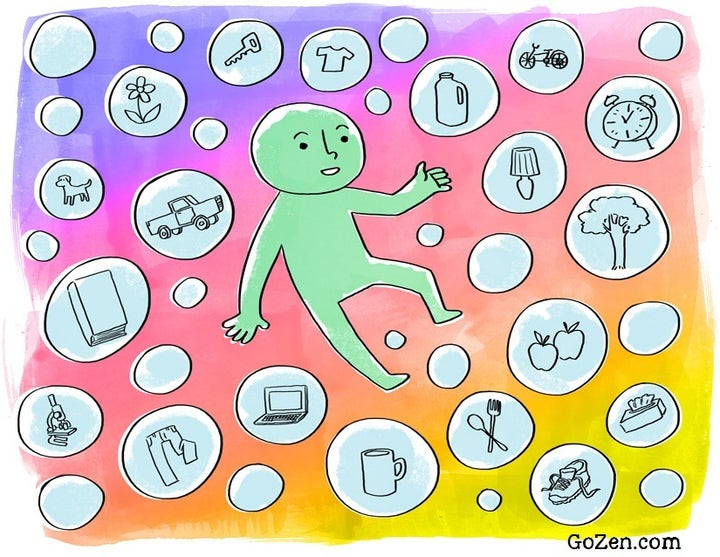
Unfortunately, in the face of adversity, James makes a common error; he falls into what I like to call “thought holes.” Thought holes, or cognitive distortions, are skewed perceptions of reality. They are negative interpretations of a situation based on poor assumptions. For James, thought holes cause intense emotional distress.

Here’s the thing, all kids blow things out of proportion or jump to conclusions at times, but consistently distorting reality is not innocuous. Studies show self-defeating thoughts (i.e., “I’m a loser”) can trigger self-defeating emotions (i.e., pain, anxiety, malaise) that, in turn, cause self-defeating actions (i.e., acting out, skipping school). Left unchecked, this tendency can also lead to more severe conditions, such as depression and anxiety.

Fortunately, in a few steps, we can teach teens how to fill in their thought holes. It’s time to ditch the idea of positive thinking and introduce the tool of accurate thinking. The lesson begins with an understanding of what causes inaccurate thinking in the first place.

We Create Our Own (Often Distorted) Reality

One person walks down a busy street and notices graffiti on the wall, dirt on the pavement and a couple fighting. Another person walks down the same street and notices a refreshing breeze, an ice cream cart and a smile from a stranger. We each absorb select scenes in our environment through which we interpret a situation. In essence, we create our own reality by that to which we give attention.

Why don’t we just interpret situations based on all of the information? It’s not possible; there are simply too many stimuli to process. In fact, the subconscious mind can absorb 20 million bits of information through the five senses in a mere second. Data is then filtered down so that the conscious mind focuses on only 7 to 40 bits. This is a mental shortcut.

Shortcuts keep us sane by preventing sensory overload. Shortcuts help us judge situations quickly. Shortcuts also, however, leave us vulnerable to errors in perception. Because we perceive reality based on a tiny sliver of information, if that information is unbalanced (e.g., ignores the positive and focuses on the negative), we are left with a skewed perception of reality, or a thought hole.

Eight Common Thought Holes

Not only are we susceptible to errors in thinking, but we also tend to make the same errors over and over again. Seminal work by psychologist Aaron Beck, often referred to as the father of cognitive therapy, and his former student, David Burns, uncovered several common thought holes as seen below.

  • Jumping to conclusions: judging a situation based on assumptions as opposed to definitive facts
  • Mental filtering: paying attention to the negative details in a situation while ignoring the positive
  • Magnifying: magnifying negative aspects in a situation
  • Minimizing: minimizing positive aspects in a situation
  • Personalizing: assuming the blame for problems even when you are not primarily responsible
  • Externalizing: pushing the blame for problems onto others even when you are primarily responsible
  • Overgeneralizing: concluding that one bad incident will lead to a repeated pattern of defeat
  • Emotional reasoning: assuming your negative emotions translate into reality, or confusing feelings with facts

Going from Distorted Thinking to Accurate Thinking

Once teens understand why they fall into thought holes and that several common ones exist, they are ready to start filling them in by trying a method developed by GoZen! called the 3Cs:

  • Check for common thought holes
  • Collect evidence to paint an accurate picture
  • Challenge the original thoughts

Let’s run through the 3Cs using James as an example. James was recently asked by his science teacher to chat after class. He immediately thought, “I must be in trouble,” and began to feel distressed. Using the 3Cs, James should first check to see if he had fallen into one of the common thought holes. Based on the list above, it seems he jumped to a conclusion.

James’s next step is to collect as much data or evidence as possible to create a more accurate picture of the situation. His evidence may look something like the following statements:

“I usually get good grades in science class.”

“Teachers sometimes ask you to chat after class when something is wrong.”

“I’ve never been in trouble before.”

“The science teacher didn’t seem upset when he asked me to chat.”

With all the evidence at hand, James can now challenge his original thought. The best (and most entertaining) way to do this is for James to have a debate with himself.

On one side is the James who believes he is in big trouble with his science teacher; on the other side is the James who believes that nothing is really wrong. James could use the evidence he collected to duke it out with himself! In the end, this type of self-disputation increases accurate thinking and improves emotional well-being.

Let’s teach our teens that thoughts, even distorted ones, affect their emotional well-being. Let’s teach them to forget positive thinking and try accurate thinking instead. Above all, let’s teach our teens that they have the power to choose their thoughts.

As the pioneering psychologist and philosopher, William James, once said, “The greatest weapon against stress is our ability to choose one thought over another.”

Filed Under: Sexual Purity Posts Tagged With: addiction, Affairs, alcoholic, anonymous sex partners, call girls, castimonia, Character Defects, christian, co-dependency, Emotions, escorts, father wound, gratification, healing, Intimacy, Jesus Christ, lust, masturbation, porn, porn star, pornography, pornstar, pornstars, prostitute, prostitutes, ptsd, purity, recovery, Sex, sex addict, sex addiction, sex partners, sexual, sexual addiction, sexual impurity, sexual purity, spouses, STD, strippers, trauma

August 19, 2019 By Castimonia

How Codependency Sabotages Your Life

SOURCE:  Dr. Henry Cloud

Codependency is something that often needs to be addressed because it can be a huge obstacle in your life, and learning to say no is crucial to removing this obstacle.

Codependency is most simply defined as a tendency to take too much responsibility for the problems of others. While it’s good to care for, help and support people, the codependent crosses a line in the relationship – the line of responsibility. Instead of being responsible to others, the codependent becomes responsible for them. And, unless the other person is your child or someone whose care is entrusted to you, the line of responsibility between the to and the for can become quite blurred. The result is that instead of caring and helping, you begin enabling and rescuing. Enabling and rescuing do not empower anybody. They only increase dependency, entitlement, and irresponsibility. Love builds up strength and character, whereas codependency breaks them down.

Codependency unchecked can take you right off the rails of what you want to achieve in your life, get in the way of goals and sabotage your dreams. And it’s all too easy to be completely unaware of it. This is because while distractions, toxic people and worthy-but-untimely things are outside of you, codependency is within you. Sometimes it’s just too close to see. But it is there, at least in small part, in most of us.

For example, you are late to your night class in the MBA track because a co-worker drops the ball and asks you to work late to bail him out. Or you want to take flying lessons, but your wife doesn’t like to try new things and prefers to stay at home. Since she feels lonely when you are gone, you stay home, which actually ends up being worse for the both of you. Or perhaps you feel guilty for the fact that your efforts at online dating are paying off, while your girlfriends are moping and complaining about their lack of prospects. So you hid your success from them, or even slow down the process.

Most of the time, the problem caters on the unhappiness of the other person. Since we care about them, we don’t want them to be sad, hurt, disappointed or unhappy. And that kind of care is a good thing. However, no one has ever yet made an unhappy person happy. You can’t take the emotions of another person and change them. You can help, love, accept, empathize, advise, challenge, confront and support. But at the end of the day, their feelings belong to them. So you must say no to enabling and rescuing behaviors. Life gets better and people become more successful when they are able to shoulder their own responsibilities.

When you start saying no to your own codependency, however, you will also find yourself saying no to people you have been rescuing. So be ready for some twinges of guilt. You may feel like the bad guy or fear that the other person will think badly of you. These feelings are normal; consider them part of the price of reaching your dreams. Just remember to stay loving and caring while respecting the line of responsibility. The guilty feelings should resolve in time, and you will become a freer person.

Filed Under: Sexual Purity Posts Tagged With: addiction, Affairs, alcoholic, anonymous sex partners, castimonia, Character Defects, christian, co-dependency, Emotions, escorts, father wound, gratification, healing, Intimacy, Jesus Christ, lust, masturbation, porn, pornography, pornstar, pornstars, prostitute, prostitutes, ptsd, purity, recovery, Sex, sex addiction, sex partners, sexual, sexual addiction, sexual impurity, sexual purity, spouses, STD, strippers, trauma

August 15, 2019 By Castimonia

Intimacy and Human Relational Design

Originally posted at: https://applyingmybeliefs.wordpress.com/2017/09/04/intimacy-and-human-relational-design/

This posting is part of what I am going to discuss in an “Intimacy in Marriage” class I am teaching at my church – The Fellowship, in Katy TX.  (www.thefellowship.org).

Having a God-centered comprehension of intimacy is a key to having a good understanding of human design and relationships.  This understanding, together with knowing what the fall of mankind into sin means, helps us to explain so many of the relational phenomena we see in human society.

The comprehension of intimacy starts with knowing some things about God.

We know from scripture that God is presented to us as a pre-existent uncreated being made up of three persons that are known as Father, Son and Spirit – sometimes we call them a trinity.  Some of the things we know about God are:

John 4:24 – God is spirit, and those who worship him must worship in spirit and truth.

1 John 4:16 – So we have come to know and to believe the love that God has for us. God is love, and whoever abides in love abides in God, and God abides in him.

John 10:30 – I and the Father are one.

From these three things that God says about Himself, we can note that He is a highly relational non-physical being, with His relationships cemented together by love.

As we move forward from past eternity to the sixth day of creation we see this being said:

Gen 1:26-27 – Then God said, “Let us make man in our image, after our likeness. And let them have dominion over the fish of the sea and over the birds of the heavens and over the livestock and over all the earth and over every creeping thing that creeps on the earth.”  So God created man in his own image, in the image of God he created him; male and female he created them.

God, the three persons, made us humans, to be like Him in some way.  He calls us an image, a word that suggests that we look like Him, probably not physically because He is spirit, but more likely our soul is made in His image.  This leads us to understand that our individual inner person is a representation of the trinity, although we may not know exactly what that means.  He also says that we are made in His likeness; that we are like Him in certain ways.  In the chart at the end of this document I have listed some likenesses and differences in a useful comparative table.

The next relevant thing that God said is this:

Gen 2:18 – Then the Lord God said, “It is not good that the man should be alone; I will make him a helper fit for him.

As we look at this we must remember that the original scriptures are written as continuous text, and our translators have added in grammar and most importantly punctuation.  Verse 18 here probably ought to be considered as two sentences that we have connected.  There is no indication that God spoke them as one continuous set of words without a pause.  It is entirely possible they were separated by days, weeks, months or years.  In the way we think, we would prefer to believe they were connected.  For a moment though consider them as completely separated.

Gen 2:18(a) – It is not good for man to be alone.

The Hebrew word that we translate as “man” here is “haa’aadaam” which is often shortened to “adam.”  It is found in over 500 places in the Old Testament, and is almost always used as a plural word for all of humankind.  So when God spoke Gen 2:18(a) He was referring to all of us.  Whereas in Gen 2:18(b) He was referring specifically to the man we call Adam.

This is the first true and direct reference to the designed-in reality that we (all humans) are created to be connected – to have intimacy with each other.  Also note that God spoke this before sin entered the world, making our need for intimacy part of God’s original intended design.

As we move forward in the story we come to this

Gen 2:24 – Therefore a man shall leave his father and his mother and hold fast to his wife, and they shall become one flesh.

When scripture says “therefore” it is asking the reader to consider the words written before it.  In this case the scriptures from Gen 2:18 to 2:23 that deal with the creation of the woman.  The woman is called a “suitable helper” for the man – this is specific designation and excludes all other animals and also another male human.

So in Gen 2:24 we see God tell us that a man (iysh in the Hebrew, meaning a generic man) is to leave the parents of his family of origin, and hold fast to his wife, and become one flesh with her.  This is a significant and formal intimacy statement from God that we ought to pay close attention to.

The words “hold fast” in our English translation (often called “cleave” in other translations) is one single word in the Hebrew, dabaq.  This word carries the meaning that something is “fastened together.”  One useful word picture here is that the man and woman become joined with each other using a relational bonding agent.  God says to link together so that no other human can break the connection.  Jesus put it this way:

Matt 19:5-6 – Therefore a man shall leave his father and his mother and hold fast to his wife, and they shall become one flesh.  So they are no longer two but one flesh. What therefore God has joined together, let not man separate.

The “one flesh” in Hebrew is basar echad (which we translate as “flesh one” and switch the order of words.)  Our English translation is a convenience to help the reader of scripture understand what God is saying.  But when we investigate what these words more literally say, we don’t get the simple “one flesh”; instead we get “collected together and united as a fresh unit.”  This obviously has an entirely different slant than the physicalness of the word flesh.

Sex and intimacy

As we look at intimacy as a designed-in feature of all humans, we need to make another special note here.  When God spoke these words about marriage, no human had ever had physical sex, and yet we, in our culture, use the term sexual intimacy.  Intimacy and sex are not connected; consider that God the Father, Son and Spirit are intimate and yet sex is not part of that intimacy.

So then, an error that is often made by well-meaning believers is that they relate marriage and sex based on the “one flesh” words in the scripture.  That is a stretch.  The reality is that humans are a special animal, the only one created in God’s image, but we are still an animal and we can have sex without being married just like other animals.  Physical sex does not need marriage, as many humans prove every day.

Physical sex is given to us by a loving God for two reasons.

  • To multiply the human race.
  • As a pleasurable reward for marital intimacy between two suitable helpers.

It is that second reason that needs to be focused on in this paper.

What we know as physical sex is only legitimate when it is conducted inside a marriage made in the sight of God, a lifetime covenant between two suitable helpers.  Anything outside of that is an immoral act; and God says this about that subject:

1 Cor 6:18 – Flee from sexual immorality. Every other sin a person commits is outside the body, but the sexually immoral person sins against his own body.

This is well-known and a simple conventional Christian statement.  However, there some other things that we ought to know about physical sex and intimacy.

Physical sex without intimacy can be fantastic!  Many people would be able to say that, but it is not the whole story.  When intimacy, relationship and true deep connectedness, is not present, the physical sex eventually fades into an animal-like routine.  The result is that humans who engage in it go from sexual partner to sexual partner trying to regain the “feeling.”  In the end it results in a kind of soul-sterility, and inability to connect with others in a designed-in way.  Promiscuity leads to numbness inside a person – this is because sex cannot lead to intimacy; God has designed us so that marital intimacy (only) is to lead to physical sex.

Sex “experts”, those that advise and teach about how to have a great sex life, seem to be united in one basic idea.  They almost universally tell us that the true sex organ is the brain, not the genitals.  They go on to explain that a good sexual life, meaning high levels of physical pleasure on a sustained basis, is only achievable when you are thoughtfully, emotionally and willfully connected to a specific partner.  Isn’t that an alternative description of intimacy in action?  So then, even the world agrees with God, although they don’t admit it.  Sex and intimacy go together, but intimacy is necessary for sustained pleasurable sex.

Another interesting aspect of sex and intimacy is what is reported by marriage researchers.  Apparently, long-term (30 years plus) marriage partners that have high levels of connectedness report that sex got better and was more satisfying for both partners on a continuous basis.  This was true for believers and non-believers alike.  This may be the best proof that God’s designed-in need for us to be intimate, to be like Him, is real and tangible – and that it is a precursor to a healthy sex life.

Some final words

If one agrees with what has been spoken of above so many things can be looked at differently.

  • Being hooked on pornography is not about sex, it is about intimacy.
  • Visiting sex workers is not about sex, it is about looking for intimacy.
  • Promiscuity will never lead to satisfaction, intimacy takes time and work.
  • Extra-marital affairs are not about sex, they are about the need for intimacy.
  • If a couple wants better sex, they ought to work on intimacy.

A Comparative Table of Likenesses and Differences

Characteristic God Mankind
Power & Strength Omnipotent – All Powerful Powerful
Knowledge Omniscience – All Knowing Knowledgeable
Understanding Unlimited Limited
Wisdom Unlimited Limited
Reason/Rationality Perfect reason Imperfect reason
Feelings Emotional being Emotional being
Self-directed Perfect Willfulness Imperfect Willfulness
Singularity One God One Soul
Trinitarian Three Persons Heart, Mind and Will
Action Orientation Acts through Jesus Acts through the Will
The Heart Perfect subjectiveness Deceptive
Lovingkindness Constantly loving Capable of loving
Connectedness Perfectly relational Made for relationships
Depth of relational ability Perfectly intimate Designed for intimacy


Filed Under: Sexual Purity Posts Tagged With: addiction, Affairs, anonymous sex partners, castimonia, Character Defects, christian, co-dependency, Emotions, escorts, father wound, gratification, Intimacy, Jesus Christ, lust, masturbation, porn, pornography, pornstar, pornstars, prostitute, prostitutes, ptsd, purity, recovery, Sex, sex addict, sex addiction, sex partners, sexual, sexual addiction, sexual impurity, sexual purity, spouses, STD, strippers, trauma

August 11, 2019 By Castimonia

How I Apologize to My Kids

Originally posted at: https://promisedhopechurch.wordpress.com/2017/09/02/how-i-apologize-to-my-kids/

*There seems to have been some interest in these practical family and parenting posts.  I do not write as an expert in anything.  This is simply one sinner saved by grace explaining his best approach to those awful 5 minutes after slamming a door or yelling at his children, when he realizes he behaved like a fool.


The screaming starts.  Almost always over a toy.  If it’s not that, it’s that somebody hit somebody.

Then Daddy throws open the door, angry that his 9:30 PM peace and quiet is being interrupted.

He isn’t angry because his children have sinned against God and each other by stealing or hurting each other.  Well, maybe a little, but not primarily.  Primarily he’s angry because the created thing he wanted (peace and quiet, food, TV) was disrupted.  That’s what has his fingers digging into his palms.

And do you know what we call it when a created thing is so important to you that you freak out if you don’t get it?

Idolatry.  

So, now Daddy’s idolatry play out in all its ugly glory, here.  He clenches his teeth and points with his finger at Kid #1’s bed.  “Get.  In.  Bed.”  He raises his voice a few decibels to Kid #2.  “If you do anything to him again I will spank your butt.”  Then he shouts over the crying of Kid #3.  “Enough!  I don’t want to hear it!  All of you:  Be quiet.”  He turns on a dime and slams the bedroom door.

And now sin has wrapped its poisonous vine around these four souls.  Three children sinned against each other out of idolatry, and their father responded with anger at his own idol being threatened.  None of these four souls were, at that moment, resting in the Lord Jesus Christ and savoring Him.  That would’ve resulted in joy, forgiveness, peace, and patience.

Oh, and if you haven’t figured it out yet:  This Daddy is me.  

So, after a few minutes, I open the door, and tell the two who are old enough to get down out of bed to sit down with me.  The other can listen from the crib.  And then I say the following.

  • “Daddy sinned.”

Before you apologize for a sin, you need to acknowledge that it was sin.  It was not merely a “mistake,” it was not that you “lost your cool,” it was not that someone “made you” do it.  Jesus did not die on the Cross to redeem good people for their “aw shucks” mistakes.  He died to save sinners from their sins.  

I sinned. Period.  No excuses, no qualifications.

My kids need to know that sin is serious.  If they don’t see Daddy taking his sin seriously, they’re less likely to take their sins seriously.  And to live a Gospel life, a true Christian life, one must take sin seriously.  

  • “Daddy is sorry.”

If I’ve sinned, then I have at least two parities I need to apologize to, two people with whom I need to reconcile.

  1. The God whose Law I broke
  2. The person I sinned against

These apologies are essential for these relationships (mine to God and mine to the person I sinned against) to be restored.  In general, if I am not a person who confesses my wrongs from the heart, I will not be a person who has healthy relationships.

If we say we have no sin, we deceive ourselves, and the truth is not in us. If we confess our sins, he is faithful and just to forgive us our sins and to cleanse us from all unrighteousness.

1 John 1:8-9

If your brother sins against you, go and tell him his fault, between you and him alone. If he listens to you, you have gained your brother. 

Matthew 18:15

My kids need to hear me grieve my sin, hear me say that I am sorry that I did such a thing to God and to them.  I realize that to some people this may sound like overkill for something as “small” as angrily raising your voice, but I firmly believe that that sentiment is usually arising from the flesh.

See, our flesh always wants to minimize our own sins and magnify others’ sins against us.  We understand that it’s good for someone to apologize to us when he has committed even some “small” sin against us (and we are usually unhappy or feel slighted if he doesn’t).  But because of our flesh and our pride, we often think that it isn’t necessary for us to apologize for our own “small” sins.

But it is.  Jesus died to bear God’s wrath for every instance of bad anger I’ve ever committed, every harsh word and bitter thought and nursed grudge.  Those sins are no small matter.  

And, hear me on this part, too:  Sin brings death.  And so if I want life flowing through my relationships, I must confess my sins in those relationships and receive the grace and restoration of God.

  • “Do you forgive me?”

Say what?  You’re going to ask your kids to forgive you, dude?

Yes, because I (almost always) make them ask my wife or I to forgive them after they have sinned against us.

So, obviously we are in authority over our children, authority given to us by God for their good and His glory.  They answer to God and to us.  But one of the truths of the Bible is that authority comes with responsibility.  I have a responsibility to God and to the children He’s given me to love them selflessly.  When I treat them, even for a moment, as an impediment to my own pleasure, as an annoyance keeping me from TV or a snack or a good book, I am breaking that God-given responsibility.  I am putting my own good ahead of theirs.  And after acknowledging that sin and then grieving it, I need to give them the opportunity to forgive me.

Now, until children are born again through faith in Jesus Christ (something I hope all you parents pray for for your own children), they cannot forgive like a Christian can.  They aren’t able to forgive from the bank of grace they have received in Christ Jesus, because they haven’t received that grace.  But they can begin to see how important forgiveness is.  And they can also begin to see how impossible it is to truly and humbly forgive without being made a new person.

See, one of the best things I can do to drive my children to the Cross is to make them try to forgive from the heart.  Because in time, they will see how weak and selfish their hearts are.  And so, I pray, they will call upon Jesus to change them and save them.  

So, there you have it.  That’s how this one Christian father does it.  “Daddy sinned.  I’m sorry.  Do you forgive me?”  

They’re no magic words, and it doesn’t always go smoothly.  But often enough it builds trust, and it shows them just a little bit of what Christianity is, of who Daddy is, and of who Jesus is:  The God who saved sinful father.

It’s no silver bullet.  But I can honestly say that they increasingly feel comfortable enough to tell me if they think I’ve sinned, and they also feel a little more comfortable with owning up to their own sins.

Which is the point.

Because by God’s grace, I pray, someday each of them will come to Christ’s Cross on their knees and say to Him, in faith, words they once heard from their imperfect Daddy.

“Jesus, I sinned.  I’m sorry.  Will you forgive me?”

Filed Under: Sexual Purity Posts Tagged With: addiction, Affairs, alcoholic, anonymous sex partners, call girls, castimonia, Character Defects, christian, co-dependency, Emotions, escorts, father wound, gratification, healing, Intimacy, Jesus Christ, lust, masturbation, porn, pornography, pornstar, pornstars, prostitute, prostitutes, ptsd, purity, recovery, Sex, sex addict, sex addiction, sex partners, sexual, sexual addiction, sexual impurity, sexual purity, spouses, STD, strippers, trauma

  • « Go to Previous Page
  • Page 1
  • Interim pages omitted …
  • Page 11
  • Page 12
  • Page 13
  • Page 14
  • Page 15
  • Interim pages omitted …
  • Page 258
  • Go to Next Page »

Footer

Useful Links

Castimonia Restoration Ministry, Inc. is a 501c3 non-profit organization


This site is intended for individuals who struggle with maintaining sexual purity. This information is posted for individuals at various stages in their recovery, year 1 to year 30+; what applies to some, may not apply others. Spouses are encouraged to read this blog with the caveat that they may not agree with, understand, or know the reason for some items posted. As always, take what you like and leave the rest.

Copyright © 2026 Castimonia Restoration Ministry

Loading Comments...