• Skip to main content
  • Skip to footer

CASTIMONIA

Sexual Purity Support & Recovery Group

  • Home
  • About Castimonia
    • Statement of Faith
    • Member Struggles
    • Are You a Sex Addict?
    • About the Leaders of Castimonia
  • Meetings
    • What to Expect at a Castimonia Meeting
    • Meeting Times & Locations
      • Alaska Meetings
      • Arkansas Meetings
      • Mississippi Meetings
      • New York Meetings
      • Ohio Meetings
      • Tennessee Meetings
      • Texas Meetings
      • Telephone Meeting
      • Zoom Online Meetings
  • News & Events
  • Resources
    • Books
    • Document Downloads
    • Journal Through Recovery
    • Purity Podcasts
    • Recovery Videos
    • Telemeeting Scripts
    • Useful Links
  • Contact Us

pornstar

January 30, 2020 By Castimonia

Depression: Fighting Dragons

SOURCE:  Jim Burgen/Faithgateway

Being the Hunted

What did Jesus call people who were attacked by dragons, regardless of the righteous way they were conducting their lives? Jesus called these people normal. Jesus made a few promises about what would happen to us, regardless of our faith. Here is what Jesus promised those who love Him the most:

In this world you will have trouble. – John 16:33

Jesus didn’t say, “In this world, there is a slight chance that you will go through hard times.” Jesus didn’t say, “If you don’t have enough faith, you will have trouble.” Jesus didn’t say, “If you go to church, stop cussing, don’t drink too much, and always keep your promises, then you won’t have any trouble.” Instead, Jesus said that trouble will hunt you. Period.

If you are alive and breathing, you will have trouble in this world. Either you will hunt the dragon, or the dragon will hunt you. There is no escaping it.

Jesus had every right to make this statement. Jesus believed all the right things, and He had stronger faith and loved God more than you and I will ever be able to. Still, soon after making this statement, Jesus was arrested and nailed to a cross.

Faith, belief, and love do not buffer or barricade your life from trouble and hardship. In fact, sometimes it feels like having faith and doing the right things can attract trouble.

I want to address the dragon that I most often see hunting the people around me: depression. This includes both the deep blues anyone can feel and the diagnosable imbalance that plagues so many. No one asks for this dragon, but he swallows up many people regardless. This dragon is big, heavy, overwhelming, and he has the potential to crush, suffocate, and swallow you up. This dragon doesn’t create bad days or bad weeks. He creates bad childhoods, bad decades, and bad lives. On and on, day after day, year after year, this dragon causes pain with no relief in sight.

Remember that overwhelmingly sad feeling when you learned that someone you loved died? Remember the guilt and embarrassment you felt after your biggest failure was exposed? Remember facing the biggest problem in your life and thinking that it was impossible to fix? Remember that time, as a little kid, when someone held you under the swimming pool too long, and you thought you were going to drown? Roll all of those emotions into one, carry them around with you every day from the time you wake up until the time you fall asleep, and you will begin to understand the dragon of depression.

When you experience the dragon of depression, your entire world is seen only through the lens of sadness, hopelessness, mourning, loss, emptiness, grief, pain, anger, frustration, guilt, and death. Death is always there, looming and lurking: “I can’t live another minute like this. Death has to be better than this. The people around me would be better off if I wasn’t here to hurt them. I can’t do this anymore. This is never going to get any better.”

The dragon of depression is a cyclical prison cell. It’s like a dog chasing its own tail: “I am depressed. Because I’m depressed, I can’t do what I need to do. This makes me feel like a failure. That makes me depressed. Because I’m depressed, I can’t do what I need to do. This makes me feel like a failure. That makes me depressed.”

David, the famous king from the Bible, knew these feelings well:

Have mercy on me, Lord, for I am faint; heal me, Lord, for my bones are in agony. My soul is in deep anguish. How long, Lord, how long? Turn, Lord, and deliver me; save me because of Your unfailing love. Among the dead no one proclaims Your name. Who praises You from the grave? I am worn out from my groaning. All night long I flood my bed with weeping and drench my couch with tears. – Psalm 6:2-6

How long, Lord? Will You forget me forever? How long will You hide Your face from me? How long must I wrestle with my thoughts and day after day have sorrow in my heart? How long will my enemy triumph over me? Look on me and answer, Lord my God. Give light to my eyes, or I will sleep in death. – Psalm 13:1-3

King David wasn’t alone, and you aren’t either. This might surprise some readers, but Jesus understands what depression feels like. In the Garden of Gethsemane, just before Jesus was arrested, He experienced the height of His depression:

Then He said to them, “My soul is overwhelmed with sorrow to the point of death. Stay here and keep watch with Me.” Going a little farther, He fell with His face to the ground and prayed, “My Father, if it is possible, may this cup be taken from Me. Yet not as I will, but as you will.” – Matthew 26:38-39

If you read Hebrews 4:15, it is clear that Jesus had been tempted in every way that we are, yet He walked through those temptations without sinning. But somewhere along the way, it seems some biblical scholar or translator decided “depression” was no longer included in the long list of ways that Jesus was tempted.

In my opinion, it’s tough to read, “My soul is overwhelmed with sorrow to the point of death” without concluding that Jesus was struggling with depression. Jesus essentially said, “I’ve been swallowed up to the core of My being with sorrow. The suffocating weight of My sadness is about to crush My life.” Elsewhere, the Bible says this about Jesus’ time in the garden:

Being in anguish, He prayed more earnestly, and His sweat was like drops of blood falling to the ground. – Luke 22:44

There is a medical condition (hematidrosis) brought on by extreme emotional anguish, strain, and stress during which the capillaries in the skin rupture, allowing blood to flow out of a person’s sweat pores. So for hours, alone in a dark corner of a remote garden, Jesus fell down, curled up on the ground, cried, and prayed so intensely for deliverance from His circumstances that the blood vessels burst inside His skin. You can call it whatever you want, but to me it looks like emotional depression.

Jesus understood, and still understands, depression.

Weeks before Jesus was in the garden, He came face-to-face with everything I’ve just described.

They went across the lake to the region of the Gerasenes. When Jesus got out of the boat, a man with an impure spirit came from the tombs to meet Him. This man lived in the tombs, and no one could bind him any more, not even with a chain. For he had often been chained hand and foot, but he tore the chains apart and broke the irons on his feet. No one was strong enough to subdue him. Night and day among the tombs and in the hills he would cry out and cut himself with stones. – Mark 5:1-5

Depression can be caused by many different things. In this guy’s case, depression was caused by satanic attack or demonic oppression. The man in this story was possessed by many demons. If you’re anything like me, you immediately think of The Exorcist or some sci-fi movie, but the reality is that, all through the Bible, we read descriptions of battles being fought in the spiritual realm. The New Testament teaches that while a Christian cannot be possessed by Satan or one of his demons, he can be oppressed.

Satan continues to wage war against Christians by attacking or tempting us.

Depression can also be caused by guilt. Sometimes the weight of our downfalls and sins can cause us to grieve and mourn to the point of depression. That’s one of the reasons King David was depressed. He had just been convicted of adultery and murder, and his child was about to die. He used phrases like, “My bones wasted away… my strength was sapped… Do not forsake me, my God… My heart has turned to wax… my tongue sticks to the roof of my mouth… Troubles without number surround me” (Psalm 32:3-4, Psalm 71:18, Psalm 22:14–15, Psalm 40:12).

The apostle Peter understood depression after he denied knowing Jesus. After his sin of denying Jesus, Peter wept bitterly (Matthew 26:75). Judas understood depression after he betrayed Jesus to his death. When the weight and guilt of what he had done finally hit him, Judas decided that committing suicide was the only way out of the belly of the dragon in which he found himself swallowed (Matthew 27:1-5).

Depression can also be caused by the difficult circumstances of our lives. Life can get so hard that it makes us depressed, and that’s what Jesus was feeling in the Garden of Gethsemane. He understood why He needed to be sacrificed. He even knew the wonderful outcome that would result from His torture and death. Yet even though Jesus knew that the next few days would ultimately become the most wonderful event ever to occur in the history of the universe, the thought of them still caused Him to collapse to the ground, curl up, and cry until blood seeped from His pores.

Depression can also be the result of a physical illness. Sometimes the circumstances of our bodies can cause us to become depressed. I’m not talking about body image issues causing someone to become depressed (although that happens often). I’m talking about synapses misfiring and chemicals becoming imbalanced. I’m talking about diseases within our bodies. This can be the most difficult cause of depression to wrestle with because you can’t quite put your finger on the reason you are suffering. You’re simply suffering. More on this in a minute.

Regardless of the cause of depression, one factor remains constant: depression always centers on death and pain.

Depression is about death. The naked guy on the beach in Mark 5 lived in a cemetery. When you feel dead inside, you begin to dwell on the things of death, and eventually that place becomes your home. Depression is also about pain. The man would cry out and cut himself with razorsharp stones.

Depression has many causes, it revolves around death and pain, and it has no easy fixes.

Let’s continue with the story about the naked man on the beach:

When he saw Jesus from a distance, he ran and fell on his knees in front of Him. He shouted at the top of his voice, “What do you want with me, Jesus, Son of the Most High God? In God’s name don’t torture me!” For Jesus had said to him, “Come out of this man, you impure spirit!” Then Jesus asked him, “What is your name?” “My name is Legion,” he replied, “for we are many.” – Mark 5:6-9

Later in this story, Jesus sends the spirits away and heals the man. That’s when the crowd shows up:

When they came to Jesus, they saw the man who had been possessed by the legion of demons, sitting there, dressed and in his right mind; and they were afraid. – Mark 5:15

Jesus is bigger, stronger, and Most High over everything.

In the story about the naked man at the beach, the demon of depression recognized and yielded to the authority of Jesus. Jesus is bigger than depression. Whether you personally hunted down your dragon or it stalked and ambushed you, Jesus can set you free again.
Filed Under: Sexual Purity Posts Tagged With: addiction, Affairs, alcoholic, castimonia, Character Defects, christian, co-dependency, depression, Emotions, escorts, father wound, gratification, healing, Intimacy, Jesus Christ, lust, masturbation, porn, pornography, pornstar, pornstars, prostitutes, ptsd, purity, Sex, sex addict, sex addiction, sex partners, sexual addiction, sexual impurity, sexual purity, spouses, strippers, trauma

January 26, 2020 By Castimonia

Five FACTS About Porn

Today, digital pornography is a hot topic. Very hot.

Beliefs and opinions about porn’s availability, use, and effects abound, but facts are relatively scarce. There are pro-porn factions who think porn is great for sex and relationships; the more the better. At the same time, there are anti-porn factions who think porn is sending us to hell in a handbasket.

Interestingly, both groups want us to believe that porn is taking over the internet and maybe the world.

Unfortunately, neither side of this debate gives sufficient credence to facts when formulating their opinions. Recognizing this, I have culled information about the availability, use of, and effects of pornography from the latest academic and scholarly research, distilling the information into five factually accurate categories. From this, my hope is that people will form their own informed opinions about pornography.

Porn is Ubiquitous

  • There are more than 2.5 million porn websites (Ogas & Gaddam, 2012). This number does not account for the countless number of erotic images on social media, dating sites, hookup apps, etc.
  • 13% of all internet searches are porn-related (Ogas & Gaddam, 2012).
  • Adult male porn users spend an average of three hours per week with porn. Some spend as little as five minutes per week; others spend up to 33 hours per week (Wéry & Billieux, 2016).

Kids Look at Porn, Too

  • Current estimates place the average age of first porn use at 11 (Wolak, Mitchell & Finkelhor, 2007).
  • One study found that nearly all boys and most girls use porn, though boys tend to look at it earlier and to view it more often (Sabina, Wolak & Finkelhor, 2008).
  • In a study of 16-year-old boys, 96% admitted they were porn users, with 10% saying they looked at porn every day (Mattebo, Tyden, Haggstrom-Nordin, Nilsson & Larsson, 2013).
  • Porn use among adolescent males and young men is almost universal. When a Canadian researcher tried to study the effects of porn on this population, he couldn’t, because he was unable to locate even one potential study participant who wasn’t already using porn. Unable to compare users to non-users, the researcher scuttled the experiment (Liew, 2009).

Reasons for Porn Use Vary by Person and Circumstance

  • Motivations for porn use vary widely, with reasons often overlapping. One study found that 94.4% of porn users went online for sexual satisfaction. Other common reasons were feeling arousal (87.2%), achieving orgasm (86.5%), alleviating stress (73.8%), relieving boredom (70.8%), forgetting daily problems (53%), decreasing loneliness (44.9%), and combatting depression (38.1%) (Wéry & Billieux, 2016).

Porn Can Create Personal Problems

  • Not all porn users feel good about their behavior. One study found that 61.7% of adult male porn users felt shame about porn use, 49% sometimes searched for sexual content that did not previously interest them or that they considered disgusting, and 27.6% self-assessed their porn use as problematic (Wéry & Billieux, 2016).
  • Heavy porn use among adolescent boys is correlated with higher levels of risky sexual behaviors, relationship problems, truancy, smoking, drinking, and illicit drug use (Mattebo, Tyden, Haggstrom-Nordin, Nilsson & Larsson, 2013).
  • People who use porn primarily to manage their emotions are more likely to experience porn-related problems than people who use porn to find sexual satisfaction (Wéry & Billieux, 2016).

Porn Can Undermine Real-World Sex and Relationship

  • Increased porn use is correlated with decreased marital satisfaction in both the short-term and long-term. This link is stronger with male porn use than with female porn use (Perry, 2017).
  • Porn use almost doubles the likelihood of getting divorced in the next four years, increasing the probability from 6% to 11% (Perry, 2017).
  • Compulsive porn users often struggle with sexual dysfunction, including erectile dysfunction, delayed ejaculation, and anorgasmia (inability to reach orgasm) (Rosenberg, Carnes & O’Connor, 2014). One study found that 26.7% of compulsive porn users reported issues with sexual dysfunction (Hall, 2012). Another study identified sexual dysfunction in 58% of compulsive porn users (Voon, Mole, Banca, … & Irvine, 2014).

Professional Opinion

Although digital technology facilitates, encourages, and drives modern-day porn use, tech itself is not a root cause of porn-related issues.

In fact, most people can use porn without problems, just as most people can drink alcohol without problems. Most often, it is individuals who are predisposed to emotional and intimacy-related difficulties thanks to genetics, trauma, and other factors, who experience porn-related problems, just as they might struggle with alcohol, drugs, gambling, and the like. But tech itself is neither the issue nor a root cause of the issue.

References

Hall, P. (2012). Understanding and treating sex addiction: A comprehensive guide for people who struggle with sex addiction and those who want to help them. Routledge.

Liew, J. (2009). All men watch porn, scientists find. The Telegraph. Retrieved Jan 16, 2015 from telegraph.co.uk/women/sex/6709646/All-men-watch-porn-scientists-find.html.

Mattebo, M., Tyden, T., Haggstrom-Nordin, E., Nilsson, K.S., & Larsson M. (2013). Pornography consumption, sexual experiences, lifestyles, and self-rated health among male adolescents in Sweden. Journal of Developmental & Behavioral Pediatrics 34(7):460-468.

Ogas, O. & Gaddam, S. (2012). A billion wicked thoughts: What the Internet tells us about sexual relationships, p 8. New York, NY: Plume.

Perry, S. L. (2017). Does viewing pornography reduce marital quality over time? Evidence from longitudinal data. Archives of sexual behavior, 46(2), 549-559.

Rosenberg, K. P., Carnes, P., & O’Connor, S. (2014). Evaluation and treatment of sex addiction. Journal of sex & marital therapy, 40(2), 77-91.

Sabina, C., Wolak, J., & Finkelhor, D. (2008). The nature and dynamics of Internet pornography exposure for youth. CyberPsychology & Behavior, 11(6), 691-693.

Voon, V., Mole, T. B., Banca, P., Porter, L., Morris, L., Mitchell, S., … & Irvine, M. (2014). Neural correlates of sexual cue reactivity in individuals with and without compulsive sexual behaviours. PloS one, 9(7), e102419.

Wéry, A., & Billieux, J. (2016). Online sexual activities: An exploratory study of problematic and non-problematic usage patterns in a sample of men. Computers in Human Behavior, 56, 257-266.

Wolak, J., Mitchell, K., & Finkelhor, D. (2007). Unwanted and wanted exposure to online pornography in a national sample of youth Internet users. Pediatrics, 119(2), 247-257.

by Robert Weiss LCSW, CSAT-S

Filed Under: Sexual Purity Posts Tagged With: addiction, Affairs, alcoholic, castimonia, Character Defects, christian, co-dependency, Emotions, escorts, father wound, gratification, healing, Intimacy, Jesus Christ, lust, masturbation, porn, pornography, pornstar, pornstars, prostitutes, ptsd, purity, recovery, Sex, sex addict, sex addiction, sex partners, sexual addiction, sexual impurity, sexual purity, spouses, STD, strippers, trauma

January 14, 2020 By Castimonia

Emotions: Four Ways to Defeat Hijacking

SOURCE:  Ken Sande

In last week’s blog, we considered a neurological/emotional process known as “hijacking.” This week we will look at four steps to defend yourself from this problem.

But first, let me illustrate the behavioral signs of hijacking with a short clip from the movie, Cinderella Man.

In this scene, Mae Braddock is struggling with a deep fear that her husband, James, is going to be killed in an upcoming boxing match with Max Baer, who has reportedly killed two men in the ring. Watch how Mae’s emotions overpower her in this scene (click here to view the clip).

Mae’s outburst at her children demonstrates the three classic signs of “amygdala hijacking”: (1) the sudden onset (2) of an intense emotional reaction (3) that is later regretted.

Part of this dynamic can be traced to tensions between different parts of the brain, which no longer function as seamlessly as God originally designed them.

Competition in the Brain

Last week we noted that because of the way the brain is wired, sensory impulses arrive at the limbic system, where emotions are centered, a few nanoseconds before they get to the neocortex, where rational thinking is located. This means that our emotions can get rolling before we are able to rationally process critical information.

Using functional neuroimaging, a team of neuroscientists led by Matthew Lieberman discovered another competing relationship between the amygdala (a central part of the limbic system) and the neocortex.

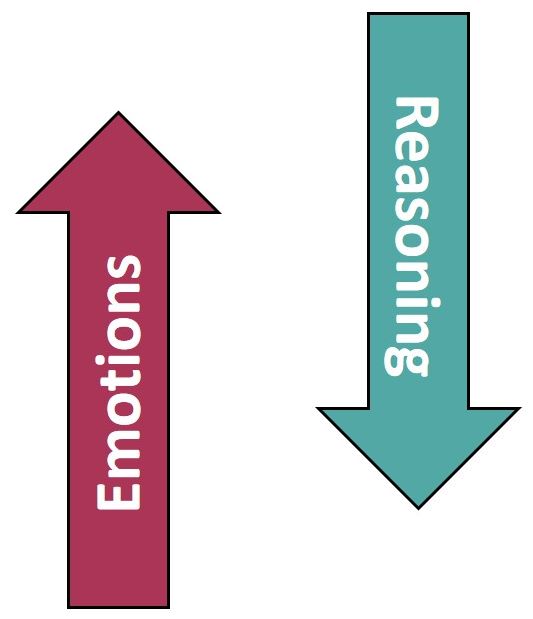
Picture1 - CopyThey found that when the amygdala is highly stimulated with intense emotions, it utilizes more blood and oxygen than normal, leaving less of both for the neocortex. This deficit causes a corresponding decrease in our capacity for reasoning, problem solving, and impulse control. This can lead to a temporary loss of 10 to 15 IQ points!

Yes, you really do get dumber when you’re highly emotional.

So when someone asks, “What were you thinking?” after an emotional outburst, part of your answer can be, “I was thinking with a lot less brain power than I normally have at my disposal.”

Practical Defenses Against Hijacking

Realizing that emotional hijacking makes it difficult to think clearly, our ministry has developed a few simple acrostics to make it easier for you to manage your words and actions wisely in stressful situations.

One of these acrostics is set forth in this principle: “To become more self-aware and self-engaging, READ yourself accurately.” This acrostic summarizes four key steps that can help you resist hijacking:

  • Recognize your emotions
  • Evaluate their source
  • Anticipate the consequences of following them
  • Direct them on a constructive course

Recognize – What am I feeling?

Neuroimaging, as well as practical experience, have shown that labeling emotions can help to reduce their intensity and shift more of their management back to the prefrontal cortex.

For example, in a study conducted by Dr. Lieberman, when people attached a word like “angry” to an angry-looking face, neuro-activity in the amygdala, which processes fear, panic and other strong emotions, decreased significantly. This dampening effect was accompanied by a corresponding increase of activity in the neocortex, which controls impulses.

Recognizing and labeling emotions also helps us to pull them out of the shadows and identify those that pose risks to our relationships. Just as pneumonia is a more dangerous illness than a common cold, bitterness is more dangerous than disappointment, self-pity can lead to more problems than sadness, and fear can be more crippling than concern.

So it is important to practice looking into our own hearts and accurately applying labels such as sad, discouraged, depressed, angry, lonely, embarrassed, rejected, bitter, jealous, and self-pity, to name a few.

If you’re not used to doing this, a way to practice identifying emotions is to read a novel or watch a movie and constantly ask yourself, “What is that character feeling?” As you get better at reading emotions in others, you’ll get better at reading them in yourself.

Evaluate – Why am I feeling this emotion?

The next step is to ask yourself, “Why am I feeling this way?” Asking these kinds of questions helps to move your thought process from the amygdala to the neocortex.

When I’m attempting to override a hijacking, I actually visualize grabbing my thoughts with both hands and dragging them from the back of my brain to the front of my brain, where my prefrontal cortex (and reasoning capacity) is located.

That’s also where all my sermon applications, memorized Scriptures, and lessons learned the hard way are stored, which is exactly what I need to draw on in order to defeat emotional hijacking.

More importantly, asking yourself why you’re feeling certain emotions helps to identify the circumstances and desires that are driving them, which is a crucial step toward controlling them (see James 4:1-3; Matt. 15:18).

The process looks like this: “I’m feeling angry. Why? Because Corlette just questioned my judgment. Why does that bother me so much? Because I’m proud and want her unqualified trust, respect, and support. Why else? Because I’m busy and I’m lazy and don’t want to spend more time explaining myself to her.”

Or, “What am I feeling? Self-pity. Why? Because I work my tail off for my family and make all sorts of sacrifices for them. And here when I needed just a little bit of support from them, they say they’re too busy. It’s just not fair. Really? So why have you been serving them all along, to put them in your debt?” Ouch!

As we dig into the depths of our own hearts in the middle of intense emotional times, we will often find that God is using the situation to free us from the grip of sinful desires and passions that have become controlling “idols.” (For more guidance on overcoming desires and emotions that seek to rule your life, see Getting to the Heart of Conflict.)

Anticipate – What are the likely consequences if I give in to this emotion?

Here again we are making a conscious effort to move our brain activity from the emotional zone to the reasoning zone. We draw on memories, experience, and learning by asking, “What is likely to happen if I give in to these emotions?”

It looks like this: “If I give into my anger, I’ll become defensive and say harsh things to Corlette, which will make her feel guilty and disrespected, and reluctant to voice questions or concerns in the future, which would not only hurt her but also undermine our ability to work as a team.”

Or, “If I give into self-pity, I’ll withdraw from my family and give them the cold shoulder. I’d like to label that as a defense mechanism, but the hard truth is that it’s simply a way to punish and manipulate them for not treating me the way I want. That will only build walls and distrust between us.”

“But worst of all, these reactions will offend my loving God who sent his Son to free me from these very sins.”

You’ll find equally uncomfortable but course-changing mental conversations when the emotions in question are bitterness, envy, jealously, depression, or hopelessness.

Direct – How can I channel my emotions onto a constructive course?

Although emotional hijacking can be almost instantaneous, these defense mechanisms take time. So what do we do to gain this time?

Buy some time. As I mentioned last week, one of the simplest anti-hijacking techniques is to always have a bottle of water or cup of coffee in front of you in any meetings or conversations that could become emotionally volatile. Make a firm resolution that you will not respond to an irritating or offensive comment without first taking a sip of water or coffee. The six seconds it takes to do so will usually give your neocortex time to catch up with your amygdala.

Another way to buy some time is to simply ask for it. “You know, this is really important to both of us, so I’d like to take a few minutes to walk around the block and think about our options.” Or, more simply, “We’ve been talking quite a while, and I need to take a bathroom break.”

Oxygenate. Slow down the conversation and breathe deeply. In emotional situations your brain is working intensely and using up a lot of oxygen. Be deliberate in replacing it. Your mother probably never heard of neuroimaging, but somehow she knew that counting to ten was always a good thing.

Rejoice in the Lord … and remember that he is near. This is a discipline the apostle Paul urged the Philippians to practice when they were wresting with a conflict: “Rejoice in the Lord always; again I will say, rejoice. Let your reasonableness be known to everyone. The Lord is at hand” (Phil. 4:4-5). It’s difficult to have two strong emotional experiences simultaneously, so rejoicing in God—remembering his character, works, and promises—is an excellent way to counteract strong negative feelings about another person.

Pray. Paul goes on in Philippians to teach, “Do not be anxious about anything, but in everything by prayer and supplication with thanksgiving let your requests be made known to God” (Phil. 4:6). In addition to appropriating God’s grace, prayer moves your thoughts off of what is provoking you and centers them on God himself … which should put worldly issues in a clearer context.

Be thankful. Since it’s difficult to entertain competing emotional experiences at the same time, being thankful is another way to counter a hijack (see Phil. 4:6). While it’s especially effective to be thankful for the person you’re talking with, other kinds of thankfulness can be helpful … whether it’s thankfulness to God for his many kindnesses to you, or thankfulness for other people he’s placed in your life. As Paul told the Philippians:

Finally, brothers, whatever is true, whatever is honorable, whatever is just, whatever is pure, whatever is lovely, whatever is commendable, if there is any excellence, if there is anything worthy of praise, think about these things … and the God of peace will be with you (Phil. 4:8-9).

Do a 180. If you realize that our emotions are trying to lead you in a direction that is contrary to the love and character of Christ, ask him for grace to “do a 180,” that is, to do exactly the opposite of what you feel like doing (Luke 6:27-36; Rom. 12:20-21; see this blog for more specific guidance).

Learn from your mistakes. If you are hijacked, get a benefit from it. After your emotions cool, spend some time reflecting on what happened and why. Identifying the trigger for that event can help you be better prepared when you face a similar situation in the future.

There are no panaceas. Since we live in a fallen world, we will always be faced with the challenge of mastering our imperfect minds and emotions. But if you practice the spiritual principles that are summarized in the READ principle, you can steadily improve your ability to head hijacking off at the pass, and channel the power of your emotions into constructive words and actions.

This truth is beautifully illustrated in another clip from Cinderella Man, after Mae has spent time doing the kinds of things described above (in real life, Mae Braddock was a devout Christian). Watch what happens when she uses all of her mental and emotional gifts to bless her husband before he heads into the ring (click here  to view the clip).

What an excellent illustration of the simple but life-changing relational wisdom summarized in Philippians 4:4-7:

Rejoice in the Lord always; again I will say, rejoice. Let your reasonableness be known to everyone. The Lord is at hand; do not be anxious about anything, but in everything by prayer and supplication with thanksgiving let your requests be made known to God. And the peace of God, which surpasses all understanding, will guard your hearts and your minds in Christ Jesus.

Filed Under: Sexual Purity Posts Tagged With: addiction, Affairs, alcoholic, castimonia, Character Defects, christian, co-dependency, Emotions, escorts, father wound, gratification, healing, Intimacy, Jesus Christ, lust, masturbation, porn, pornography, pornstar, pornstars, prostitutes, ptsd, purity, recovery, Sex, sex addict, sexual addiction, sexual impurity, sexual purity, spouses, strippers, trauma

January 10, 2020 By Castimonia

[Emotionally] Hijacked

SOURCE:  Ken Sande

Peter, James, and John were hijacked. So was Paul.

The same was true of Abraham, Sarah, Isaac, and Rachel … even David, the man after God’s own heart.

Chances are that you’ve been hijacked too. Probably within the last week.

It has nothing to do with being on an airplane. It has everything to do with having a marvelously complex and yet defective brain.

In simple terms, hijacking occurs when the emotional part of your brain (the limbic system) overpowers the rational part of your brain (the neocortex) … and gets control of your whole body along with it, including your mouth.

Think, for example, of a time when you hit your thumb with a hammer and blurted out an expletive … only to remember a moment too late that your five-year-old daughter was standing by your side.

Or a time when someone said something that offended you, so you threw a sarcastic comment back at him … only to wish later that those words had never left your mouth.

It’s bad enough when this happens in private; it’s so much worse when it’s done during a congregational meeting.

Hijacking Can Be Humorous

Sometimes hijacking is funny. Like the time my daughter wrote all over a wall and her own face with lipstick. Although the evidence against her was conclusive (and a quick confession would have been wise), when asked how the wall got all red, fear of admonishment led her to say, “I don’t know.”

We also smile when we read the account of a servant girl named Rhoda in the book of Acts. Peter had just been miraculously released from prison and was knocking on Rhoda’s door. Note how her emotions overpowered rational thinking: “Recognizing Peter’s voice, in her joy she did not open the gate but ran in and reported that Peter was standing at the gate” (Acts 12:14). So Peter kept on knocking …

Hijacking Is Often Harmful

Unfortunately, hijacking is usually not funny. When we are overtaken by sinful emotions like anger, jealousy, lust, or fear, we often respond impulsively and say or do things that hurt other people, damage our relationships, trigger long-lasting shame, and weaken our witness as followers of Christ.

Like James and John when their anger flared and they sought to bring down fire on the Samaritans because they would not welcome Jesus (Luke 9:51-55).

Or Joseph’s brothers, when jealousy drove them to sell him into slavery (Gen. 37:11; 27-28).

Or David, when lust led to seduction, pregnancy, manipulation, and murder … and eventually to civil war (2 Sam. 11:1-17; 2Sam. 12:11-15).

Or Peter, when fear compelled him to deny Jesus three times … which he deeply regretted within moments as he wept outside the gate (Luke 22:54-62).

Sin-Damaged Brains

When we read these biblical narratives, we typically explain them by simply saying, “They sinned.”

That’s true, but painting with such a broad brush robs us of a full understanding of the problem and an effective plan of action.

Sin is definitely central to these harmful dynamics, but its impact is far more nuanced than most of us realize. Let’s look at this from both a theological and neurological perspective.

At creation, God made us in his image (Gen. 1:26). Among other things, this means he designed our minds to function perfectly in every situation, no matter what kind of stress we might be feeling. The limbic part of our brain, where emotions and motivations are centered, was designed to work in perfect harmony with our neocortex, where rational thinking and decision making takes place.

But sin threw this beautifully designed system out of whack. Instead of meshing smoothly, the various parts of our brain sometimes get out of synch. Emotions, desires and passions can get so intense that they compel us to do things we know are wrong and will soon be regretted (see Rom. 7:18-19; James 4:1-3).

A Matter of Nanoseconds

Part of what goes wrong in these situations (and this is only one part) has to do with the wiring of our brains, which no longer works as perfectly as God initially designed it. So here’s what happens …

Data from our senses enter the brain through the thalamus, which relays impulses to other parts of the brain. Due to small differences in the distances to be traveled, impulses arrive at the limbic system a few nanoseconds before they get to the neocortex. This means that our emotions can get rolling before we are able to rationally process the information.

Simple illustration. My wife is terrified of snakes. If we were walking along a high mountain cliff and she saw a small garter snake beside the trail, she would probably scream and leap ten feet out into thin air before her neocortex reminded her that she can’t fly. But by then it’s too late.

Saved by a Water Bottle

Next week we’ll look at several ways to use the READ principle to guard against hijacking. But let me leave you with a simple illustration today.

I once counseled a man who frequently got himself into trouble at work by speaking impulsively during business meetings. If he was irritated, surprised, or simply wanted attention, he would throw out little sarcastic comments that steadily eroded his credibility and relationships. He wanted to stop but the little jabs just kept on coming.

Although a thorough solution would require a prayerful examination of his heart (Matt. 15:19), I gave him some immediate help simply by advising him to always take a water bottle or cup of coffee into his meetings … and to never say a word until he had raised the bottle or cup to his lips and taken a sip.

The six seconds required to take a sip gave his brain time to work around his emotional impulses and get a message up to the neocortex, where his higher reasoning powers had time to evaluate the situation and send an overriding message to his mouth: “I really don’t need to say this.”

Not very fancy, but it worked. And that little bit of progress motivated him to pursue the more comprehensive solutions we’ll look at in next week’s blog: Four Ways to Defeat Hijacking.

Filed Under: Sexual Purity Posts Tagged With: addiction, Affairs, castimonia, christian, co-dependency, Emotions, escorts, father wound, gratification, healing, Intimacy, Jesus Christ, lust, masturbation, porn, pornography, pornstar, pornstars, prostitutes, ptsd, purity, recovery, Sex, sex addict, sex addiction, sexual, sexual addiction, sexual impurity, sexual purity, spouses, trauma

January 6, 2020 By Castimonia

Parental Conflict Can Cause Lasting Emotional Damage to Kids

SOURCE:  Traci Pedersen/PsychCentral

Children who regularly witness parental conflict may be sustaining lasting harm to their emotional processing abilities, potentially becoming overvigilant, anxious and vulnerable to misreading even neutral human interactions, according to a new study published in the Journal of Social and Personal Relationships.

The findings are particularly strong for children who are naturally shy and sensitive.

“The message is clear: even low-level adversity like parental conflict isn’t good for kids,” said Dr. Alice Schermerhorn, an assistant professor in the University of Vermont’s Department of Psychological Sciences and the lead author of the study.

In the study, 99 children (aged 9 to 11) were divided into two groups based on their scores from psychological tests which assessed how much parental conflict they experienced and how much they felt the conflict threatened their parents’ marriage.

Next, the children looked at a series of photographs of couples engaged in happy, angry or neutral interactions and asked to choose which category the photos fit.

Most of the children from the low-conflict homes consistently scored the photos accurately. However, children from high-conflict homes were only able to accurately identify the happy and angry couples, not those in neutral poses. These children would incorrectly perceive the neutral photos as either angry or happy, or they would say they didn’t know which category they fit into.

According to the researchers. one possible reason for the inability of those in the high-conflict group to evaluate the neutral photos could be hypervigilance. “If their perception of conflict and threat leads children to be vigilant for signs of trouble, that could lead them to interpret neutral expressions as angry ones or may simply present greater processing challenges,” said Schermerhorn.

Alternatively, it could be that neutral parental interactions may be less significant for children who feel threatened by their parents’ conflict.

“They may be more tuned into angry interactions, which could be a cue for them to retreat to their room, or happy ones, which could signal that their parents are available to them,” she said. “Neutral interactions don’t offer much information, so they may not value them or learn to recognize them.”

The study also reveals the impact of shyness on the children’s ability to process and recognize emotion. The shy children in the study, who were identified via a questionnaire completed by the subjects’ mothers, were unable to correctly identify couples in neutral poses, even if they were not from high-conflict homes.

Shyness made them more vulnerable to parental conflict. Children who were both shy and who also felt threatened by their parents’ conflict were unable to perceive photos of neutral interactions as simply neutral.

“Parents of shy children need to be especially thoughtful about how they express conflict,” Schermerhorn said.

The findings have significant implications, according to Schermerhorn, because they shed light on the impact relatively low-level adversity like parental conflict can have on children’s development. Either of her interpretations for the findings —hypervigilance or not being able to read neutral interactions — could mean trouble for children down the road.

“One the one hand, being overvigilant and anxious can be destabilizing in many different ways,” she said. “On the other, correctly reading neutral interactions may not be important for children who live in high conflict homes, but that gap in their perceptual inventory could be damaging in subsequent experiences with, for example, teachers, peers, and partners in romantic relationships.”

“No one can eliminate conflict altogether,” said Schermerhorn, “but helping children get the message that, even when they argue, parents care about each other and can work things out is important.”

Source: University of Vermont

Filed Under: Sexual Purity Posts Tagged With: addiction, Affairs, alcoholic, castimonia, Character Defects, christian, co-dependency, Emotions, escorts, father wound, gratification, healing, Intimacy, Jesus Christ, lust, masturbation, porn, pornography, pornstar, pornstars, prostitutes, ptsd, purity, recovery, Sex, sex addict, sex addiction, sex partners, sexual, sexual addiction, sexual impurity, sexual purity, spouses, STD, strippers, trauma

  • « Go to Previous Page
  • Page 1
  • Page 2
  • Page 3
  • Page 4
  • Interim pages omitted …
  • Page 151
  • Go to Next Page »

Footer

Useful Links

Castimonia Restoration Ministry, Inc. is a 501c3 non-profit organization


This site is intended for individuals who struggle with maintaining sexual purity. This information is posted for individuals at various stages in their recovery, year 1 to year 30+; what applies to some, may not apply others. Spouses are encouraged to read this blog with the caveat that they may not agree with, understand, or know the reason for some items posted. As always, take what you like and leave the rest.

Copyright © 2026 Castimonia Restoration Ministry

Loading Comments...